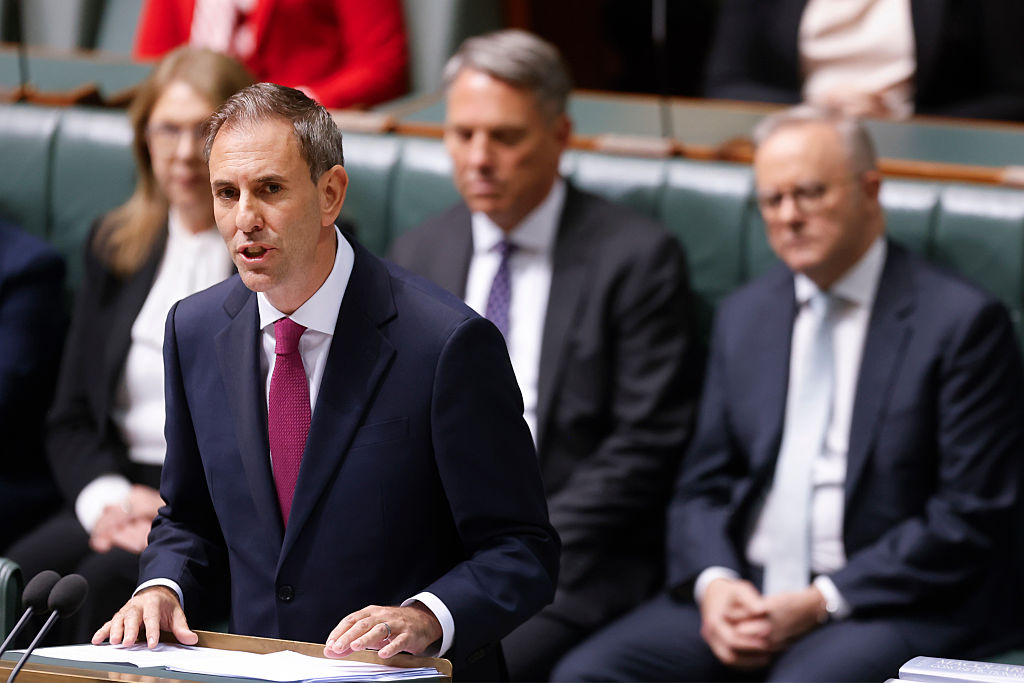

Labor’s proposed tax reforms have passed the House of Representatives without amendment with the Coalition and crossbench senators waiting next.
The legislation passed the lower house 94 votes to 48 and includes the $250 Working Australian Tax Offset, a $1,000 instant tax deduction, as well as the contentious changes to capital gains tax (CGT) and negative gearing.
The Treasury Laws Amendment (Tax Reform No. 1) Bill 2026 removes the 50 percent capital gains tax (CGT) discount, and replaces it with a 30 percent flat tax on the total profit of a sale plus inflation costs.
Regarding negative gearing, investors can only do this for new properties instead of existing ones.
The bill was opposed by the Liberal-National Coalition, One Nation, and the Teals with several proposed amendments moved. To pass the Senate, it will require the support of the Greens.
Opposition Tries to Split Off CGT, Negative Gearing Changes
During the debate, Opposition Leader Angus Taylor moved the first amendment to split the bill, backing the tax offset and deduction while opposing the CGT and negative gearing reforms.
He also pushed for income tax brackets to be indexed to inflation to prevent bracket creep.
“These cost-of-living measures could have passed this parliament easily with bipartisan support, but tricky Labor, this tricky treasurer has deliberately tied these measures to its toxic taxes,” Taylor said.
Treasurer Jim Chalmers dismissed the criticism, arguing the Coalition was once again opposing tax relief.
“That entire five-minute rant from the opposition leader can be summarised in one sentence. The Coalition is voting against tax cuts once again,” the treasurer said.
Taylor’s amendment was defeated by 93 votes to 43.
While Western Sydney independent MP Dai Le tried to move an amendment for the bill to be delayed until after the next election due in 2028, which was easily defeated.
Teal MP Says CGT Change Should Not Cover Shares, Businesses
Independent MP Zali Steggall also sought changes, arguing the government’s CGT reforms should focus on housing rather than extending investments like shares, ETFs, start-ups, business equity and family businesses.
“A capital gain is often realised only after many years of risk, delayed reward, reinvestment, losses, or uncertainty. If we want an economy that backs enterprise innovation and productivity, we must recognise and reward responsible risk taking,” she said.
“It [the amendment] restricts Schedule One (CGT) to real property now, where the government says the core problem lies.”
Chalmers rejected that amendment, arguing the reforms were designed to reduce incentives that favour investment in established housing.
“House prices have risen by more than 400 percent since 1999 which is more than twice as fast as average full-time earnings,” Chalmers said.
He said the reforms would compensate investors more accurately for inflation and, in some cases, result in lower tax liabilities.
Steggall’s amendment was defeated by 104 votes to seven.
Spender Proposes Scaled CGT Tax Rate
Fellow Teal MP Allegra Spender backed the goal of reforming tax concessions but argued the legislation needed refinement.
Spender said too much of the projected revenue—about $77 billion—would be retained by government rather than returned to taxpayers. She also criticised the speed with which the legislation was being considered.
Her amendments sought to exempt active businesses, start-ups and small businesses from the new CGT regime, and replace the proposed 30 percent minimum CGT tax rate with a measure that calculates the average income over the life of an asset.
Chalmers instead said the amendments would create new loopholes.
He said allowing investors to spread capital gains across multiple years for tax purposes had previously been abandoned following recommendations from the Ralph Review. He also warned that adjusting investment losses for inflation could encourage investors to repeatedly sell and repurchase assets to increase tax deductions.
He also defended the 30 percent minimum rate, saying it would bring the taxation of capital gains closer to the rates paid by workers on their income.
Business Concession Thresholds Not Adjusted for Inflation: Ryan
Independent MP Monique Ryan proposed updating CGT concessions for small businesses, saying current thresholds did not keep up with inflation.
Ryan said current businesses qualify for concessions if they have an annual turnover below $2 million or net assets below $6 million, limits that have remained largely unchanged since 2007.
Had they been indexed to inflation, she says, the thresholds would now be about $3.3 million in turnover and $10 million in net assets.
Chalmers opposed the amendment, saying the government was retaining all four existing small business CGT concessions and that many business owners could pay less tax under the new arrangements.
He also pointed to broader budget measures supporting small business, including $3.5 billion in tax cuts, the permanent instant asset write-off and expanded venture capital incentives.
 Friends Read Free
Copy
Facebook
Tweet
Friends Read Free
Copy
Facebook
Tweet