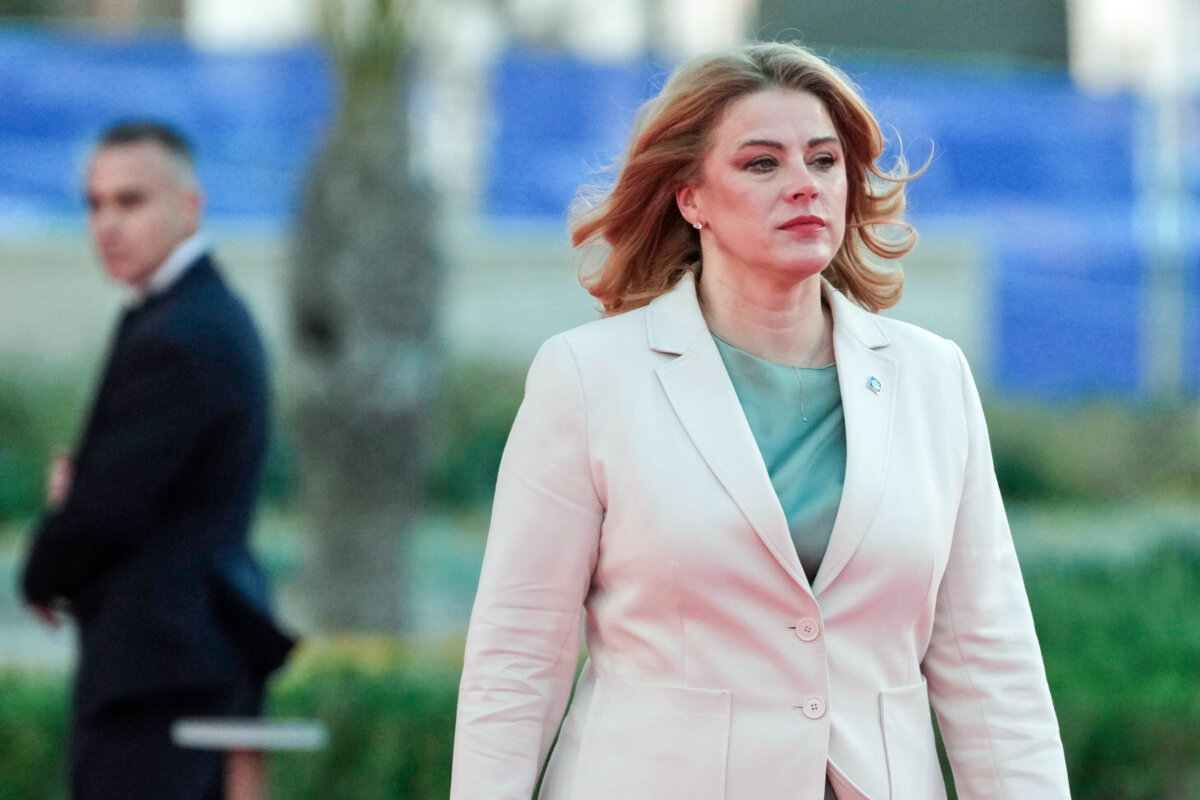
Latvian Prime Minister Evika Silina resigned on May 14, after several days of political recriminations over the country’s inability to protect its citizens from rogue Ukrainian drones.
“My priority has always been, and remains, the well-being and security of Latvia’s people,” Silina wrote on X on May 14. “Parties and coalitions change, but Latvia endures. And my responsibility to society comes above all else.”
The prime minister said she was stepping down but “not giving up.”
Ukrainian Foreign Minister Andrii Sybiha said on May 10 that the number of drones crashing in Latvia was “the result of Russian electronic warfare deliberately diverting Ukrainian drones from their targets in Russia.”
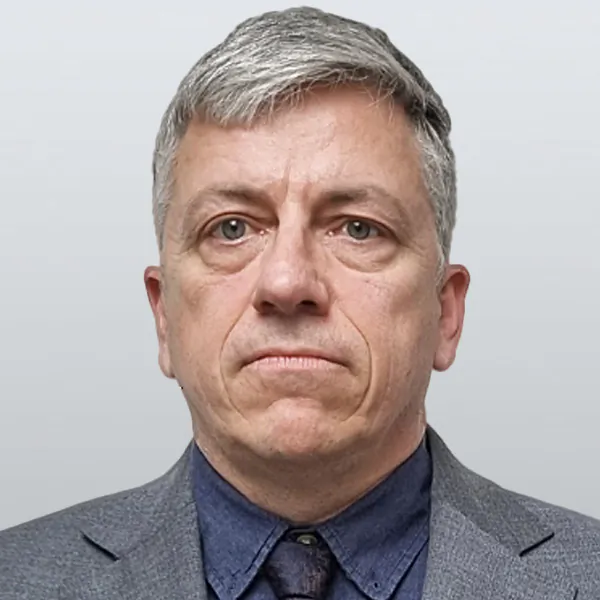
Latvian Defense Minister Andris Spruds reluctantly resigned last week over the government’s handling of a series of incidents in which stray Ukrainian drones have crossed into Latvian territory. So far, nobody has been killed or injured by the drones.
On May 7, two drones entered Latvia, and one of them hit a fuel storage facility.
Spruds said they were believed to be Ukrainian drones that had gone off course, en route to targets in Russia.
Explaining Spruds’s resignation, Silina said on May 10 that “the political leadership of the defense sector has failed to fulfill its promise of safe skies over our country.”
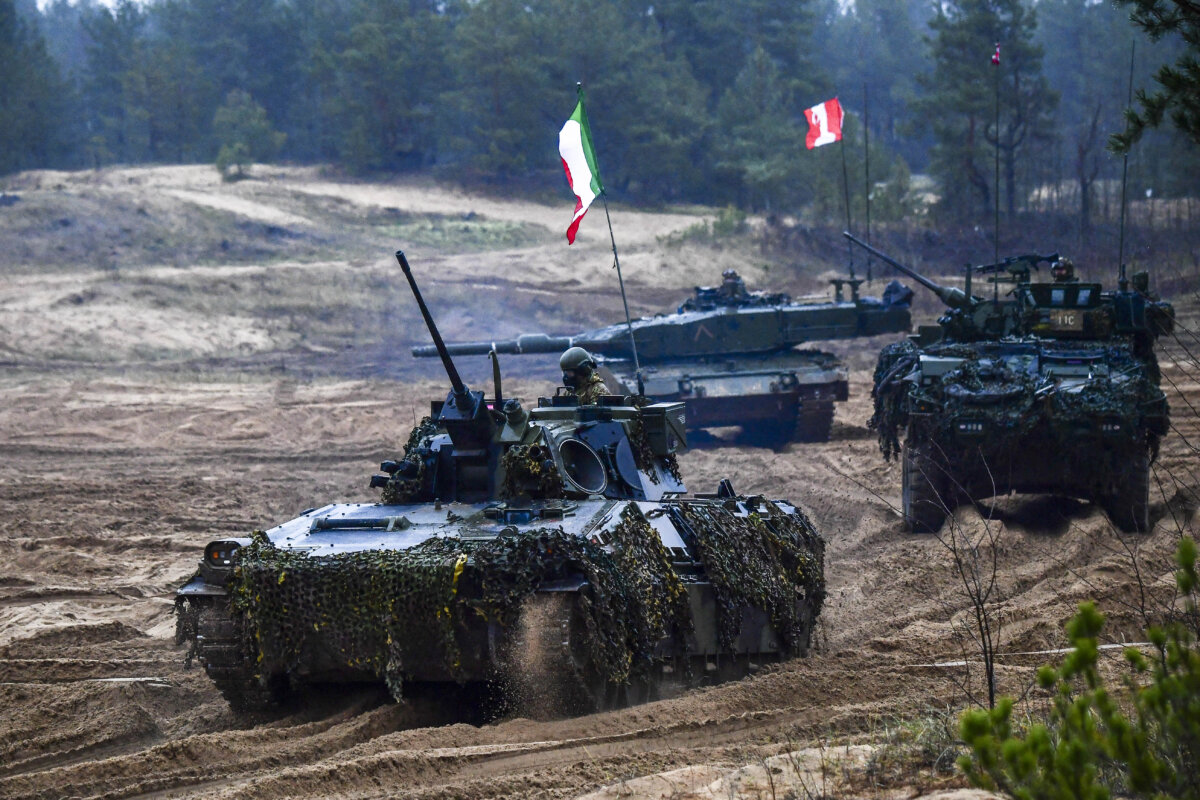
Latvia, a former Soviet republic that is now a member of NATO, is one of those countries that have massively increased defense spending in recent years, especially since the Russian invasion of Ukraine in 2022.
“Russia is an existential threat, and we should be ready for this existential threat for years,” Spruds said at a NATO summit in Washington in July 2024.
But Silina said Spruds had lost the public’s trust.
Spruds was a member of the Progressives Party, a left-of-center group that had been part of the ruling coalition, and it then removed its support from the government, leaving Silina without a parliamentary majority.
The Latvian coalition government, which also included an agrarian party, had been under political pressure for months.
General elections are due in the former Soviet Republic in October.
‘Political Empty Talkers’
In her statement on X on Thursday, Silina claimed that “political envy and narrow party interests have taken precedence over responsibility” and, in a dig at the Progressives, said that rather than find a “strong and professional candidate” to replace Spruds as defense minister, “the political empty talkers chose not a solution, but a crisis.”
Latvian President Edgars Rinkevics, tasked with appointing a new head of government, is set to meet with representatives of all parliamentary parties on Friday.
Latvia is not the only country that has been hit by stray Ukrainian drones.
Neighboring Lithuania, Estonia, and even Finland—which is on the other side of the Baltic Sea—have also reported them.
In March, Finnish Prime Minister Petteri Orpo told public broadcaster Yle, “Russia has extremely strong electronic jamming capabilities, which could explain why these drones are drifting into Finnish airspace, something that is a very serious issue.”
On May 10, Sybiha offered Ukraine’s help in preventing future drone crashes on its territory.
Estonia and Lithuania, along with Poland, were the first European members of NATO to agree to meet U.S. President Donald Trump’s request for all nations in the alliance to devote 5 percent of GDP to defense spending.
Ukrainian President Volodymyr Zelenskyy has not commented on the stray drones or the political consequences for Latvia, but his chief of staff, Kyrylo Budanov, thanked Spruds for his cooperation and support while defense minister.
“Latvia has been, and remains, our reliable ally,” Budanov posted on X on May 11. “I am grateful to our Latvian partners for their clear understanding of what is at stake here in our part of Europe and in this war.”
He also welcomed the Latvian government’s decision to nominate Col. Raivis Melnis as its new defense minister.
Melnis has been a professional soldier for 26 years, but his nomination has to be ratified by the Latvian parliament.
In an interview with Latvia’s TV24 channel on May 11, Melnis said he would seek Kyiv’s help in training his country’s air defense personnel to operate anti-drone interception systems.
When asked by a reporter about the introduction of a so-called “drone wall”, Melnis said, “I wouldn’t call it a ‘drone wall,’ I would talk about capabilities.”
“Capabilities that include both electromagnetic warfare, drone systems, and anti-drone systems must be developed that would increase the security of our citizens and the country as a whole,” he said.
The Associated Press contributed to this report.
 Friends Read Free
Copy
Facebook
Tweet
Friends Read Free
Copy
Facebook
Tweet