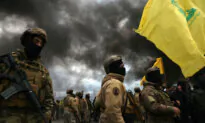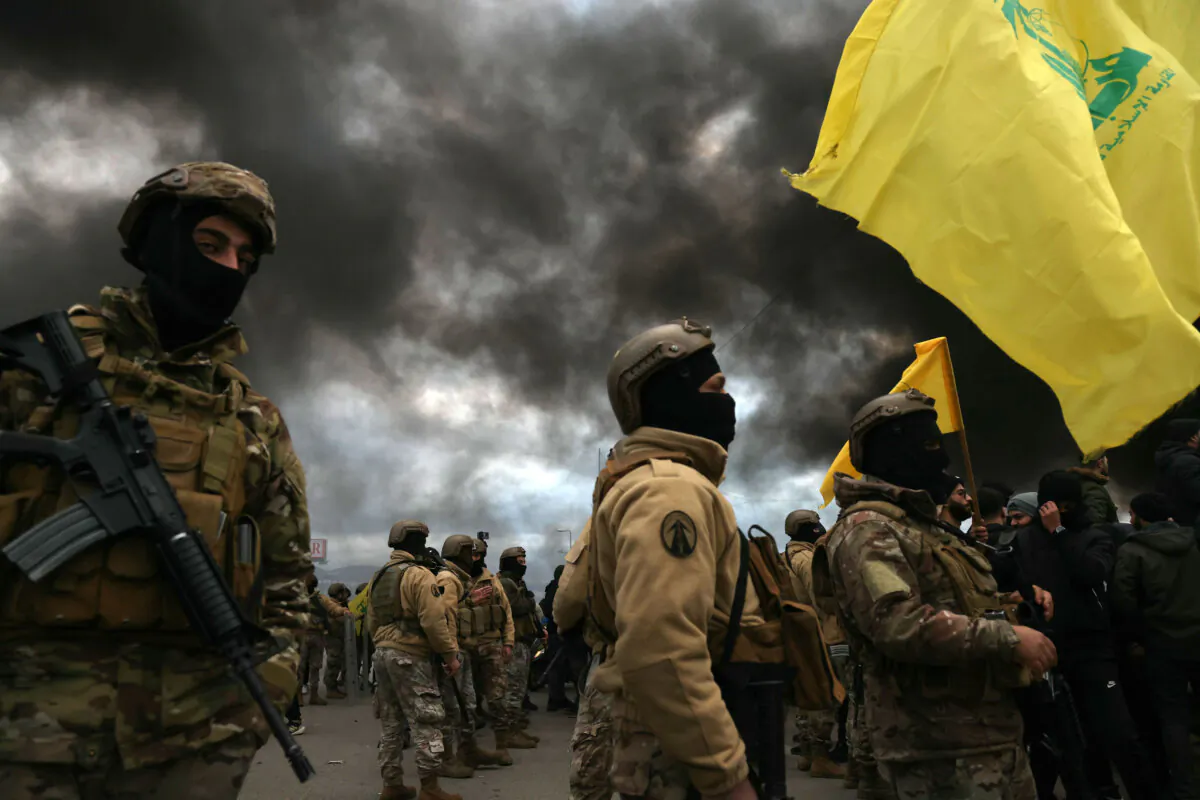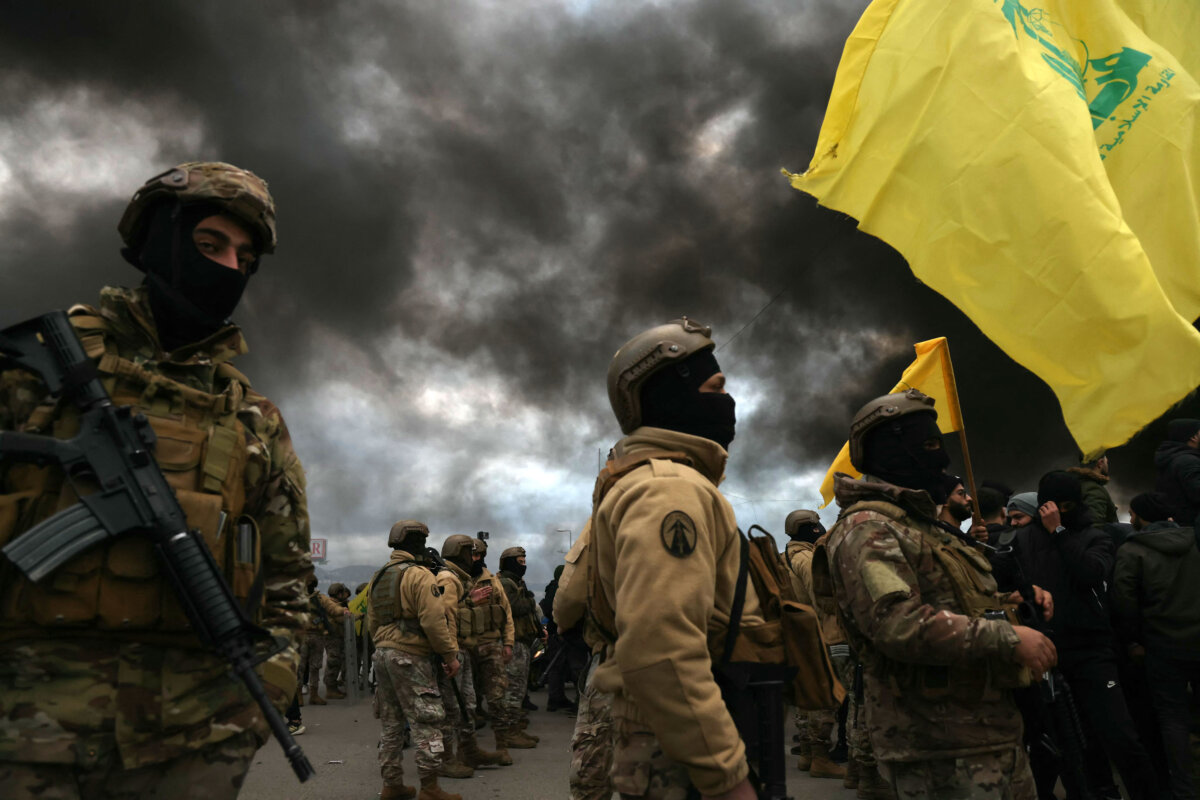

The Lebanese government on Aug. 5 authorized its army to draw up a plan to restrict weapons across the country to six official security agencies by year’s end, a move that would effectively dismantle Hezbollah, the Iran-backed Shiite Muslim terrorist group that operates independently of the state.
“The Cabinet decided today to task the Lebanese Army with developing a plan to contain all weapons before the end of the year, and to present it to the Cabinet before the end of the current month, and to continue discussions on the paper submitted by the American side on [Aug. 7],” Lebanese Prime Minister Nawaf Salam stated in an Aug. 5 social media post.
The Aug. 5 decision followed a July visit to Lebanon by U.S. envoy Tom Barrack, who has called for disarming the Iran-backed group.
Barrack said during a news conference at the time that the United States views Hezbollah as a terrorist organization and will engage only with the Lebanese state, not the group itself.
“The Hezbollah disarmament agreement is something that is so internal,” he said.
“Remember America has Hezbollah as a foreign terrorist organization. So we have no skin in the game in discussing anything with Hezbollah. That’s not where we’re at. We’re discussing with the nation state, your government, how we can help.”
Hezbollah was formed in 1982 in response to Israel’s invasion of Lebanon that year, according to the CIA.
“[The group was] estimated in 2024 to have up to 50,000 armed combatants, divided between full-time and reserve personnel,” the CIA stated.
The State Department designated it as a terrorist group in 2014.
The group and its allies hold nearly half the seats in Lebanon’s parliament. The group has also held Cabinet positions since 2005.
In a televised speech on Aug. 5, Hezbollah leader Naim Kassem rejected calls for his group to lay down its weapons.
“We don’t accept the U.S. demands, and we don’t accept any timeline for disarmament,” he said.
In 2024, Israel and Hezbollah agreed to a cease-fire that ended more than a year of cross-border air and rocket attacks and two months of Israel’s ground war to drive Hezbollah away from Israel’s northern frontier.
The Israel Defense Forces (IDF) said on June 27 that it had killed one of the founders of the Hamas terrorist group and two alleged Hezbollah terrorists: Abbas al-Hassan Wahbi and Hassan Muhammad Hammoudi.
Wahbi, the IDF stated, was a terrorist “responsible for intelligence in Hezbollah’s ‘Radwan Force’ Battalion” who was killed near Mahrouna in southern Lebanon.
“The terrorist was involved in efforts to rebuild Hezbollah and weapons transfers,” the IDF stated. “These activities constitute a blatant violation of the understandings between Israel and Lebanon.”
“[Hammoudi was] responsible for Hezbollah’s anti-tank missile array in the Bint Jbeil sector,” directing multiple anti-tank missile attacks toward Israel, it stated. He was killed near Kounine, Lebanon.
On Sept. 17 and Sept. 18, 2024, thousands of handheld pagers and hundreds of walkie-talkies intended for use by Hezbollah exploded simultaneously in two separate incidents across Lebanon and Syria.
The attacks killed 39 people and wounded more than 3,400. Many lost fingers or hands, had eye injuries, or suffered severe wounds to their abdomens.
The two main theories initially put forward by analysts were that threat actors exploited a flaw in the batteries for the pagers or that they planted and then triggered explosive charges added to these devices.
Israel confirmed the attacks when a spokesperson for Israeli Prime Minister Benjamin Netanyahu’s office said the Israeli leader had approved them.
“Netanyahu confirmed [on Nov. 10] that he greenlighted the pager operation in Lebanon,” the prime minister’s spokesperson, Omer Dostri, said on Nov. 11.
Dan M. Berger and T.J. Muscaro contributed to this report.
 Friends Read Free
Copy
Facebook
Tweet
Friends Read Free
Copy
Facebook
Tweet