
The Liberal government has proposed adding a clause to its hate speech legislation that it says will address concerns about religious speech being classified as incitement to hatred.
The House of Commons justice committee is currently studying Bill C-9, also known as the Combatting Hate Act, which aims to create new criminal offences associated with intimidation and the obstruction of access to places of worship. It also seeks to create a new offence for the intentional promotion of hatred through the public display of specific symbols.
The Conservatives and religious groups oppose a Bloc Québécois amendment to the bill—backed by the Liberals—that would remove the religious defence to hate speech in the Criminal Code. That defence currently protects individuals from charges of wilfully promoting hatred when expressing religious beliefs in good faith.
The Liberal Party had accepted the Bloc’s amendment as a way to secure support for Bill C-9, but opposition from the Conservatives and religious groups has stalled progress on the bill, and several committee meetings on the legislation have been cancelled.
The Liberals then proposed another amendment that would add “clarifying language” to the bill during a Feb. 23 committee meeting. The clause would state that Canadians are not prohibited from making statements “on a matter of public interest” that includes educational, religious, political, or scientific statements, as long as they do not willfully promote hatred against an identifiable group.
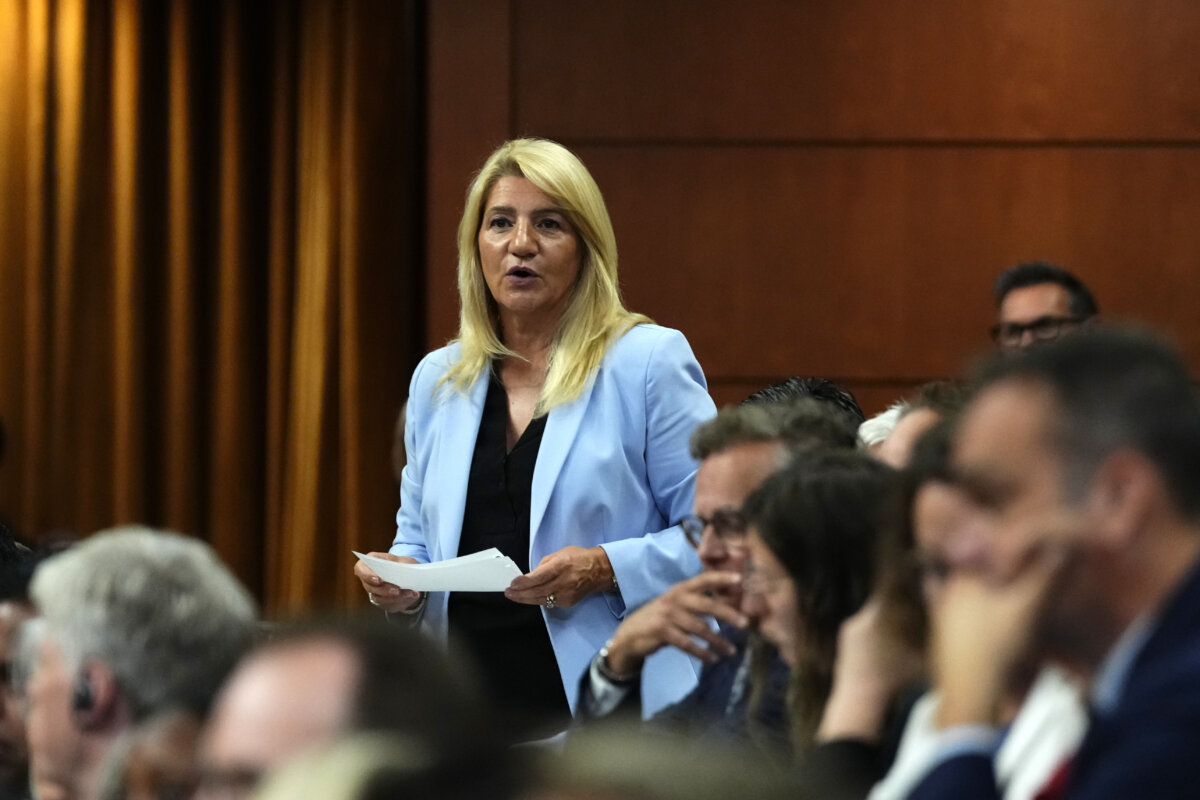
Liberal MP Patricia Lattanzio, parliamentary secretary to the justice minister, said the government has heard from faith communities, legal experts, and civil society about the removal of the religious defence from the Criminal Code. She said the current religious exemption created “interpretive ambiguity that allowed the provision to be invoked in ways Parliament never intended.”
Lattanzio said these groups told the Liberal government that removal of the exemption could be “misread as a signal” that ordinary religious expression was now at risk.
“We listened to those concerns. That is why we’re adding a clause for greater certainty,” she said, adding that the clause clarifies that nothing in the legislation will impact “worship, sermons, prayer, religious education, peaceful debate, or even the good faith of reading and discussion of religious texts.”
Lattanzio said that freedom of expression remains “fully protected” by the Charter of Rights and Freedoms, and that the courts have consistently ruled that ordinary religious expression “does not meet the legal test for willfully promoting hatred.”
Opposition, Sub-Amendment
Conservative MP Andrew Lawton told the committee that while he appreciated the “recognition by my Liberal colleague that there is a problem with Bill C-9,” the proposed clause would not “bolster any protections” for religious freedom or freedom of expression.
“It simply aims to say that ‘none of this was at issue in the first place’,” he said. “For people that were raising concerns that Bill C-9 was eroding long-standing protections in criminal law, the government’s own admission right now about this amendment is that nothing is changing.”
Lawton said that although the Liberal government informed stakeholders it would include “robust protections in the bill that ensure religious freedoms will be upheld,” the government was now saying there is “no reason to be alarmed.”
The Conservative MP referenced the government’s invocation of the Emergencies Act in 2022 in response to the Freedom Convoy protest—a reaction that the Federal Court later ruled to be unreasonable and to have breached Charter rights. The court decision was affirmed by the Federal Court of Appeal in 2026.
“That was also a situation in which the government used the very same circular reasoning here to defend its actions,” Lawton said. “They said, when they invoked the Emergencies Act, ‘this will not violate your Charter rights because the Charter protects your rights.’”
Lawton said that while the Charter could provide a remedy after a Canadian is charged for a crime, “this government has not earned or warranted the benefit of the doubt when it comes to matters of conscience, when it comes to matters of faith.”
Lawton introduced a sub-amendment designed to remove the caveat—“if they do not willfully promote hatred against an identifiable group by communicating the statement”—from the legislation. He argued that this change would eliminate the bill’s “circular and confusing” language, clarifying that expressing a matter of public interest is not willfully promoting hatred.
Liberal MP Anthony Housefather raised a point of order, saying that Lawton’s sub-amendment would “completely negate the intention of what the proposed amendment does and says.”
Housefather said the sub-amendment would change the legislation to state that any statement communicated in a matter of public interest does not constitute willful promotion of hatred. “My argument is, this is completely not in order,” he said.
Liberal MP and committee chair James Maloney said he wanted to review a hard copy of the amendment, prompting the committee to suspend its proceedings before Lawton’s sub-amendment was debated. The committee is expected to reconvene on Feb. 25.
Conservative House Leader Andrew Scheer said on Feb. 11 that the party would be open to supporting a narrower version of Bill C-9, potentially by splitting the bill into two parts. He said the party could not support a “censorship bill,” but if the legislation was only focused on creating additional protections around places of worship, it could pass “very quickly.”
 Friends Read Free
Copy
Facebook
Tweet
Friends Read Free
Copy
Facebook
Tweet