
News Analysis
The federal government’s appeal against a 2024 court decision deeming its use of the Emergencies Act against the Freedom Convoy to be unreasonable was rejected on Jan. 16.
The Federal Court of Appeal, in its review of the 2024 Federal Court ruling, agreed that the lower court had “correctly determined” that the declaration of a public order emergency was unreasonable, and that measures associated with the order infringed paragraph 2(b) and Section 8 of the Charter, which protect freedom of expression and protection against unreasonable search and seizure.
The question now is what could come next and whether this will have bearing on ongoing legal cases involving the convoy protests against COVID-19 mandates.
If the federal government decides to continue its challenge of the ruling, the next step would be an appeal to the Supreme Court of Canada to hear the case.
The government has said that it’s reviewing the case and “assessing the next steps” it will take.
“The Government remains steadfast in its commitment to ensuring the safety and security of Canadians in the face of threats to public safety and national security,” the Office of the Minister of Public Safety said in a statement.
John Carpay, president of the Justice Centre for Constitutional Freedoms (JCCF), said the Supreme Court will only hear a case if it involves an “unresolved issue of national importance” that requires further examination.
“I don’t speak on behalf of the federal government, but I don’t see any major unresolved doctrine in the ruling,” he told The Epoch Times. The JCCF has been involved in many of the rulings challenging the government’s action against the protesters.
Ryan O’Connor, a Toronto-based employment and litigation lawyer who represents clients who had their bank accounts frozen during the protests, said this ruling “strengthens their position in their civil case against the Crown, the police forces, and the banks that were involved in freezing their accounts.”
Supreme Court
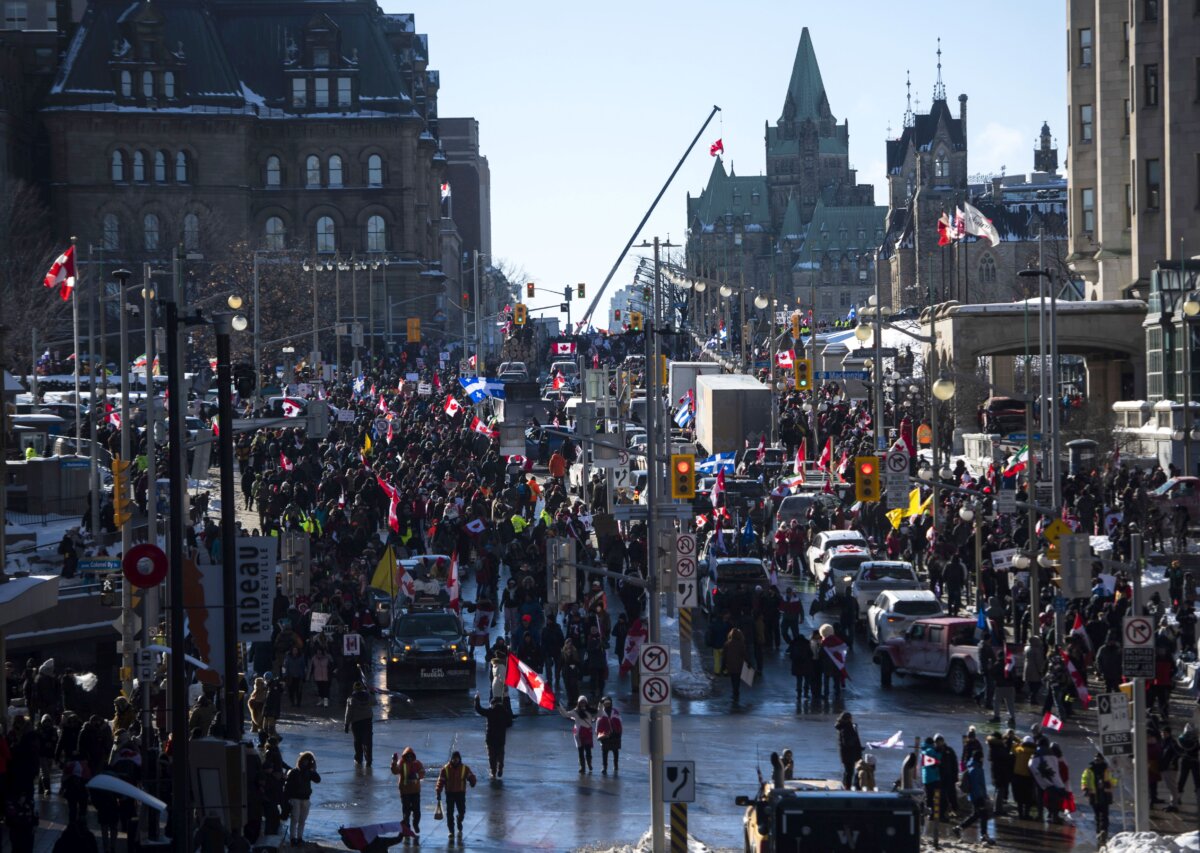
The Freedom Convoy protest of 2022 began as a demonstration against mandatory COVID-19 vaccinations for truckers traversing the Canada-U.S. border, but became a larger movement opposing various pandemic-related mandates and restrictions.
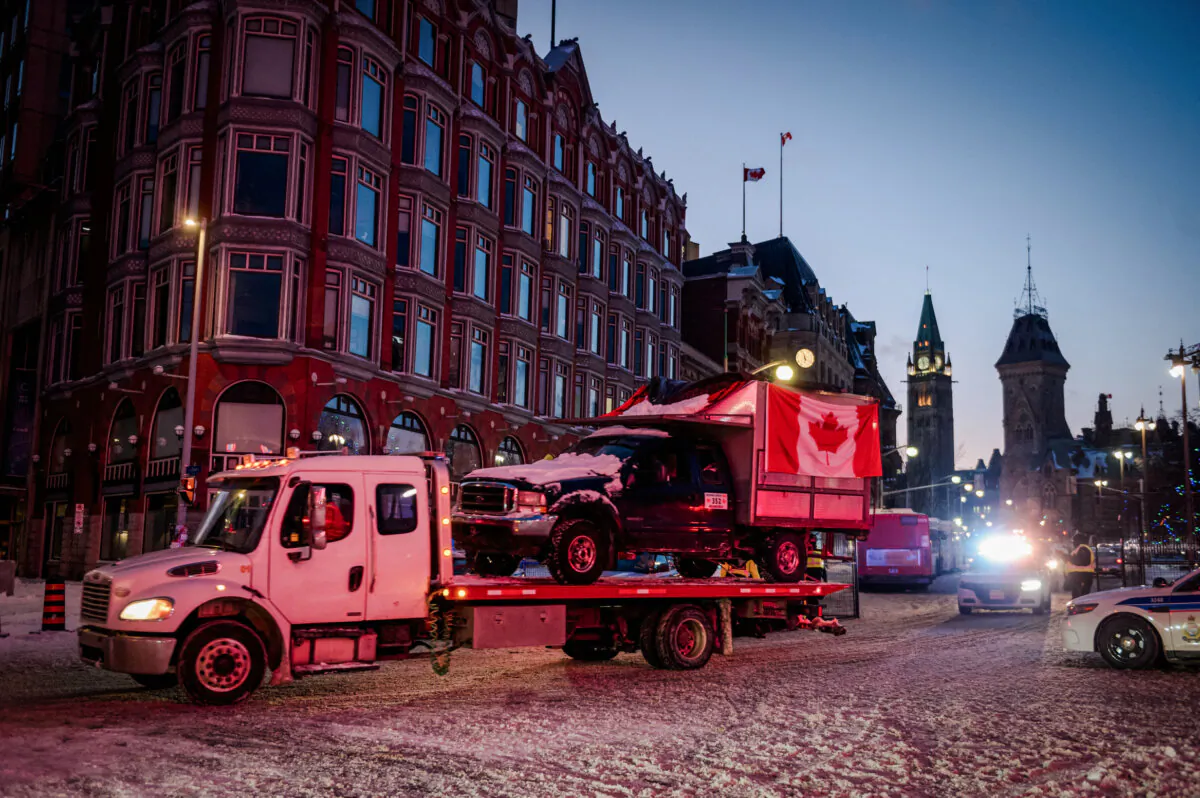
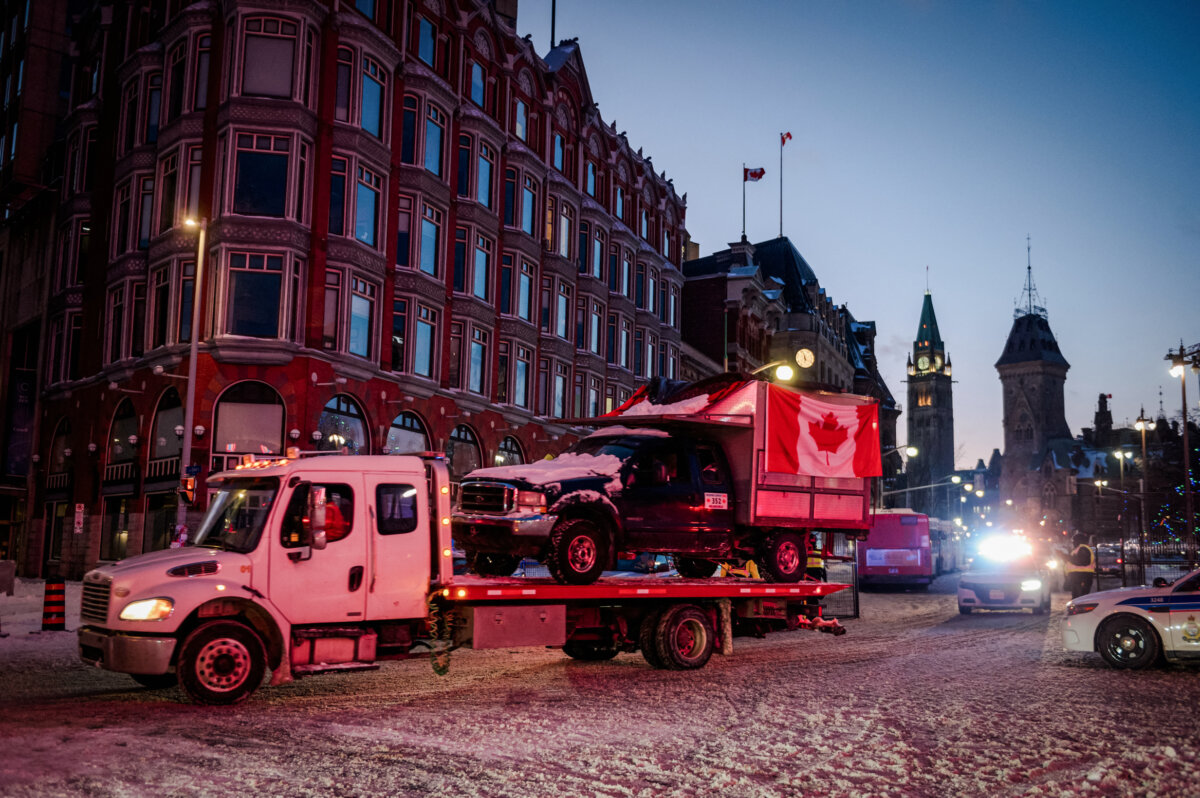
The federal government invoked the Emergencies Act on Feb. 14, 2022, to deal with the protests and encampments, giving law enforcement sweeping powers to arrest demonstrators, freeze the bank accounts of some protesters, and compel towing companies to remove protesters’ vehicles from downtown Ottawa. The act also made it illegal to attend any event deemed an unlawful assembly. It was revoked on Feb. 23.
A public inquiry held to evaluate whether the government’s use of the Emergencies Act was justified ruled in February 2023 that cabinet had met the “very high” threshold for invoking it, though the inquiry’s commissioner Paul Rouleau said he came to the conclusion “reluctantly.” He said the factual basis for his decision was not “overwhelming” and there were other questions requiring “careful review.”
A ruling 11 months later reached a different conclusion. Federal Court judge Richard Mosley, who was presiding over a lawsuit brought on by protesters, ruled in January 2024 that the government’s use of the act was “unreasonable” and that related regulations infringed on Canadians’ Charter rights. The federal government appealed the court’s ruling.
Lat week, the Federal Court of Appeal judges wrote in their unanimous decision that though the convoy demonstrations in Ottawa and at some Canada-U.S. border crossings were “disruptive,” they fell “well short of a threat to national security.” The appellate court said it found that cabinet did not have reasonable grounds to believe a threat to Canada’s national security existed based on “the evidence that was before it and on a proper interpretation” of the Emergencies Act, and it therefore dismissed the appeal.
The judges also dismissed cross-appeals by the Canadian Constitutional Fund and Canadian Civil Liberties Association asking that the court rule on whether the Emergencies Act invocation infringed on Section 2(c) of the Charter guaranteeing the right to freedom of peaceful assembly. In addition, the court said that since neither the federal government nor public interest had requested costs, “none will be awarded.” Neither responded to The Epoch Times’ requests for comment.
Both Justice Mosley’s decision and the recent Federal Court of Appeal decisions carry more legal weight than Rouleau’s commission of 2023, as they are court rulings that can be cited by future judges.
Carpay said if the government were to appeal, the next step would be for the Supreme Court to examine the case. But he said the court typically looks at cases through a lens of whether there is an “important legal doctrine that is lacking in clarity.”
Carpay said an example of this would be the Alberta Court of Appeal’s 2020 ruling that the Charter of Rights and Freedoms applies to universities’ regulation of student expression, in contrast to courts of appeal in British Columbia, Saskatchewan, and Ontario, which in previous decisions had held that the Charter does not apply to universities unless their actions implement a specific government policy.
“That would be an example where the Supreme Court might step in and say, ‘OK, we’ve got different legal doctrines in different provinces, and so we need to resolve this,’” Carpay said.
For the Supreme Court to hear the Emergencies Act decision, the government would need to “persuade the Supreme Court that there is an important legal doctrine of national importance that is unresolved,” Carpay said.
An appeal that heads to the Supreme Court would be heard by nine justices, including Chief Justice Richard Wagner, who in an April 2022 interview with Quebec daily Le Devoir said the protest in downtown Ottawa was the “beginning of anarchy where certain people decided to take other citizens hostage, to take the law into their own hands.”
This led 13 lawyers to send a complaint to the Canadian Judicial Council against Wagner for his comments. The council threw out the complaint and said it was “manifestly without substance, and does not concern judicial conduct.”
Impact on Lich and Barber Trial
One of the highest-profile court cases involving the protest has been that of Freedom Convoy co-organizers Tamara Lich and Chris Barber, who were sentenced in October 2025 for their roles in the 2022 demonstration. Lich and Barber were both found guilty of mischief, while Barber was found guilty of counselling others to disobey a court order.
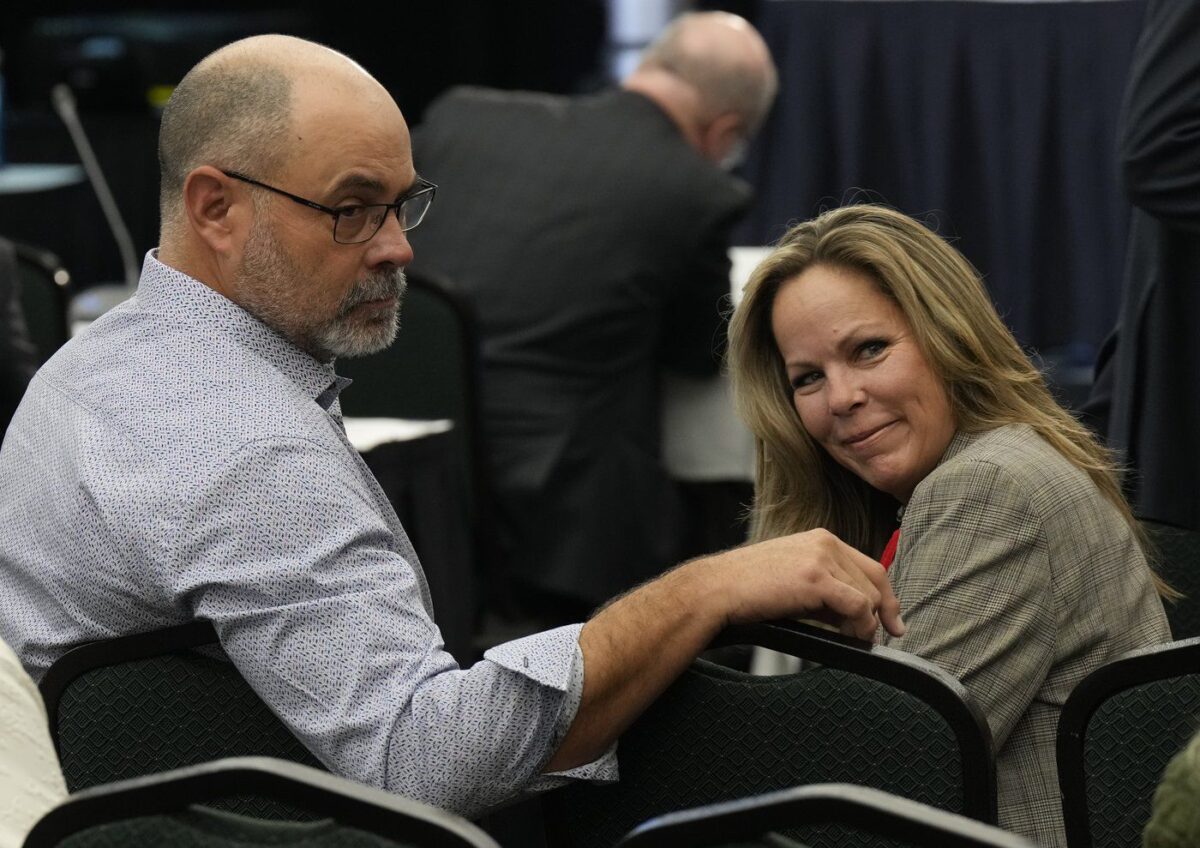
Justice Heather Perkins-McVey did not find Lich and Barber guilty on charges of intimidation, counselling to commit intimidation, or obstructing police. Both Lich and Barber were given 18-month conditional sentences on Oct. 7, compared to the seven-year sentence the Crown sought for Lich and the eight-year sentence it requested for Barber.
Lich and Barber both filed appeals in November 2025 to challenge their conviction and sentencing, while the Crown has also filed appeals against the sentencing and acquittals.
On Dec. 19, the justice also dismissed the Crown’s application to seize Barber’s long-haul truck “Big Red” that he used in the 2022 protest.
Carpay said he did not believe this latest court decision will have a “direct and immediate effect” on Lich’s and Barber’s prosecutions and appeals, as they were charged under “regular, ordinary, normal Criminal code provisions” and their arrests and convictions were not based on the Emergencies Act. However, he said there could be “potential impact.”
Lawrence Greenspon, a defence lawyer for Lich, told The Epoch Times that the appeal is “strengthened as a result of this ruling,” adding that it emphasizes the importance of freedom of peaceful assembly and freedom of speech.
Diane Magas, Barber’s lawyer, told The Epoch Times that she plans to cite the Federal Court of Appeal’s decision on Section 2(b) of the Charter, which protects freedom of expression, in her appeal of his mischief conviction.
Magas said she intends to cite the part of the decision which said that while the noise from truck horns and fireworks were “undoubtedly disruptive and very annoying to residents of downtown Ottawa,” they were “non-violent expressive activity that manifestly attempted to convey protesters’ dissatisfaction with the federal government’s COVID policies.”
The Epoch Times contacted Ontario’s Provincial Public Prosecutor’s Office, which is prosecuting the Lich and Barber cases, but did not hear back by publication time.
Other Ongoing Trials
Carpay said the recent court ruling would help Barber and Lich in their civil suits related to the freezing of bank accounts, given that the Federal Court of Appeal said this was a violation of Section 8 of the Charter, which relates to unreasonable search and seizure.
“I don’t think it’s binding on the civil lawsuits, but it would be helpful,” Carpay said.
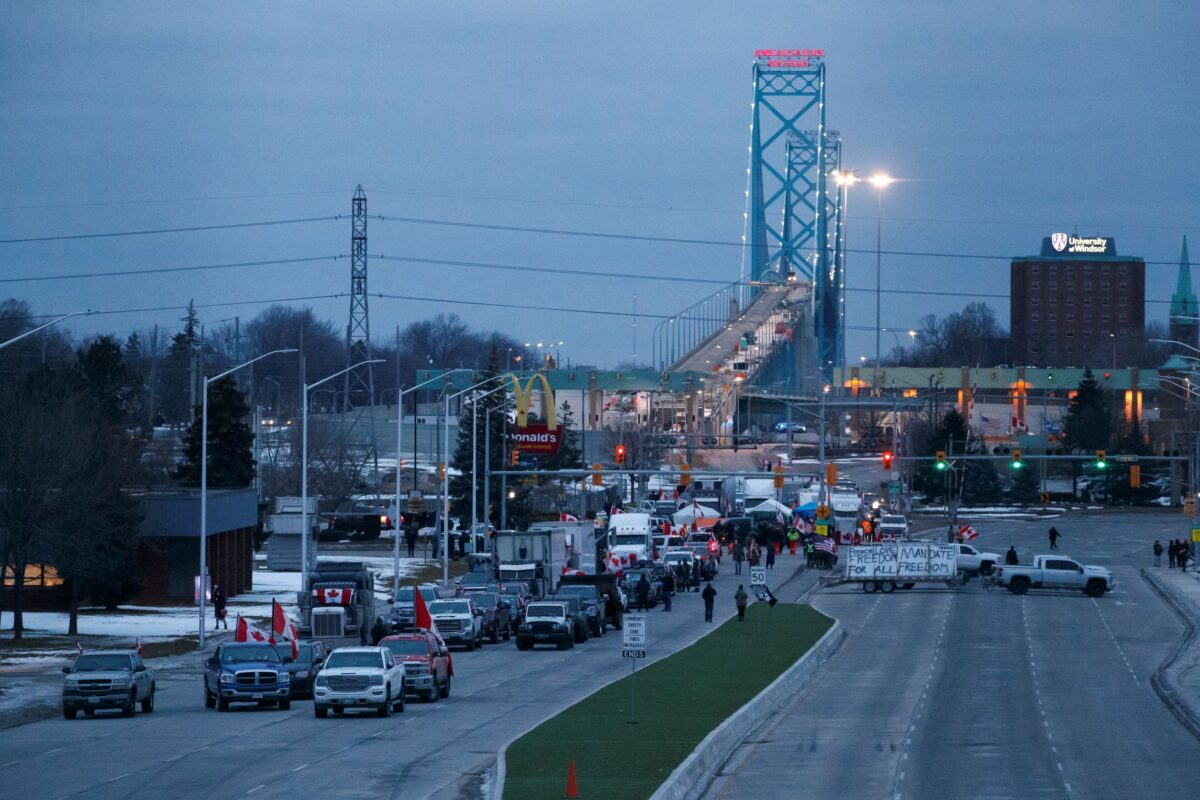
In February 2024, Barber filed a lawsuit in Saskatchewan’s Court of King’s Bench arguing that the government’s invocation of the Emergencies Act was an abuse of power, which caused him financial hardship, embarrassment, and damaged relationships by freezing his personal and business accounts without notice.
Lich also filed a lawsuit in Alberta against the federal government for freezing her bank account, citing “significant” financial and emotional distress and violating her Charter rights.
Lawyer O’Connor told The Epoch Times that he is currently representing two clients who had their bank accounts “unlawfully and unconstitutionally frozen” by the federal government for participating in the Freedom Convoy. He said the recent ruling will strengthen their cases.
O’Connor also said he is representing a Canadian who was “seriously injured at the hands of police” when law enforcement attempted to disperse the Freedom Convoy in front of Parliament Hill toward the end of the protest.
“The Federal Court of Appeal found that the peaceful protesters had a constitutional right to be protesting government policies to which they objected,” he said, adding the court’s decision “strengthens the cases of those who are suing the government for their unlawful actions.”
Justice Mosley’s 2024 ruling was borne out of a court action by five plaintiffs who participated in the protest, including two who had their bank accounts frozen. Police veteran and plaintiff Vincent Gircys, whose bank account was frozen for more than a week under the Emergencies Act, told The Epoch Times that Mosley’s decision led to at least three different legal teams taking action against the federal government.
Gircys said the legal bills related to this became a “significant challenge” by early 2025, and since fundraising efforts were not sufficient, several members in the civil suit dropped out. “Our civil suit collapsed from lack of support. I suspect the other civil suits are continuing under a different arrangement,” he said, adding that only those with “enough financial and legal support” can afford to pursue the issue in the courts.
 Friends Read Free
Copy
Facebook
Tweet
Friends Read Free
Copy
Facebook
Tweet