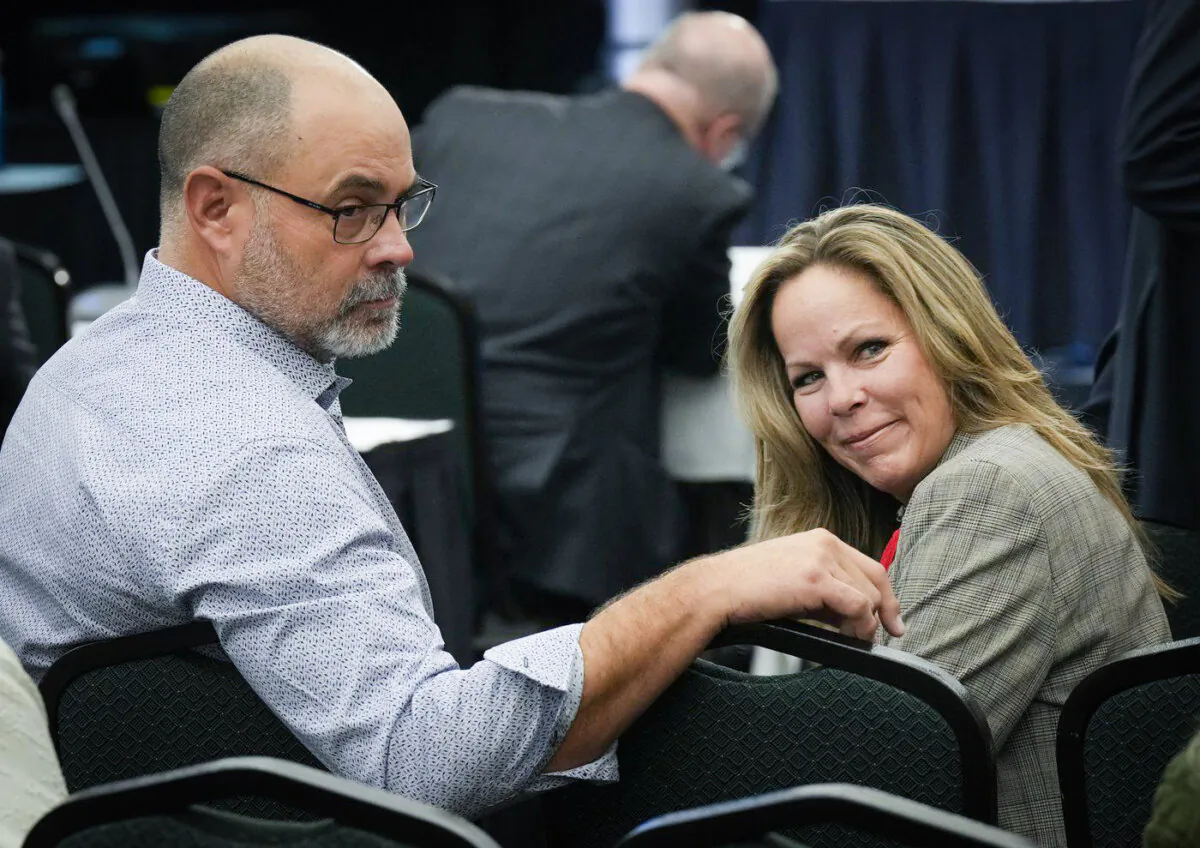

OTTAWA—Freedom Convoy organizers Tamara Lich and Chris Barber have been given 18-month conditional sentences. Lich was given credit for time already spent in pre-trial custody.
Ontario Court Justice Heather Perkins-McVey ruled on Oct. 7 that Lich will be put under house arrest for the first 12 months, with exceptions for court appearances, medical emergencies, employment, religious services, and a “period of up to five hours per week to attend to the necessities of life.”
For the remaining three and a half months, she will be under a curfew between 10 p.m. and 5 a.m. She will also have to perform 100 hours of community service.
Lich is being given credit for the 19 days she initially spent in jail, and for another 30 days she spent in custody.
Barber’s 18-month sentence will see him serve 12 months under house arrest and six months of curfew. For the duration of the house arrest, he must remain on his property except for going to work, to medical appointments, or to help his parents clear snow at their home. For the last six months of his sentence, his curfew will be between 10 p.m. and 5 a.m. He will also be required to serve 100 hours of community service.
The Crown had sought a seven-year prison sentence for Lich and an eight-year sentence for Barber. Prosecutors also sought to seize and auction off Barber’s truck, “Big Red,” which he used during the protest in Ottawa. Perkins-McVey has said her decision on seizure of the truck will come sometime after late November when both sides are set to provide submissions on the matter.
Perkins-McVey in April found Barber and Lich guilty of mischief for their role in the Freedom Convoy protests. Barber was also found guilty of counselling others to disobey a court order.
Ruling on Lich
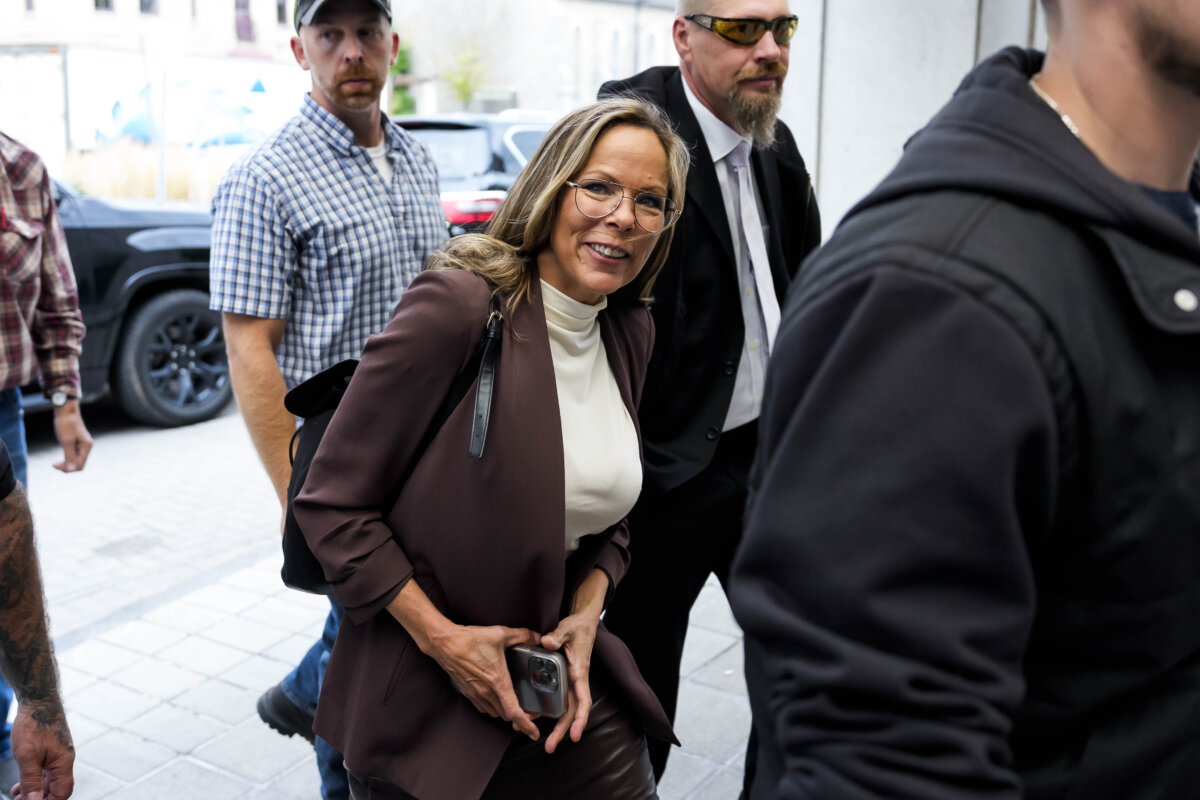
While the Crown wanted seven years in Jail for Lich, Justice Perkins-McVey said that sentence would not have been “fair, appropriate or consistent with the principles of sentencing.”
The judge said Lich’s lawyers had argued her “moral blameworthiness” was “significantly attenuated” because of actions she took during the protest to encourage protestors to remain peaceful. Perkins-McVey said there was no evidence that Lich or Barber had advocated for violence, property damage, or intimidation.
The judge said there was a risk that an overly severe sentence of imprisonment for Lich and Barber could “have the effect of creating a chill or a fear of participation in political expression” such as demonstrations or protests.
In an interview following the sentencing, defence lawyer Lawrence Greenspon said he was glad the sentence did not include any prison time. But he said the overall verdict wasn’t just.
“The main objective was to make sure she didn’t spend one more day in jail, and that was achieved,” he said, adding that they are still considering an appeal for the mischief verdict.
Greenspon said the court’s ruling did not strike the right balance between freedom of expression and the right to enjoy property, the latter a concern raised by some Ottawa residents.
“In Canada, constitutionally protected freedom of speech, which encourages peaceful assembly, must prevail over the rights of property owners’ enjoyment of property,” Greenspon said.
He also contrasted the case to how some other protests such as pro-Palestine demonstrations are handled.
“The pro-Palestinian protests—there’s definitely a different way that those are being treated as opposed to the way that this peaceful assembly, and freedom of expression, was treated in this courtroom,” he said.
Some Ottawa residents testifying at the trial had said they were overwhelmed by the smell of diesel fumes from the vehicles during the protest, with one resident saying he had to leave the city for one week due to the noise and odour.
Crown prosecutors had argued that the convoy organizers’ conduct was unlawful, and disputed the defence’s assertion that the protest was peaceful.
“[The protest was a] prolonged civil disobedience with a clear intent of pressuring the government through disruption,” Crown prosecutor Siobhan Westcher told the court in July.
The Democracy Fund (TDF), which has supported Lich’s legal case, said the case has significant implications for political protests.
“Her case has garnered widespread attention from civil liberties advocates, highlighting questions about how Canada’s criminal justice system handles political dissent,” TDF said in a statement.
Ruling on Barber
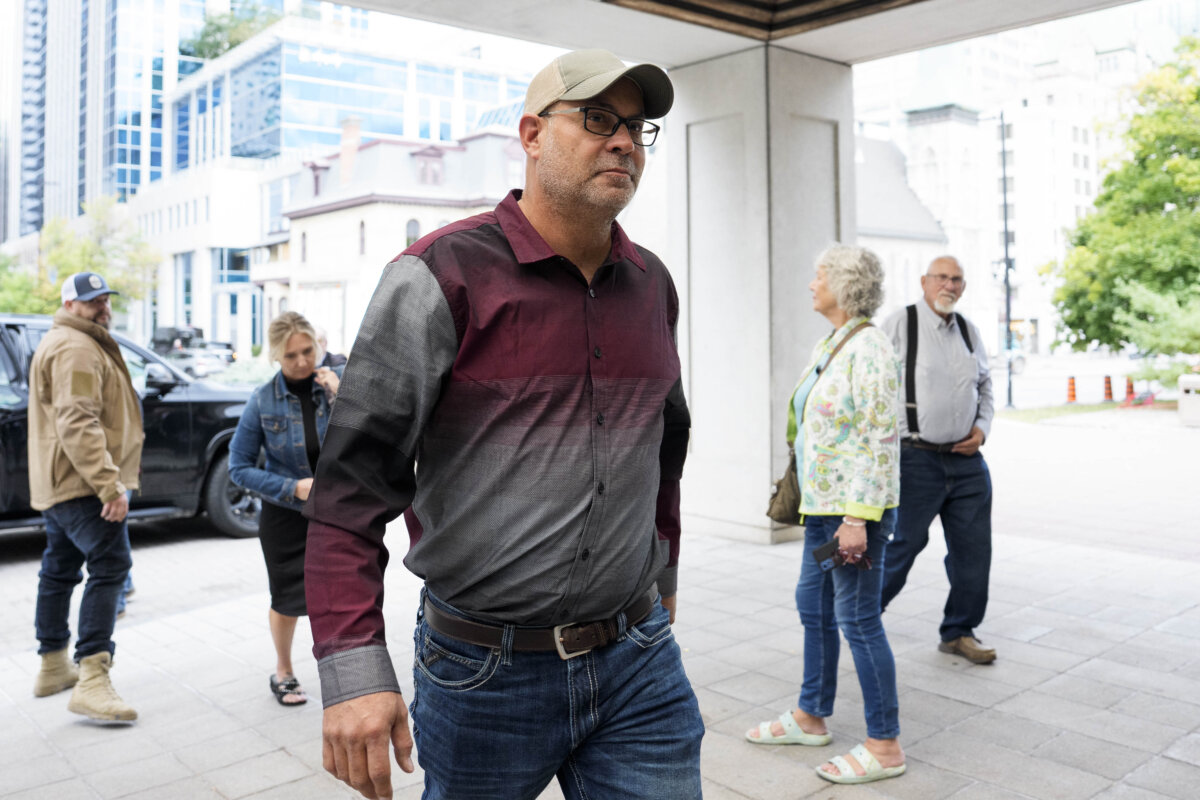
Justice Perkins-McVey said that with the Crown requesting eight years in jail for Barber and the defence asking for a conditional discharge, “the parties could not be farther apart in their submissions or in their perspectives regarding this case.”
Perkins-McVey said the defence’s request of a discharge would be “contrary to the public interest” and would undermine confidence in the administration of justice, but that the Crown’s request of eight years in prison would have been an unfit sentence.
“Persons charged with serious violent crimes such as robbery, aggravated assault, or other cases involving violence, rarely received sentences in that penitentiary range,” the judge said.
The judge noted that Barber’s lawyers emphasized that his “moral blameworthiness” was reduced because he cooperated with police, did not advocate for violence, and sought legal advice throughout the protest. She also said Barber was seen as a “hero” by many people, had his bank account frozen under the Emergencies Act, and had paid over $40,000 in travel expenses.
Perkins-McVey said an incident where Barber encouraged protesters to disobey a court order against honking was an aggravating factor, but she added that Barber had misunderstood the nature of the court injunction and relied on erroneous legal advice, and thus his moral blameworthiness was further reduced.
Barber’s lawyer Diane Magas told reporters outside the courthouse that she was not surprised by the judge’s verdict. Magas also said Justice Perkins-McVey had relayed a message that Barber and Lich had the “best intentions” when they first came to Ottawa, but that the protest turned unlawful because of the blocking of streets.
“I think the judge wanted to make sure, in our decision today, and even in her decision on conviction, that protest is allowed. That is not the issue, it’s the matter of the protest that’s the issue,” she said.
During the court proceedings, the Crown had said the protest organizers had gone beyond the limits of a peaceful protest.
“What they are not free to do is counsel others to break the law, paralyze the city, or flout police and court orders under the banner of a peaceful protest,” Westcher said in July.
The Justice Centre for Constitutional Freedoms (JCCF), which has provided support for Barber’s legal case, said the two organizers shouldn’t have received any sentence.
“Not only was their cause noble, calling upon Ottawa to recognize the fundamental rights and freedoms of all Canadians during this country’s darkest chapter, but Chris and Tamara pursued their cause in a peaceful, cooperative, and respectful manner,” JCCF president John Carpay said in a statement.
Freedom Convoy
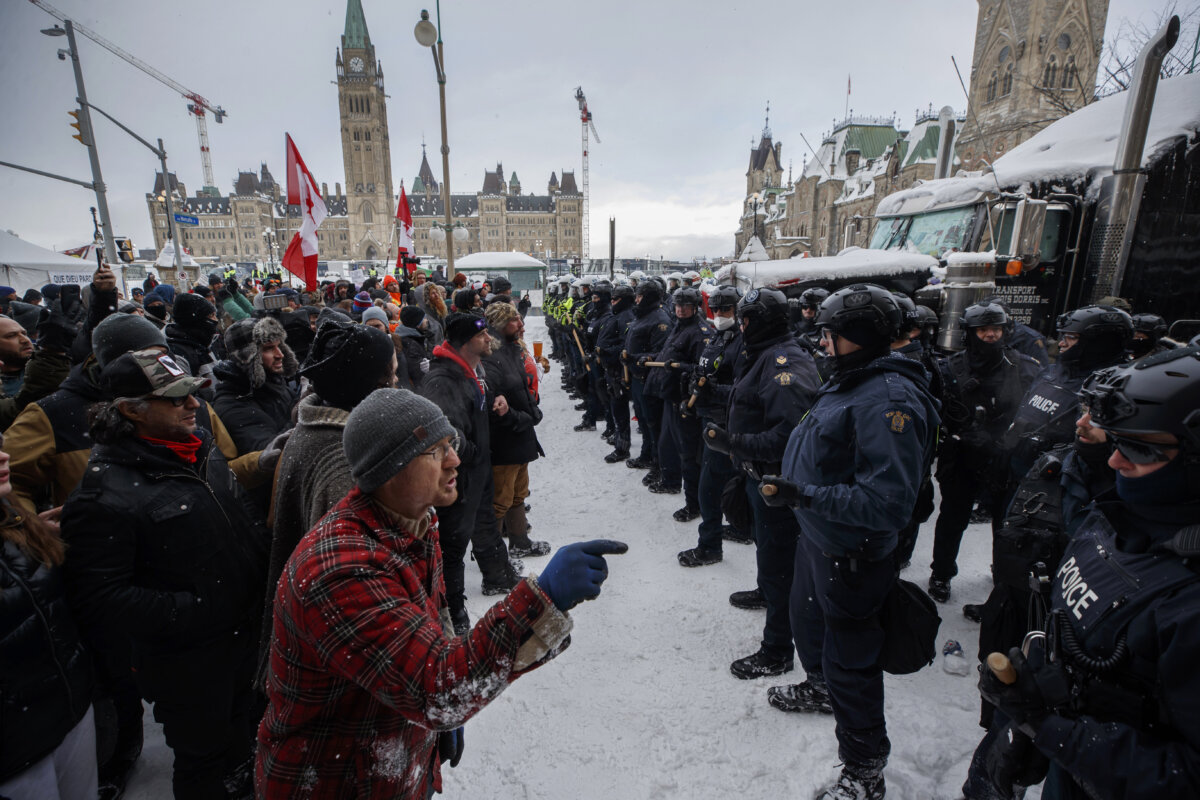
The Freedom Convoy was a protest movement in early 2022 against COVID-19 vaccine mandates and other pandemic restrictions. During the protest, hundreds of trucks and vehicles remained encamped in downtown Ottawa, demanding that the government remove its mandates. The federal government responded by invoking the Emergencies Act, and Lich and Barber were arrested on Feb. 17. The use of the act gave authorities additional powers to freeze the protesters’ bank accounts and to mandate the help of towing companies to remove the encamped vehicles.
A public inquiry held to evaluate whether the government’s use of the Emergencies Act was justified ruled in February 2023 that cabinet had met the “very high” threshold for invoking the act, though the inquiry’s commissioner said he came to the conclusion “reluctantly,” as the factual basis for his decision was not “overwhelming” and there were other questions requiring “careful review.”
A ruling 11 months later indeed reached a different conclusion. A Federal Court judge presiding over a lawsuit brought on by protesters ruled in January 2024 that the government’s use of the act was “unreasonable” and that related regulations infringed on Canadians’ charter rights. The government has appealed this ruling.
Following her Feb. 17, 2022, arrest, Lich was released on bail a few weeks later on March 7. She was arrested again in June 2022 for allegedly violating bail conditions after a brief encounter with a fellow convoy organizer during a Toronto event. She spent another month in jail before being released in July that year.
 Friends Read Free
Copy
Facebook
Tweet
Friends Read Free
Copy
Facebook
Tweet