
The Liberals have voted to move certain House of Commons committee deliberations private, shortly after gaining a majority of seats on most committees.
The Liberals passed a motion in the House on April 27, to amend the standing orders and take control of committees, shortly after achieving a majority government through recent floor crossing and byelection wins.
Shortly after that vote, they passed a motion during an ethics committee meeting to move discussions “in camera,” which shields discussions from public view. MPs were debating a Conservative request for government documents on the prime minister’s conflict-of-interest screen.
A similar scenario unfolded the next day as Conservatives planned to use a health committee meeting to ask the auditor general to investigate the failed PrescribeIT program, which cost hundreds of millions. After the Tories introduced the motion, the Liberals voted to move the meeting in camera.
The motion to restructure committees and give the Liberal Party the upper hand passed 178–162 in the House of Commons late on April 27, with the Liberals and NDP voting in favour and the Conservatives, Bloc Québécois, and Greens opposed. The Liberals did not require opposition party support to pass the motion, having reached a 174-seat majority after five floor crossings followed by the three byelection wins of April 13.
For the duration of the current Parliament, most committees will now consist of 12 members instead of 10, including seven Liberals, four Conservatives, and one Bloc member.
The three key accountability committees of ethics, government operations, and public accounts now have 10 members instead of 9, with the Liberals and the opposition each holding five seats. Conservative MPs chair those committees and can only vote to break a tie, so the Liberals have a five-to-four majority.
Prior to the change, the governing party and the opposition parties had an equal share, including five Liberal seats, four Conservative seats, and one Bloc seat. The NDP lost official party status in the last election so it has no committee seats.
The Liberals rejected a Tory amendment on April 27 to maintain the current structure for the ethics, government operations, and public accounts committees of nine members. The Liberals voted against the amendment, while the Conservatives, Bloc, NDP, and Greens voted in favour.
Committees
Earlier that day, the Liberals passed a motion to limit debate on the committee changes, prompting opposition MPs to accuse the Liberals of a power grab, while the Liberals said they want to avoid the opposition extending deliberations needlessly.
Tory House Leader Andrew Scheer criticized the move in an April 27 social media post, saying the first thing the new Liberal MPs would do is “to vote in favour of killing debate.”
Other Conservative MPs who chair committees also criticized the move.
“Just 5 minutes after a vote late last night that saw Liberals seize control of Committees (incl. Ethics), they moved a motion on a document production order about Carney’s conflicts to darkness,” Conservative MP and chair of the ethics committee John Brassard said in an April 27 post on X, referring to the ethics committee meeting that day. “North Korea, Russia, China level stuff here!” he added.
Conservative MP Dan Mazier also spoke out after the Liberals moved a health committee meeting in camera on April 28 following Mazier tabling a motion asking the auditor general to investigate the PrescribeIT program.
“In 2016, the Liberals announced $40 million in funding to develop a national e-prescribing service – PrescribeIT – that promised to replace paper prescriptions and fax machines. Ten years later, the cost to taxpayers had exploded to over $300 million, while less than five percent of prescriptions are sent through this program,” Mazier said in an April 27 statement.
The program was terminated earlier this year.
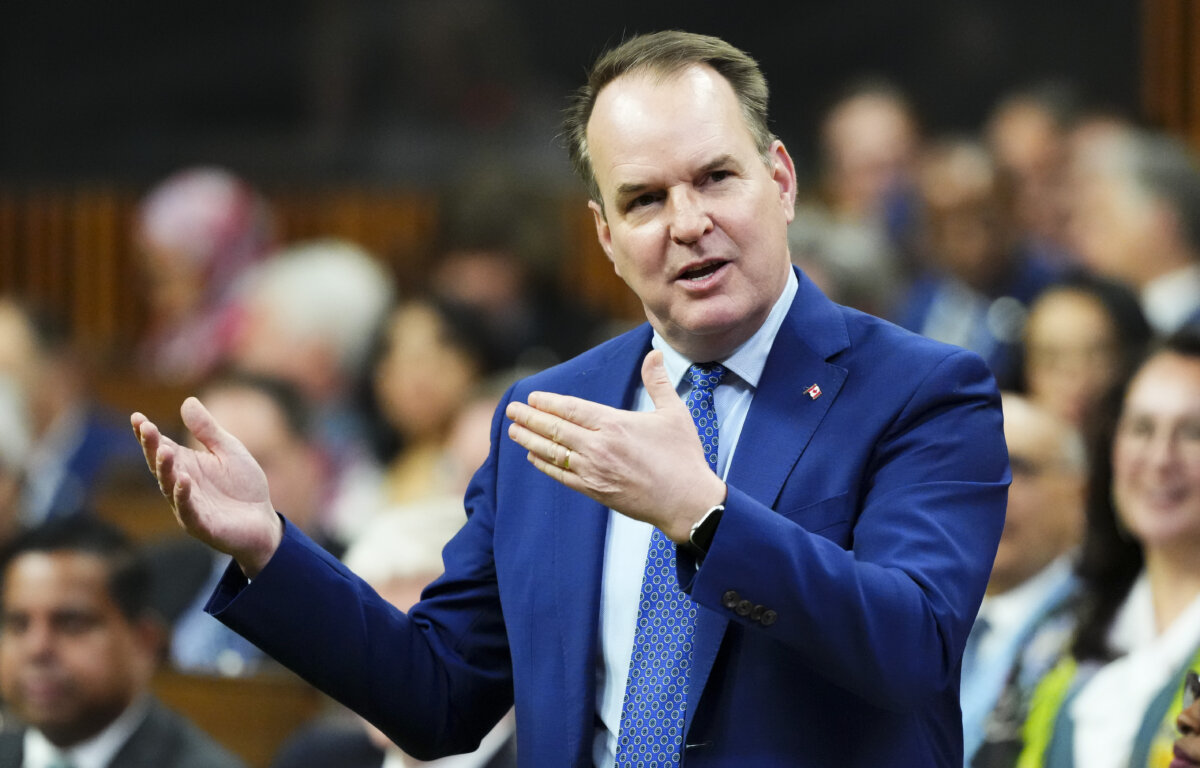
In defending the government’s plan, government House leader Steven MacKinnon said the Liberals did not want to “play silly partisan games that waste the time and the money of taxpayers.”
“There is a long-standing principle: A party that has the majority of seats in the House also has a majority in committees,” he told reporters on April 22.
The Liberals have accused the opposition of bogging down committee work, saying the change in committee structure will help the government carry out its agenda. Meanwhile, the Conservatives have accused the Liberals of filibustering in committee.
Standing orders adopted in the House of Commons last year stipulated that the structure of committees would remain in place for the duration of the Parliament, but MacKinnon said the circumstances have changed with the Liberals gaining a majority.
Noé Chartier contributed to this report.
 Friends Read Free
Copy
Facebook
Tweet
Friends Read Free
Copy
Facebook
Tweet