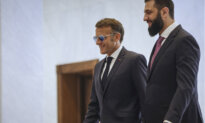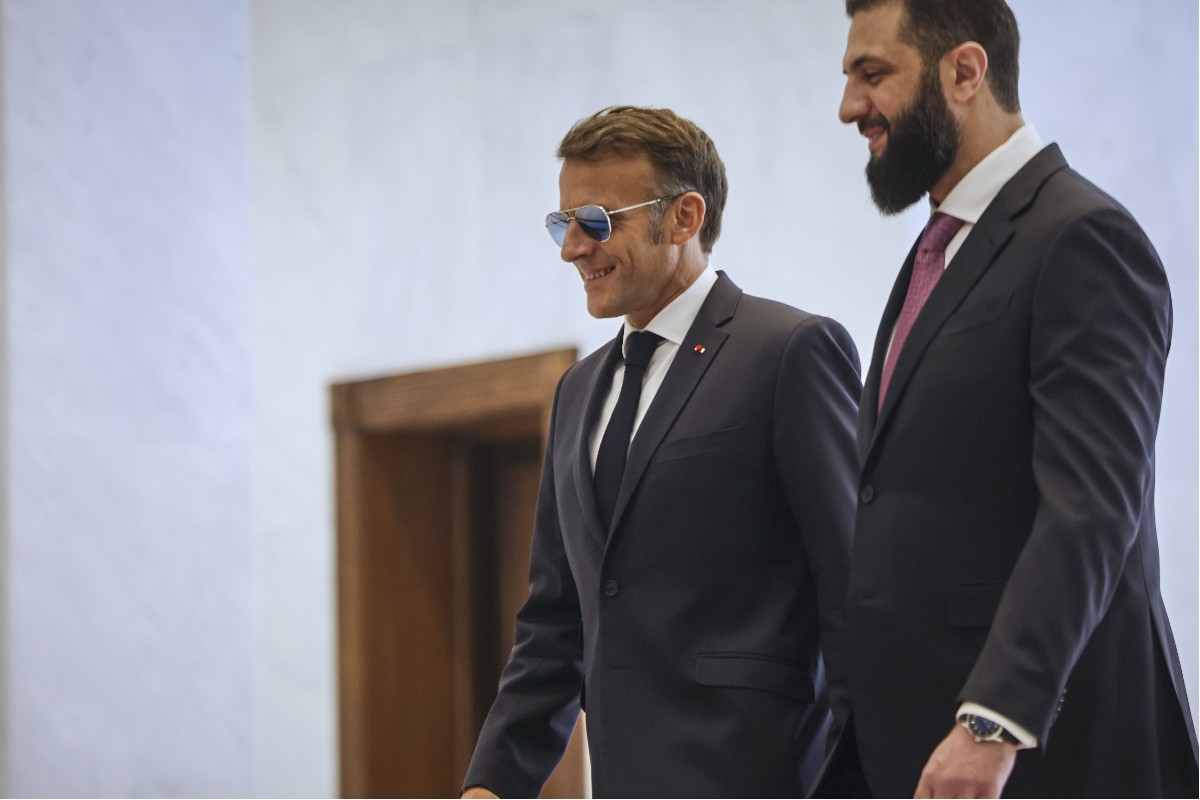
French President Emmanuel Macron has become the first European Union leader to visit Syria since militants led by current Syrian President Ahmed al-Sharaa ousted Bashar al-Assad and toppled the Ba’athist regime.
Macron landed in Syria on July 6 and was greeted by Foreign Minister Asaad Al-Shaibani, and then met with al-Sharaa the following day.
A French presidential official told reporters ahead of the trip that Syria’s reconstruction would be a key theme of the visit, adding that business leaders, including the CEO of TotalEnergies and container shipping company CMA CGM, would accompany Macron.
“I have come to express France’s commitment to the Syrian people,” Macron said in a post on X on Monday. “For a sovereign Syria, united in its diversity and at peace with its neighbors. Together, let us open a new chapter of stability and peace.”
The Syrian leader met with Macron in France last year on his first visit to a European country since coming to power at the end of 2024. The country had been subject to Western sanctions, and the French president was leading the call for them to be lifted—most of which were removed in 2025.
Al-Sharaa has also formed ties with U.S. President Donald Trump, and last year, his government joined the U.S.-led coalition to fight ISIS.
The visit underlines Syria’s geopolitical transformation under al-Sharaa, himself a former jihadi who headed Islamist group Hayat Tahrir al-Sham, which began as Al-Nusra Front, an affiliate of al-Qaeda, the Islamist terrorist group founded by Osama bin Laden.
Explosion in Damascus
While Macron was in Damascus, two bombs exploded on Tuesday in the capital. However, French officials said Macron did not hear the explosions and continued with his scheduled meeting with al-Sharaa.
The Syrian Interior Ministry said security forces had identified two devices planted near the Tourism Ministry, one in a trash can and the other in a car parked on the side of the road.
They were planted outside a security cordon where the French president was staying, but the ministry said that the devices posed no threat to Macron.
At least 18 people were wounded by the blasts.
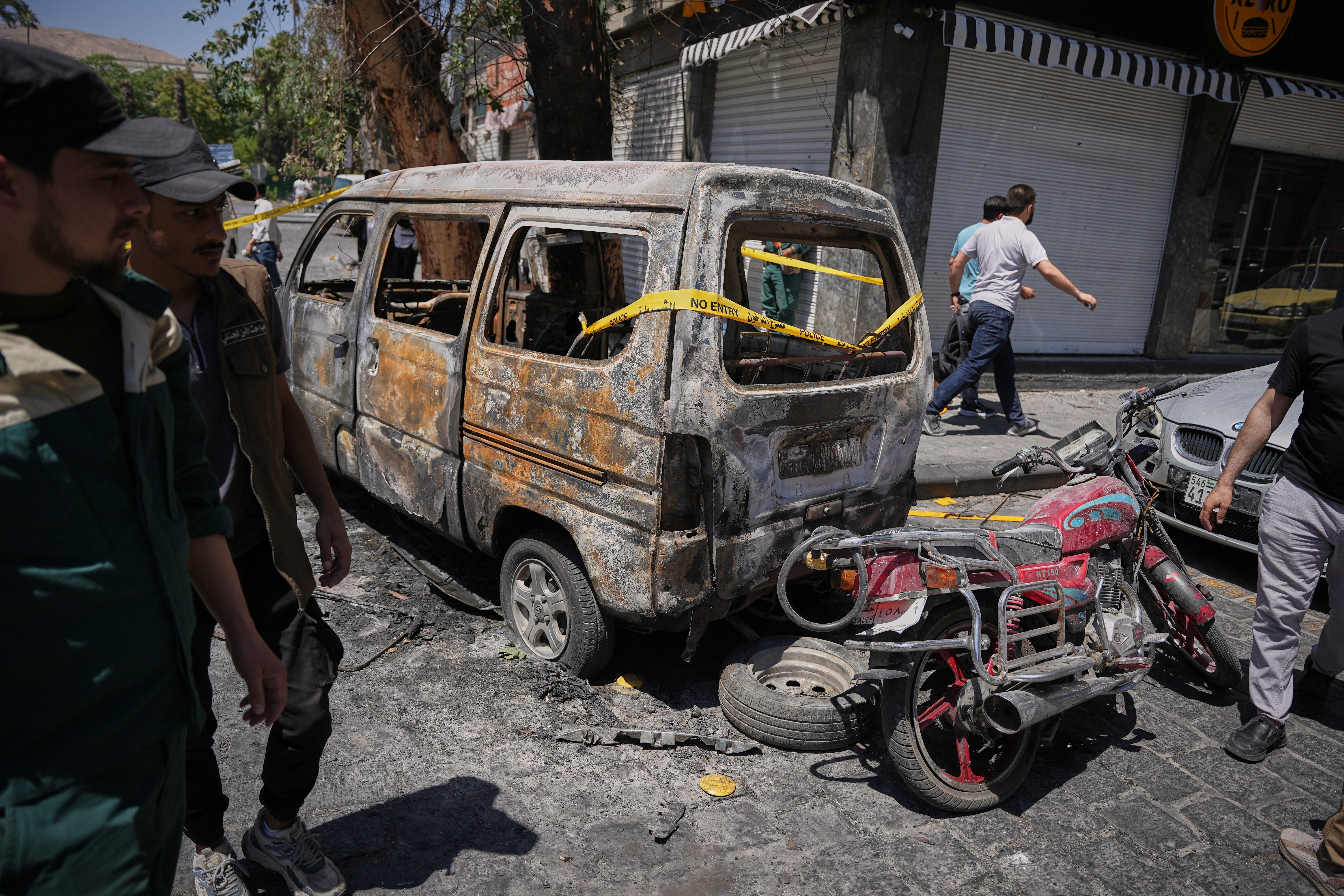 Syrian Security Forces described the bombs as crudely made and were preparing to defuse them when they detonated.
There was no immediate claim of responsibility for the attack, and security forces have launched an operation to identify those behind it, the Interior Ministry said.
Hours after the explosions, Macron posted on X that “nothing can smother the aspiration of Syrian women and men to live in a fully sovereign, safe, pluralistic, and united Syria.”
“This morning I met Syria in all its diversity. I saw dignity, courage, and determination. My visit continues,” he wrote.
Business Partnerships
Macron’s office said that CMA CGM signed a partnership deal with Syria, which will include handling air cargo freight at the international airport in Damascus.
CMA CGM in May signed a contract with Damascus to operate two dry ports in the country.
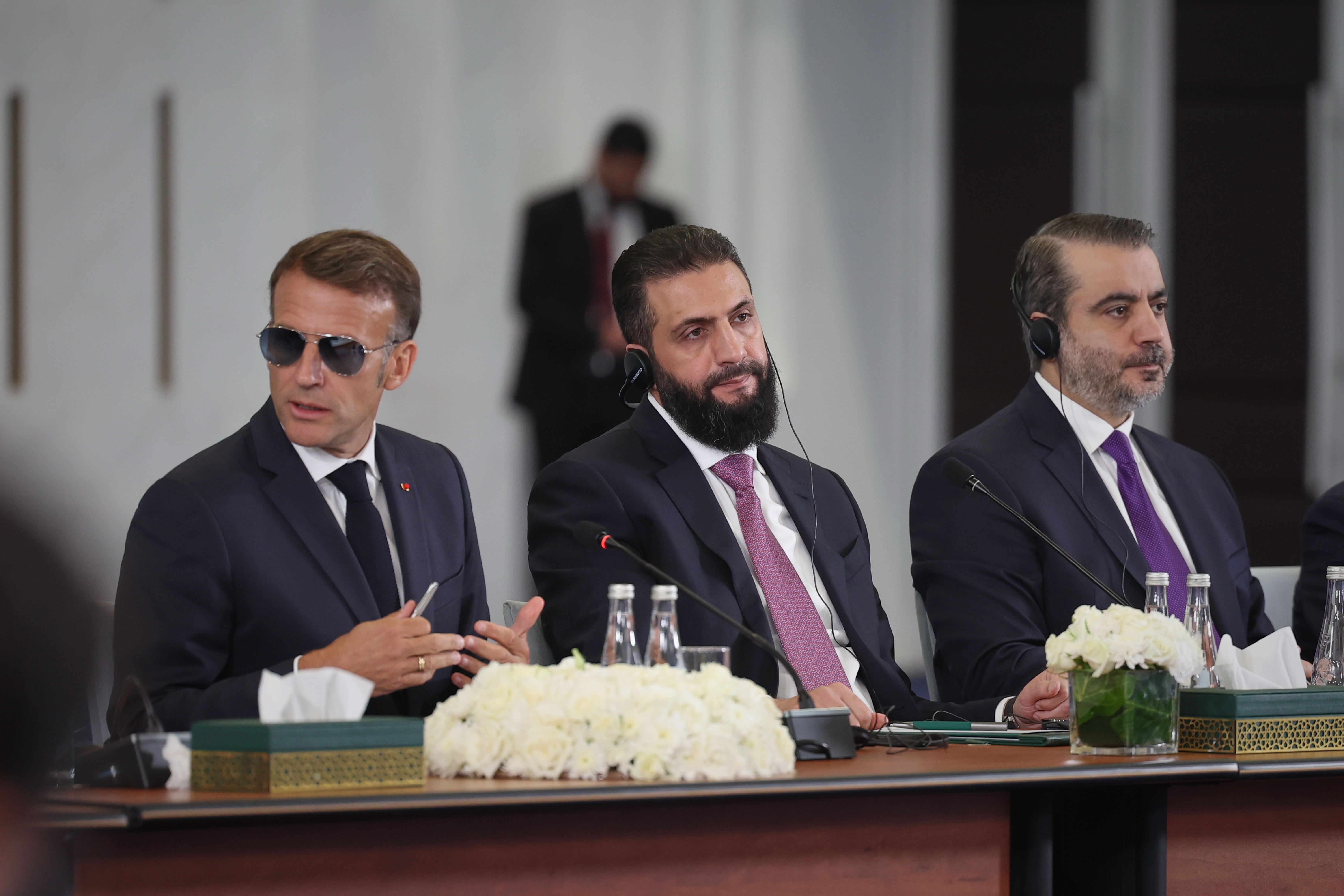 TotalEnergies’ chief executive, Patrick Pouyanne, told reporters that he will meet with the Syrian Petroleum Company on July 7 to discuss signing a contract for offshore exploration in the Mediterranean.
“Syria’s offshore area has never really been explored historically, so we have partnered [with] other companies to look into it. We will discuss it today with our Syrian counterparts to see whether we can move toward a contract,” Pouyanne said.
“Obviously we’d rather find oil than gas, but in the eastern Mediterranean most discoveries so far — in Cyprus and Israel, for example — have been gas.”
Syria may become strategically significant for transporting oil. TotalEnergies recently spoke about the need to build pipelines through the country as an alternative route to the Strait of Hormuz in the wake of U.S. military action against Iran.
Pouyanne on July 7 also reiterated that Syria has become an important route for transporting oil from Iraq.
Reuters contributed to this report.
 Friends Read Free
Copy
Facebook
Tweet
Friends Read Free
Copy
Facebook
Tweet