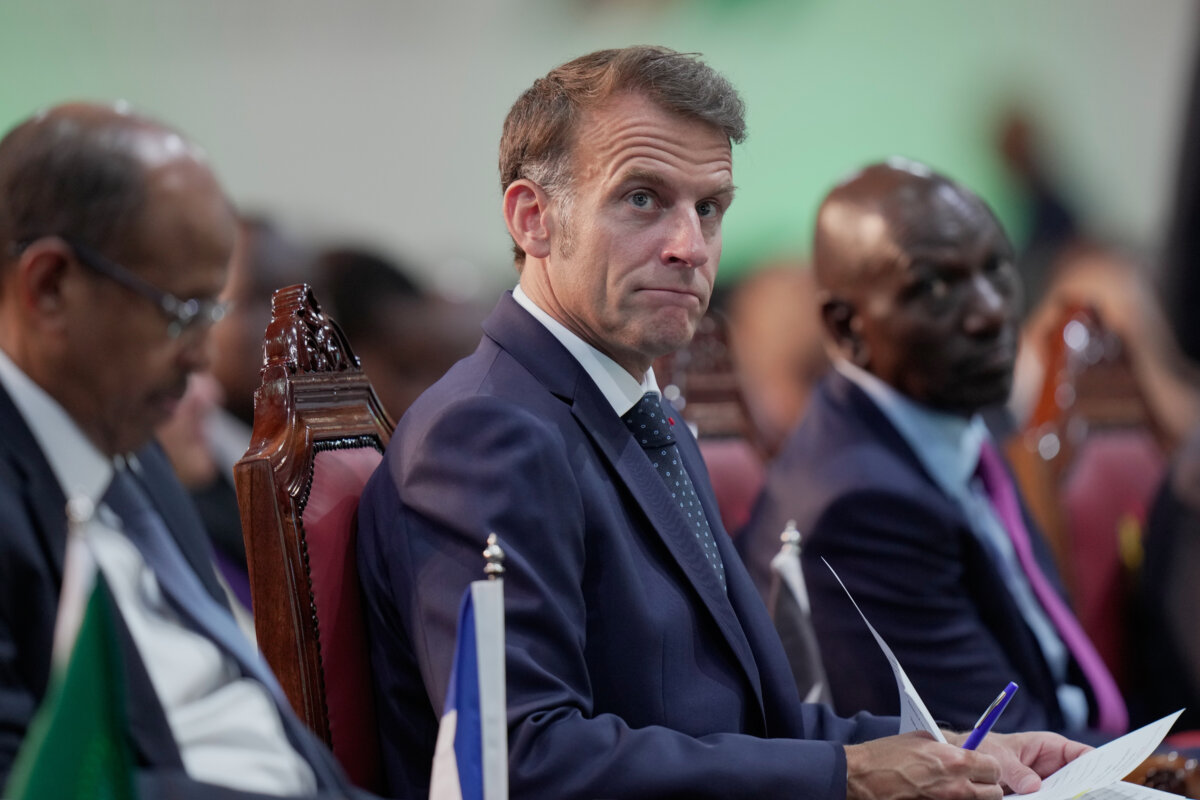
French President Emmanuel Macron announced 23 billion euros ($27 billion) in investments to fund energy, artificial intelligence, agriculture, and other sectors in Africa, during a two-day partnership summit in Kenya. The summit ended on May 12 with a joint declaration by 30 heads of state pledging cooperation.
Macron said the Africa Forward Summit marked a financial shift in relations between France and African nations, including those that were once its colonies.
Kenya, which was formerly under British colonial rule, co-hosted the summit with France.
Among those who attended were Senegal, Gabon, the Ivory Coast, and Rwanda—considered parts of Francophone Africa—and Nigeria, Ghana, Zambia, and Botswana, all Anglophone countries.
The Francophone countries of Mali, Niger, and Burkina Faso did not attend the summit. All three have joined the Alliance of Sahel States (AES) and deepened ties with Russia.
Macron, on May 10, downplayed the absence of some leaders at the summit, noting that several West African heads of state and civil society representatives would be there.
Macron said 14 billion euros ($16.4 billion) worth of investments in Africa would come from French companies, and 9 billion euros ($10.5 billion) from “African companies and business leaders on the continent.”
‘Peace, Prosperity, and Sovereignty’
Macron said in his May 12 speech that Europe and Africa face the same challenge.
“We want peace, prosperity, and sovereignty,” he said. “Today the European agenda is one of strategic autonomy—so as not to depend on Chinese or American domination—allowing for a middle path that respects international law, believes in the multilateral order we have built, believes in open trade, rejects the hegemony of a few over others, and believes that science is the best way to address climate and health, and believes in the rule of law.”
The “days of offering assistance are behind us,” Macron said as he lauded the strong display of unity among African heads of state and government at the summit. “I’d like to focus on co-investment.”
‘Win-Win Engagements’
Kenyan President William Ruto, in his May 12 speech, said future partnerships in Africa needed to be “grounded not in hierarchy, but in sovereign equality, mutual respect, and shared responsibility.”
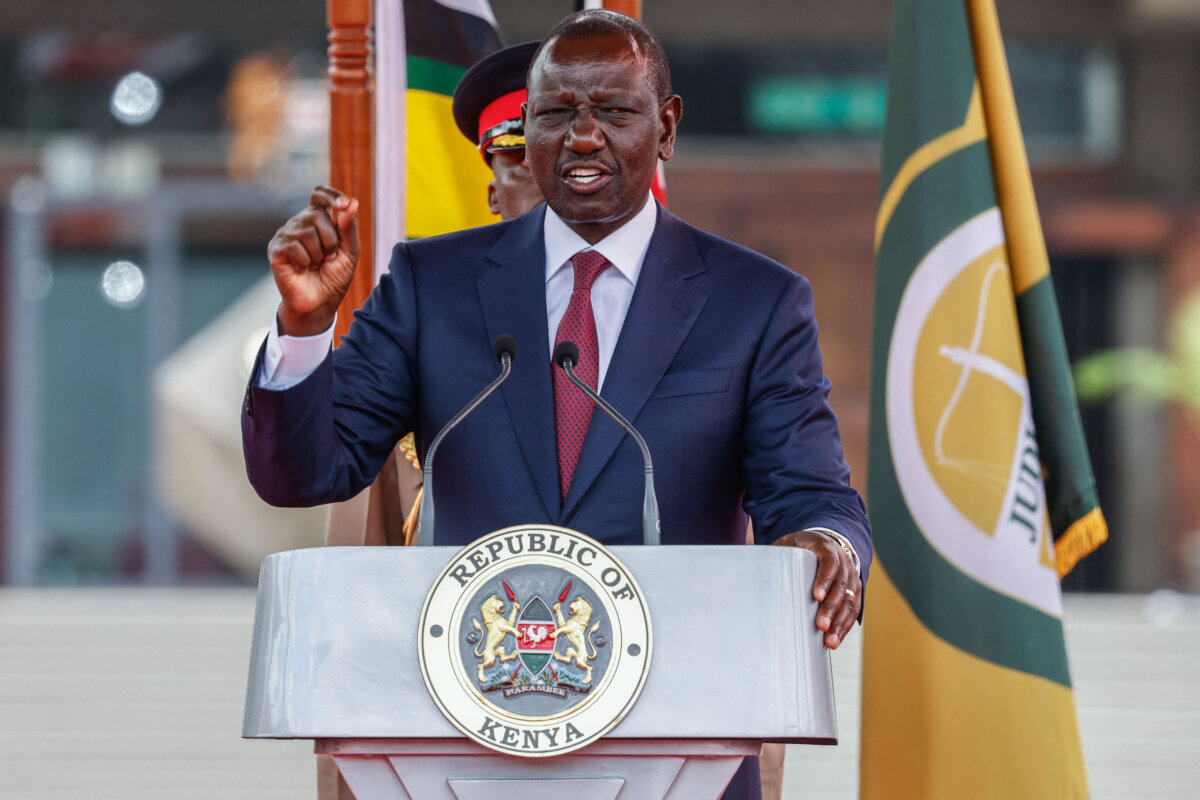
“It is in that spirit that we convene this summit, grounded in our shared conviction that enduring partnerships must not be built on dependency but on sovereign equality, not on aid or charity but on mutually beneficial investment, and not on extraction or exploitation but on win-win engagements,” he said.
The Kenyan president will attend the G7 summit next month in Evian-les-Bains at the invitation of France, where he plans to push for global action to improve the continent’s access to credit.
France, which has organized similar events in French-speaking nations since the 1970s, has touted rising trade with African countries, though it has also experienced disappointments.
Coups since 2020 in Mali, Burkina Faso, and Niger brought to power military officers who expelled French troops and invited in Russian mercenaries. France also handed over control of its last major military facility in Senegal in July 2025 after Senegalese President Bassirou Diomaye Faye said French bases were incompatible with the country’s sovereignty.
Last year, Ruto’s government terminated a $1.5 billion highway expansion deal with a consortium led by France’s Vinci SA and handed it to Chinese companies after Kenyan authorities said it saddled them with too much risk.
China has invested heavily in upgrading the road and rail infrastructure of various African countries over the past 20 years, mainly through its Belt and Road Initiative.
The United States has been seeking to challenge China’s dominance in parts of Africa and secure access to the continent’s critical mineral reserves.
Washington is investing heavily in the Lobito Corridor, a railroad project that connects an Atlantic coast port in Angola to the mineral-rich African interior, including Kolwezi in the south of the Democratic Republic of Congo and Ndola in Zambia’s copper belt.
The Associated Press and Reuters contributed to this report.
 Friends Read Free
Copy
Facebook
Tweet
Friends Read Free
Copy
Facebook
Tweet