
The Manitoba government is revising the planned site for its first supervised consumption facility after encountering strong opposition from local residents.
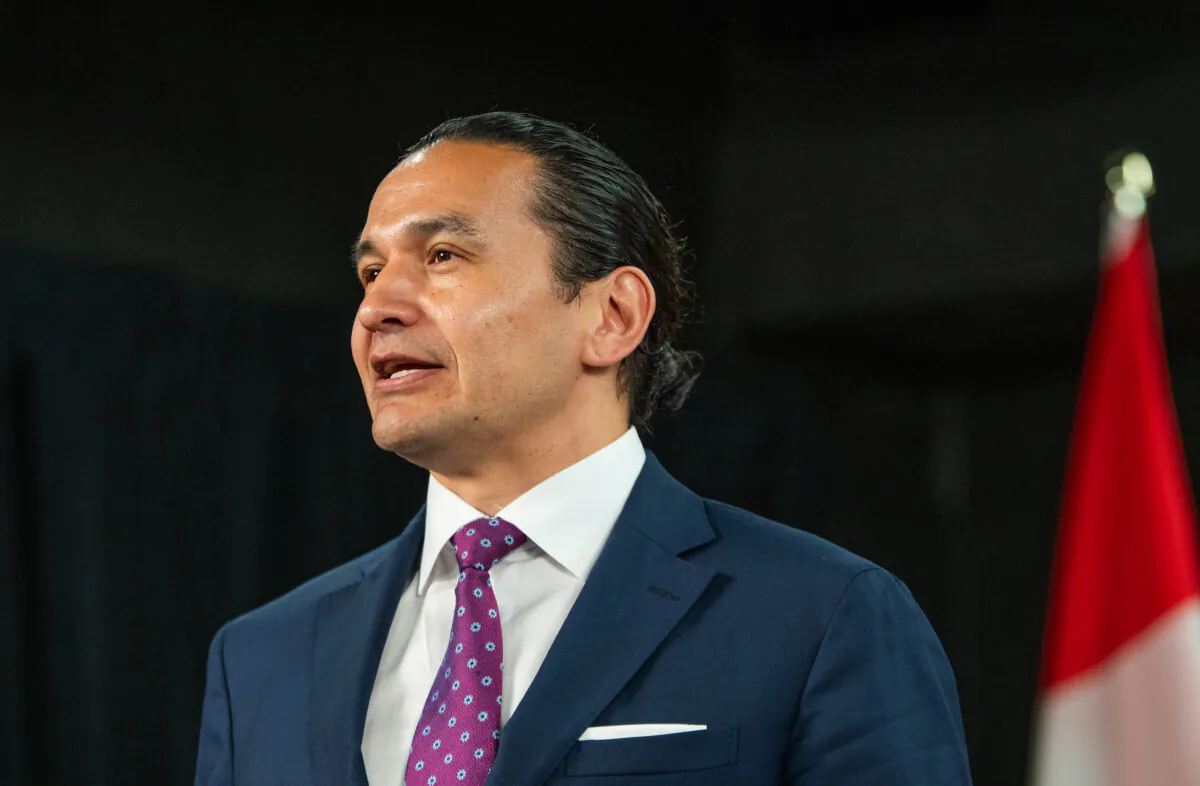
Premier Wab Kinew says the province is reversing course on its original plan after hearing negative feedback from area residents that the proposed site at 200 Disraeli Freeway in the heart of Winnipeg is too close to schools, a child-care centre, and some homes.
“We will be bringing a new location forward for people to consider,” Kinew told reporters after his Sept. 3 speech at the Assembly of First Nations’ annual general assembly in Winnipeg.
“We did a good faith consultation with the community. There’s clearly a desire to look at other locations. We’re doing that work now.”
The province, in collaboration with the Aboriginal Health and Wellness Centre, submitted a licensing application to Health Canada last November for a site at the Disraeli Freeway location.
Kinew said his NDP government will now explore alternative locations and establish a 250 metre radius around them to determine if schools or child-care centres fall within that boundary “and then take it from there.”
The province has said the goal of the supervised consumption facility is not to provide drugs but create an environment for monitored usage. Trained personnel will be on duty to address overdoses and guide individuals toward treatment services.
The province originally planned to have a facility operational this year, but now says the opening will likely be postponed until 2027 after further public consultation.
The 200 Disraeli Freeway site will continue to provide health and social services, according to Kinew, while a supervised consumption site in a different area would deliver overdose-related support.
“We have too many Manitobans dying from overdose … so this is one tool we can use to improve things in Manitoba,” he said.
The Opposition Progressive Conservatives said the 200 Disraeli Freeway site continued to be listed on a Health Canada website as an open application as of Sept. 3.
“Now the premier needs to answer, where is he opening the site?” Progressive Conservative Leader Obby Khan said in a media statement.
“His minister has promised a drug consumption site will be operating within two years. Manitobans deserve to know where the NDP are planning to open it.”
Kinew has not said any which alternative locations are being considered.
Consumption Site Debate
The Manitoba government’s decision to relocate its proposed supervised consumption site comes several months after neighbouring province Ontario shuttered several consumption facilities.
Doug Ford’s Progressive-Conservative government closed 10 of Ontario’s 23 supervised drug consumption facilities earlier this year, saying the locations were too close to schools and child-care centres.
The move came after months of public outcry about an increase in crime and violence in these areas, which intensified after the accidental shooting death of a Toronto mom near the Leslieville site in Toronto. She was killed by a stray bullet from a shootout near the site.
An increase in assaults, robberies, and other violent crimes in neighbourhoods near consumption sites were noted in a provincial report and were cited as another reason to shut down facilities within 200 metres of schools and child care centres.
The goal of supervised consumption sites is to reduce the risk of overdose deaths among users of illicit drugs rather than focusing on treating addiction, according to the Canadian Mental Health Association (CMHA). It’s a method known as harm reduction and uses what the CMHA calls “an evidence-based, client-centred approach” to prevent overdose deaths.
Some premiers have spoken out against this approach including Ford and Alberta’s Danielle Smith.
Ford has said such facilities have not helped the overdose crisis or reduced crime.
“Giving someone, an addict, a place to do their injections—we haven’t seen it get better,” he said at a 2024 press conference. “This was supposed to be the greatest thing since sliced bread. It’s the worst thing that could ever happen to a community to have one of these safe injection sites in their neighbourhood.”
Smith’s province is pioneering the “Alberta model,” a recovery-oriented system of care that offers addicts treatment for up to a year if necessary as well as drug replacement therapy, and opportunities to develop job skills and personal abilities such as cooking and participating in the community. The goal, she said, is to give addicts help and support for “a new start in life.”
There were 7,146 overdose deaths in Canada in 2024 with 5,514 hospitalizations and 24,587 emergency room visits, according to a government report. There were also 36,266 overdose-related emergency service calls during the one-year period, for an average of 99 per day.
A total of 52,544 apparent opioid overdose fatalities have been documented in Canada from January 2016 to December 2024, government stats show. Eighty percent of all such deaths in 2024 took place in British Columbia, Alberta, and Ontario.
The Canadian Press contributed to this report.
 Friends Read Free
Copy
Facebook
Tweet
Friends Read Free
Copy
Facebook
Tweet