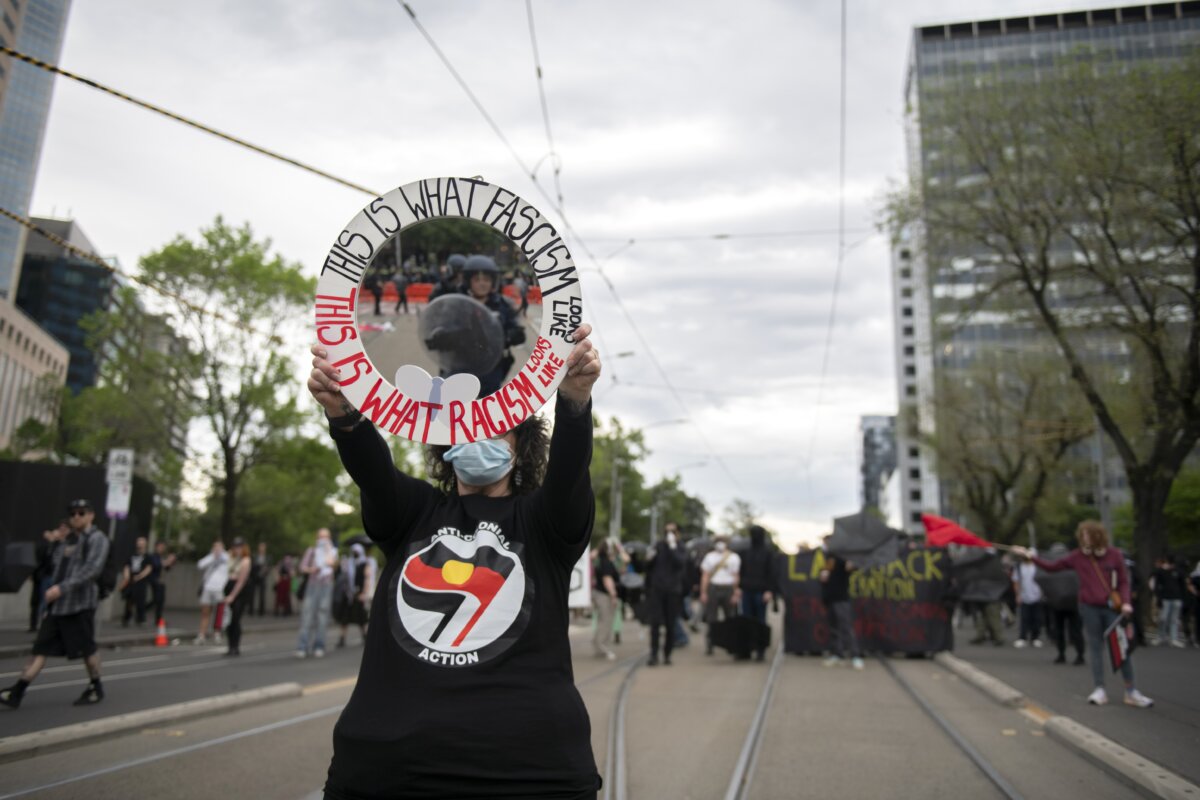

Masked protesters clashing with police in Melbourne over the weekend take their cues from Antifa, according to one former Marxist and now-academic, who say the city’s radical left has adopted the tactics of America’s most notorious protest movement.
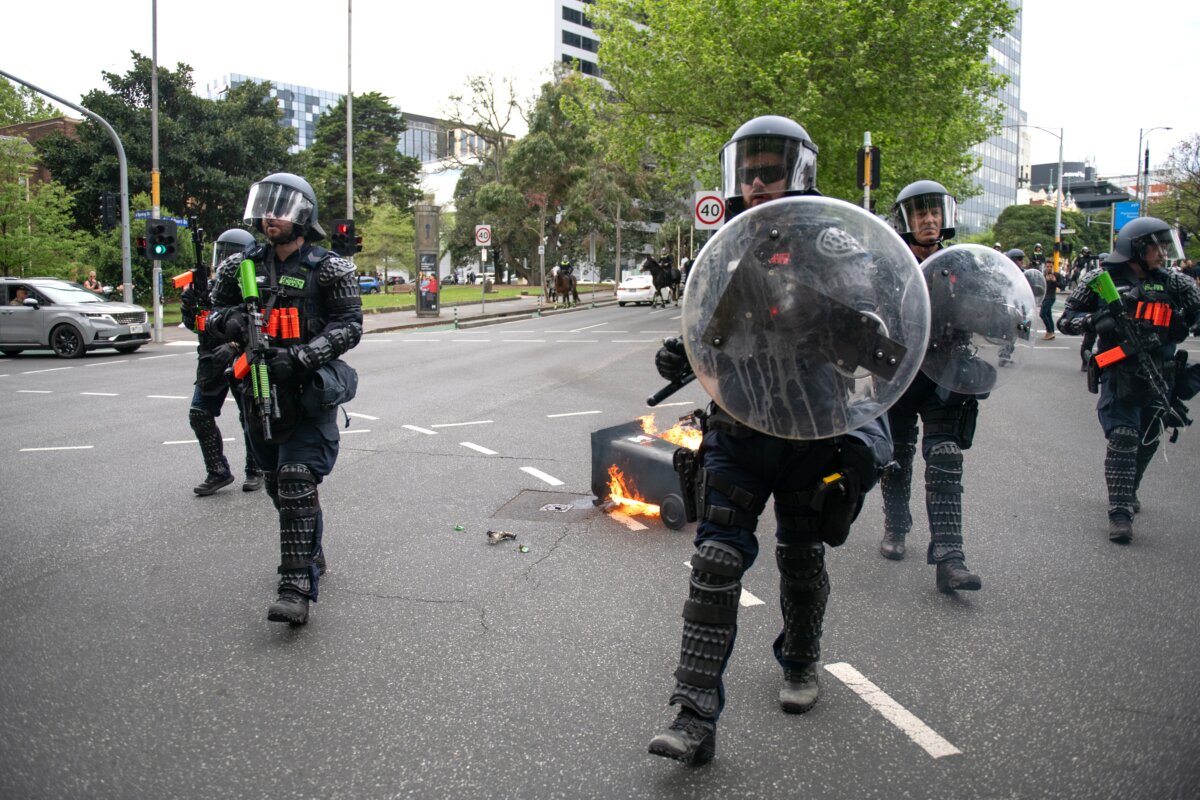
On Oct. 19, counter-protesters mobilised against the “March for Australia” rally against the government’s immigration policy, allegedly arming themselves and throwing heavy rocks, glass bottles, and rotten fruit at police, resulting in two officers being injured.
Many even brought umbrellas to block police pepper spray.
West Metro Commander Wayne Cheesman for the first time blamed left-wing protest groups for the violence, while praising the March for Australia group for being peaceful
“The people that came to pick a fight with police were the issue-motivated people on the left,” Cheesman said in a strongly worded press conference after, singling out the group called the “United Against Racism: Migrants and Refugees Are Welcome.”
He blamed about 40-50 organised “hardcore protestors” for trying to clash with the immigration protest, while also confronting police.
Victorian Premier Jacinta Allan condemned the left-wing violence, calling it “unacceptable” and “not tolerated.”
“We’ve had some significant size protests in cities, in Melbourne, in Sydney, around the country, that have been peaceful, that haven’t seen this level of violence. What we saw yesterday was a very different pattern of behaviour,” Allan said.
11 Other Far Left Groups Mobilised Against the March: Academic
Eric Louw, a retired professor from the University of Queensland and an expert on Marxism, said the tactics deployed by the protestors were reminiscent of Antifa in America.
Louw, a former organiser for the African National Congress, said Antifa published their methods online, which could be easily downloadable by similar collectives that align ideologically.
“These are effectively online ‘how-to’ manuals for using violence against both Antifa’s enemies (the right or conservatives), and against the police,” he told The Epoch Times.
Louw also noted that like Antifa, these groups tend to be decentralised, have seemingly different ideologies, are hard to categorise, but will often unite against conservative causes.
“This past weekend there were social media posts in which 11 far-left groups endorsed launching an ‘anti-fascist counter-protest’ against the March for Australia event because they saw this event as organised by ‘right-wing fascists,'” Louw said.
The scholar counted 11 groups who sent out a call-to-arms including the Anarchist Communist Federation (an anarchist group strongly associated with anti-fascist activities); the Victorian Socialists (left-wing radicals aligned with Antifa); Socialist Alternative (socialist group aligned to Antifa cause); the Socialist Alliance (another socialist group aligned to Antifa cause), and the Freedom Socialist Party (socialists with views overlapping with Antifa values).
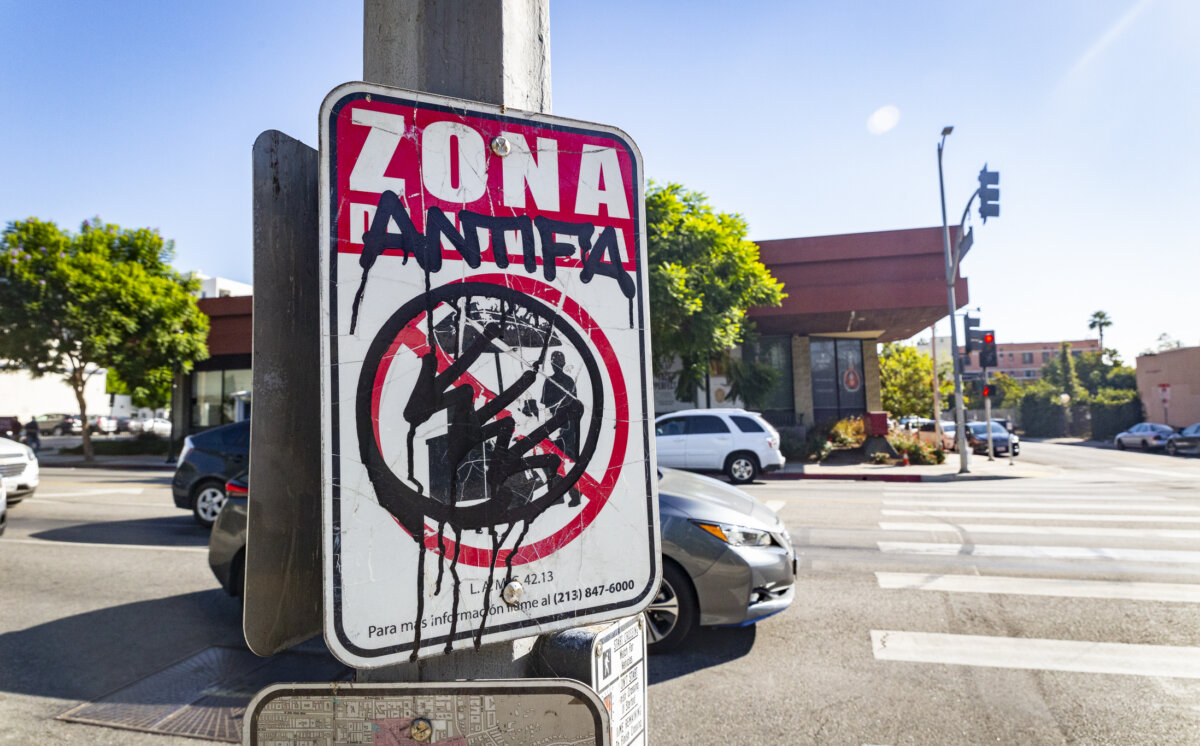
The others include Red Spark (communist group overlapping with Antifa values); Radical Women (feminist-socialist group which intersects with Antifa); Campaign Against Racism and Fascism (unambiguously an Antifa aligned group); the Refugee Action Collective Vic (anti-racism refugee advocacy group); Students for Palestine (pro-Palestine student group overlapping with Antifa values); and the Unionists for Palestine (pro-Palestine student group overlapping with Antifa values).
“All of these groups endorsed or collaborated on the Oct. 19 [counter-protest] … which was framed as a ‘united front’ against fascism and the far-right,” said Louw.
“This participation inherently ties them to Antifa, as the term broadly encompasses such decentralised activism.”
Antifa: The Modern Day Communists?
Historically, anti-fascism began in response to Italian dictator Benito Mussolini in the 1920s, whose National Fascist Party was named after a symbol of penal power in ancient Rome, the “fasces,” a bundle of rods with an axe.
In 1932, Antifaschistische Aktion (Antifascist Action), a communist-led militant group that confronted Nazi stormtroopers in Germany, created the nickname and symbol adopted by Antifa today, such as the raised-fist salute.
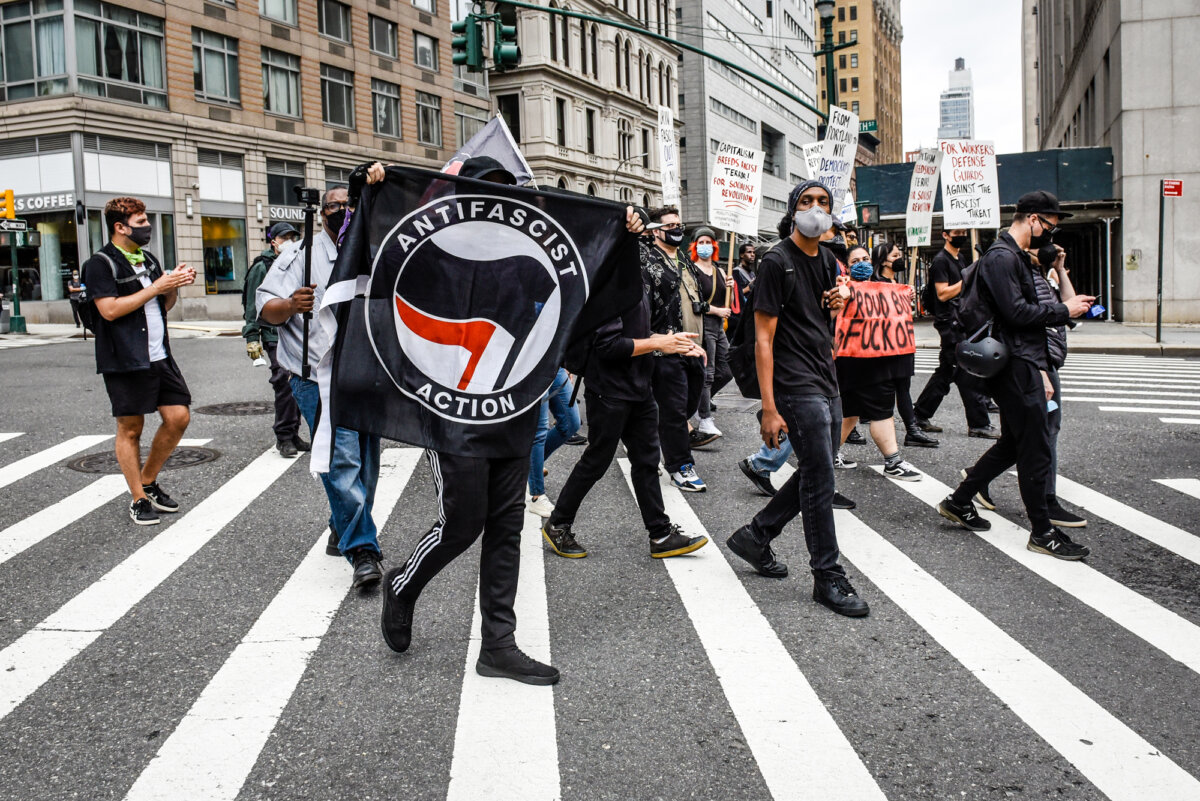
Since the 2000s, Antifa groups have grown globally, largely thanks to the digital age; encrypted messaging networks have enabled Antifa to communicate privately and evade detection.
“It’s meant to appear as if there is no organisation, but they are organised,” said journalist Andy Ngo, author of the 2021 book that became a New York Times best-seller, “Unmasked: Inside Antifa’s Radical Plan to Destroy Democracy.”
“Antifa is the decentralised movement of autonomous networks, groups, cells, and individuals who follow an ideology of violent anarchism and communism,” said Ngo, the son of Vietnamese immigrants in the United States who escaped communism.
As stated in The Epoch Times’ editorial series, How the Specter of Communism Is Ruling Our World, Antifa is one of various descendants of Marxism in the West.
One is the infamous 1960s American activist, Saul Alinsky, whose book “Rules for Radicals” is often cited as a key tome for radical movements.
While denying he was a communist, Alinsky taught a series of tactics aimed at destabilising society and government, and make them more susceptible to the introduction of Marxist-inspired ideologies.
“Alinsky’s ultimate goal was to subvert and destroy, not to benefit any group,” the series says. “When people were accustomed to being mobilised, it was relatively easy to mobilise them to act toward more radical goals.”
The series goes on to list how seemingly disparate groups, are all actually pulling in the same direction.
“Whatever the profusion of organisations that incite riots and violence in Western society today may call themselves, be it ‘Indivisible,’ ‘Anti-Fascist,’ ‘Stop Patriarchy,’ ‘Black Lives Matter,’ or ‘Refuse Fascism,’ they are all communist groups or proponents of communist ideas,” says Chapter Eight of the series, “How Communism Sows Chaos in Politics.”
In response to Antifa’s ongoing activities, U.S. President Donald Trump signed an executive order on Sept. 22 designating Antifa a domestic terrorist organisation.
Melbourne the Antifa Capital?
Over the years, due to consistent demonstrations, Melbourne has become the almost-“protest capitol” of Australia.
In September 2024, similar violent clashes broke out between police and protesters at the Land Forces military exhibition in Melbourne.
Wheelie bins were set alight and hurled at the police. Mounted police faced a barrage of rocks, horse manure, eggs, and other projectiles, including bottles of liquid.
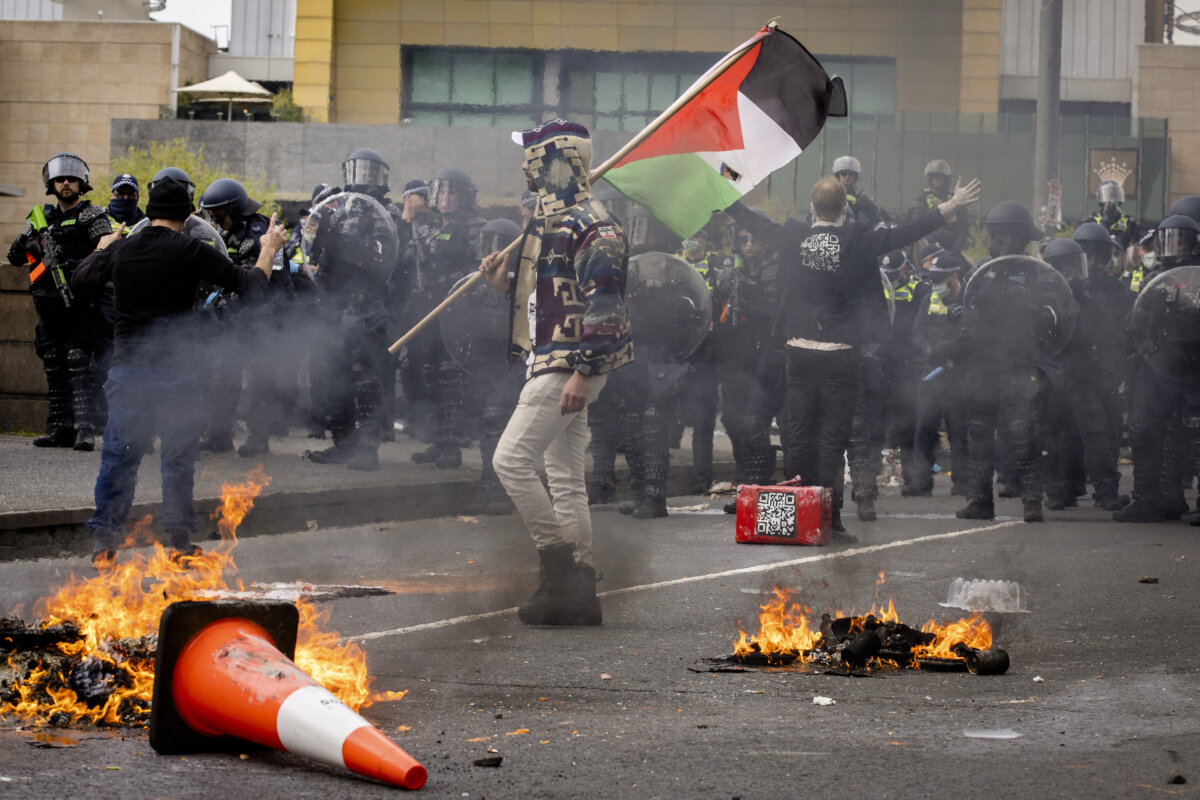
In response, heavily armed officers fired rubber bullets, deployed tear gas, and used flashbang grenades to push back the protesters. Rally organisers claimed they experienced similar levels of violence from the police.
Academic Louw isn’t entirely sure why Melbourne has become a hotbed of violent activism, but notes the volume of “far-left activities on Victorian university campuses.”
This aligns with what Bec Freedom (pseudonym), an organiser for the March for Australia in Sydney, had to share.
“The universities in Melbourne are very woke. Most of the counter protests organise throughout the universities,” Freedom, who is originally from Melbourne, told The Epoch Times on Oct. 19.
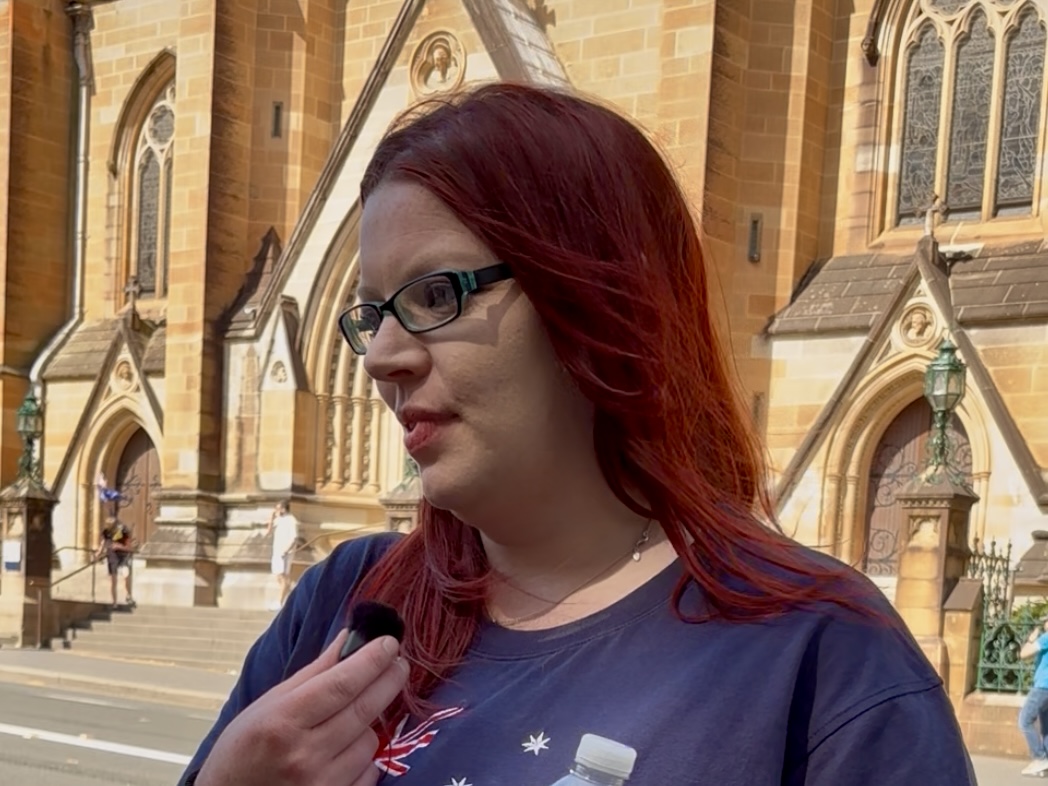
“You’ve got Antifa … They organise throughout universities. They have sign-making days and activities and stuff, so it’s very heavily promoted in the universities.
“It’s always very violent. It’s always aggressive … It’s scary down there.”
Janice Hisle contributed to this report.
 Friends Read Free
Copy
Facebook
Tweet
Friends Read Free
Copy
Facebook
Tweet