
Germany is preparing for more hybrid attacks, the country’s chancellor has said, amid increasing warnings from European authorities that Russia is likely to escalate covert operations against the West.
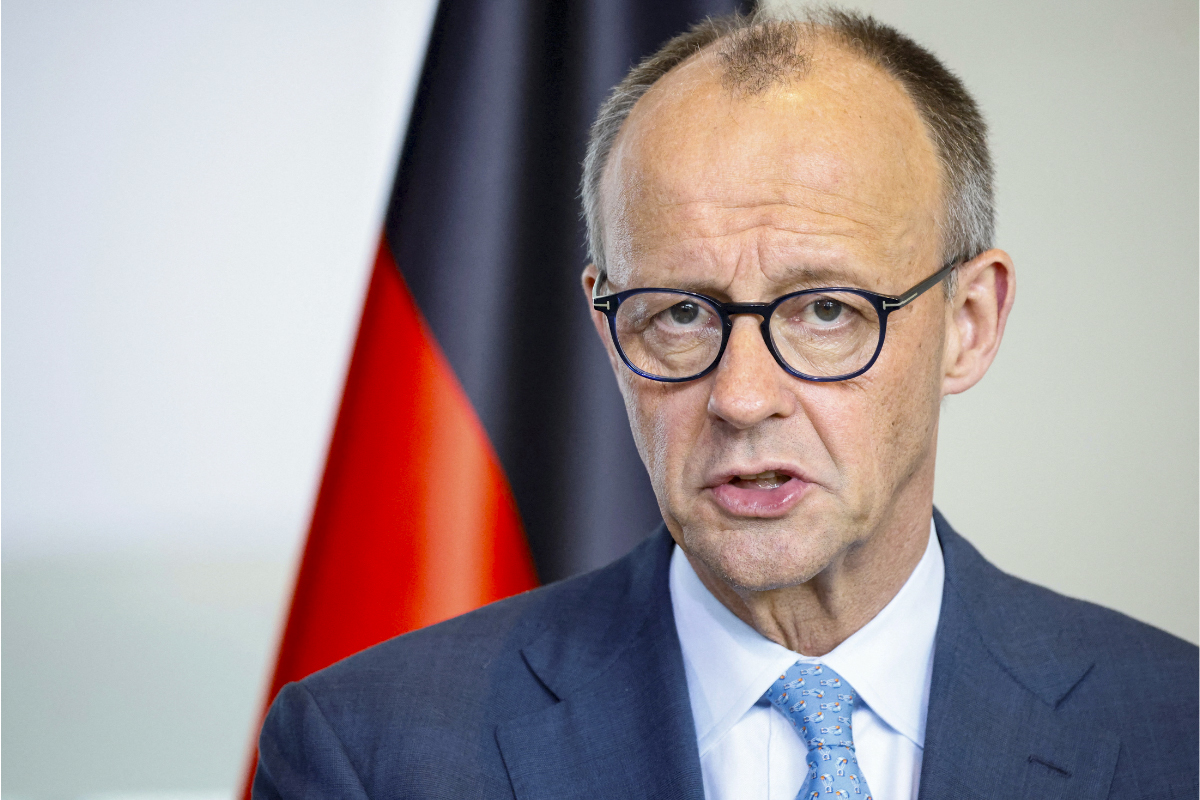
Chancellor Friedrich Merz made the remarks in a speech in Münster on Oct. 1 before awarding the Westphalian Peace Prize to NATO.
The German leader also reiterated Berlin’s support for Ukraine ahead of what is likely to be the harshest winter since Russia invaded eastern Ukraine in February 2022.
Sabotage and hybrid warfare have gained renewed attention following the attempted drone attack at Leipzig/Halle Airport in August, which Germany said was orchestrated by Russia.
Referencing the Leipzig incident, Merz said that Germany “will not be deterred by Moscow’s hybrid attacks.”
“Nor are we daunted by the fact that Russia is increasingly targeting us and other NATO partners with hybrid attacks,” the chancellor said.
“We are preparing for further hybrid attacks—including severe ones. If such attacks were to happen, then we would respond, as was the case after Leipzig, quickly and very clearly.”
Moscow has repeatedly denied that it is involved in any kind of hybrid warfare, most recently rejecting claims of involvement in the Leipzig incident.
Russia has also said it is not looking for conflict with NATO in Europe, but will defend itself if attacked first.
Hybrid Attacks Intensifying
Merz’s comments follow warnings from European leaders and intelligence agencies that Russia is likely to escalate its hybrid warfare.
Hybrid attacks fall short of an act of war and can include sabotage, propaganda, drone incursions, and other non-overt tactics.
The European Union believes that Moscow is coordinating hybrid attacks against members—most of which are in NATO—to undermine European unity and weaken support for Ukraine.
Danish intelligence said on Sept. 24 that Russia is likely to increase its hybrid warfare on NATO allies, and the agency is not ruling out the possibility that Moscow could launch a limited military attack on a Western country.
Last month, French President Emmanuel Macron said the threat of hybrid attacks facing France and Europe more broadly was intensifying.
He said in a Sept. 18 speech in Paris that as a result, his administration would be drawing up plans on how to protect critical infrastructure from drone attacks.
Polish Prime Minister Donald Tusk on Sept. 17 cited unnamed intelligence agencies saying that Moscow is planning to launch “hybrid” drone and missile attacks against countries that are supporting Ukraine.
Moscow has rejected the accusations from Western governments and intelligence services that it was planning hybrid attacks.
Speaking to a forum of experts on Oct. 1, Russian President Vladimir Putin said Moscow was not planning to attack foreign factories that produce weapons for Ukraine, but that this was something Russian intelligence services needed to track closely.
The comments follow remarks from Russian Foreign Ministry Spokeswoman Maria Zakharova on Sept. 30 that factories in Europe producing arms for Ukraine are legitimate and potential military targets.
“One should not assume that military factories outside Ukrainian territory which produce weapons for the Kyiv regime will be safe. Anyone who thinks so is mistaken,” Zakharova said.
Last week, EU defense ministers met to consider new collective ways to respond to Russian hybrid warfare.
EU foreign policy chief Kaja Kallas said that could include a new emergency NATO-style security protocol that any member of the bloc could trigger if it has been subject to a hybrid attack.
Reuters contributed to this report.
 Friends Read Free
Copy
Facebook
Tweet
Friends Read Free
Copy
Facebook
Tweet