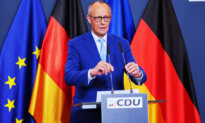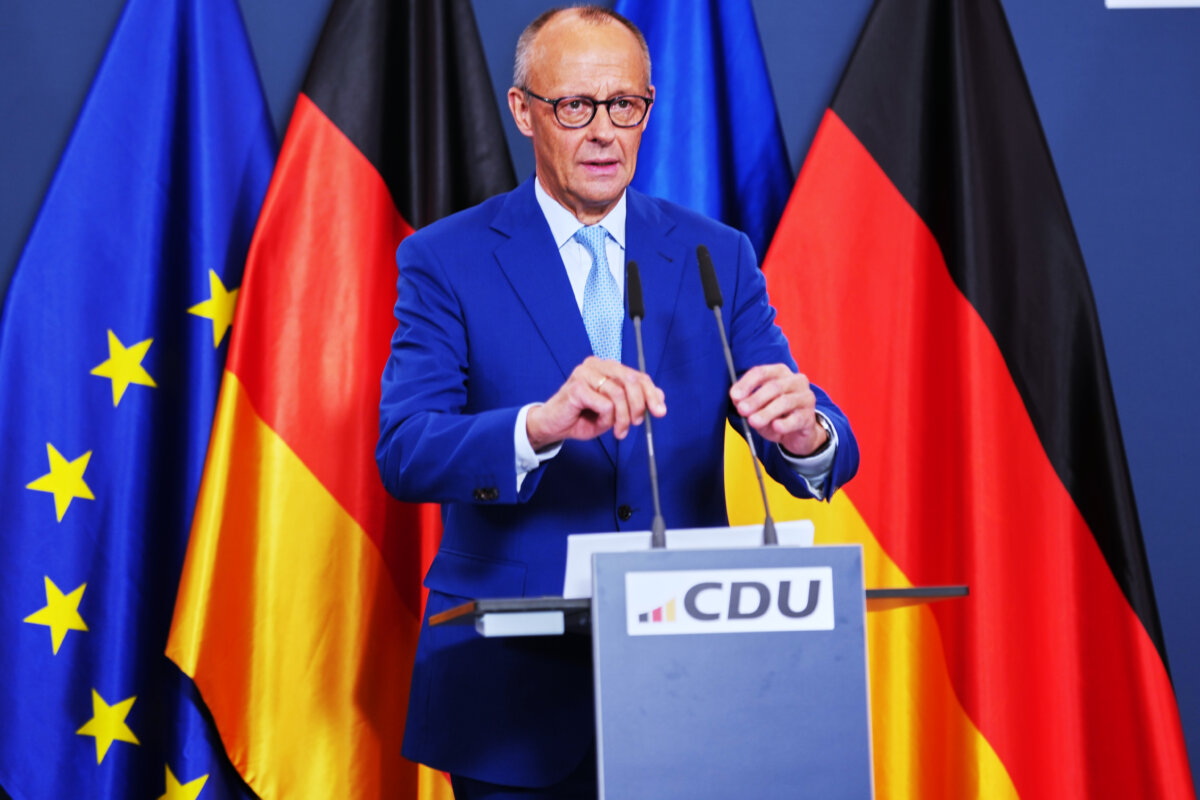

Severe election losses in two states on Sunday have put German Chancellor Friedrich Merz and his Christian Democrats (CDU) under pressure following a surge in support for the nationalist Alternative fuer Deutschland (AfD) party.
The AfD became the strongest party in Mecklenburg-Western Pomerania, once part of communist East Germany, where it more than doubled its support compared with 2021.
In contrast, Germany’s capital of Berlin saw a victory for a leftist party at its regional election.
Many Germans who previously backed the CDU have flocked to the AfD.
Merz, 70, who leads a coalition government, now has the lowest approval ratings for any chancellor since records began.
‘Strongest Force in Eastern Germany’
AfD co-leader Alice Weidel said on Sept. 21 in an X post: “We do not believe that the CDU can continue in this way. We stand ready, with a 10 percent lead nationwide and as by far the strongest force in eastern Germany, to hold talks and lead this country out of the crisis.”
Merz’s weakened position as leader of the European Union’s largest and most powerful member could undermine unity in the bloc amid ongoing tensions with the United States.
The AfD was already leading nationwide polls with 29 percent, attracting support for its pledges to deport illegal immigrants and promoting socially conservative values centred around the traditional family model. The party has also pledged to lower soaring energy costs by resuming the import of cheaper Russian fuel.
This is the second time in a fortnight that the AfD has won the largest share of votes in a state election, after winning in Saxony-Anhalt earlier this month, boosting its momentum ahead of the national election, due in 2029.
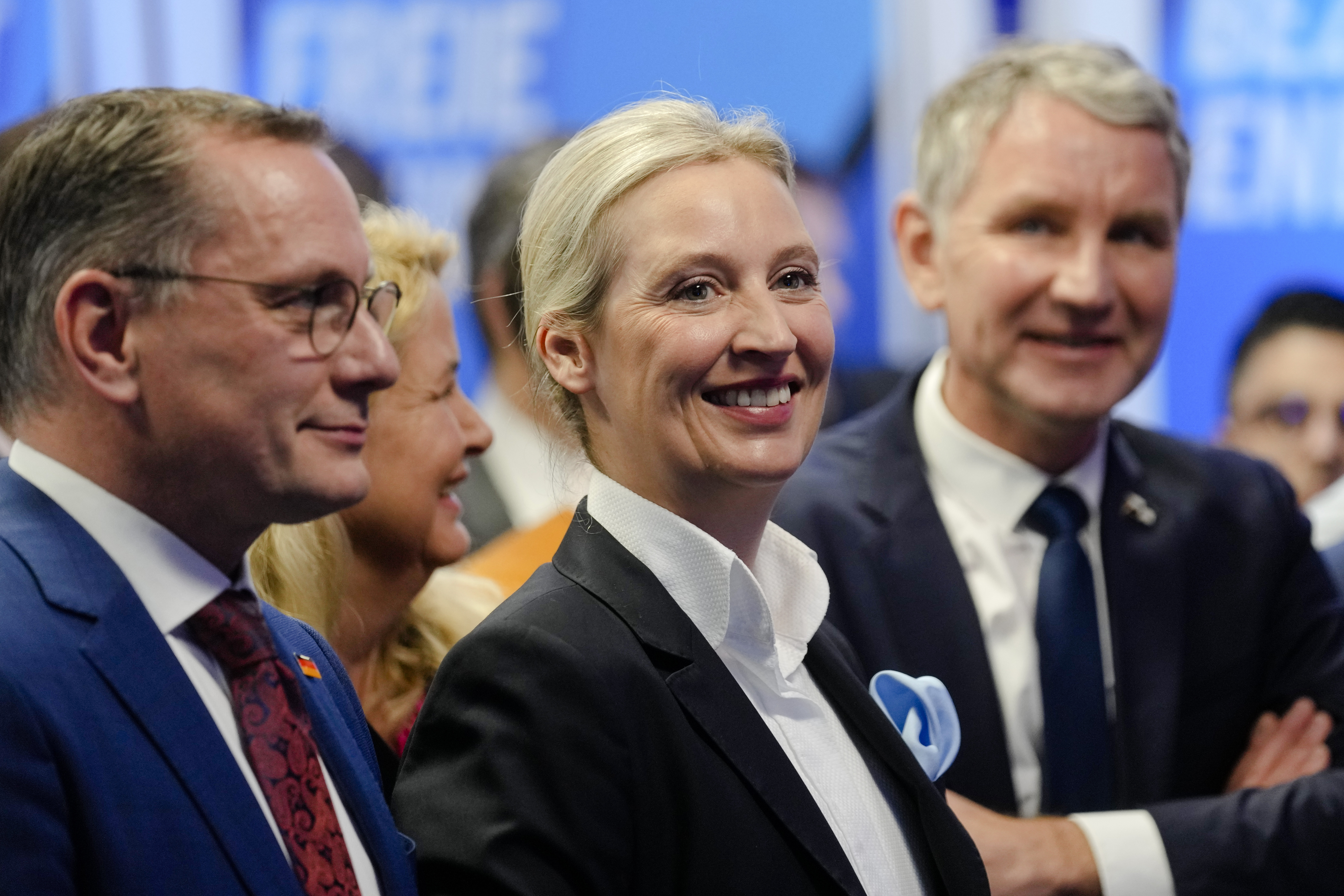 AfD co-leader Alice Weidel (C) at her party’s headquarters in Berlin after the German national election on Feb. 23, 2025. (AP Photo/Michael Probst)
‘Firewall Strategy’
Despite its popularity amid widespread discontent about mass immigration, the AfD faces obstacles to governing. The other major parties say they will maintain a “firewall” strategy and not form a coalition with the AfD. This makes it unlikely that the AfD will govern in Mecklenburg-Western Pomerania or in Berlin, where it finished third.
As voters split across more parties and the AfD grows in popularity, stable majorities are becoming harder to form, requiring compromise in a country that has traditionally run on two-party governments.
A three-way “traffic light” coalition in 2021, the first such arrangement at the national level, collapsed after less than three years.
Rival parties are being forced to explore alternative coalition arrangements to keep the AfD at bay.
In Mecklenburg-Western Pomerania, the second-place Social Democratic Party (SPD) could invite the Greens to join their existing coalition with the Left Party, preventing the AfD from being part of the state government.
In Berlin, the victorious Left Party could form a three-way working majority with the SPD and the Greens.
Campaigning in both states took place against a backdrop of surging fuel prices attributed to the wars in the Middle East and Ukraine, and tens of thousands of recent job cuts in German industry.
Voters across the political spectrum share concerns about the country’s economic downturn, and have increasingly turned away from the mainstream parties in recent years.
In Berlin, the Left Party was victorious after focusing on the city’s housing shortage. It pledged to build affordable new homes and forcibly reduce rents considered excessive, and crack down on properties being used as short-term rentals. It also pledged a government takeover of private housing associations, which operate a large share of the city’s housing units.
The result in the capital could see Elif Erlap become the first mayor of Berlin from the Left Party, which grew out of the former East German communist party following the fall of the Berlin Wall in 1989 and the reunification of the country in 1990.
“From today, we’re changing Berlin together,” Erlap, the daughter of left-wing Turkish immigrant parents, told party members in Berlin as they celebrated the result.
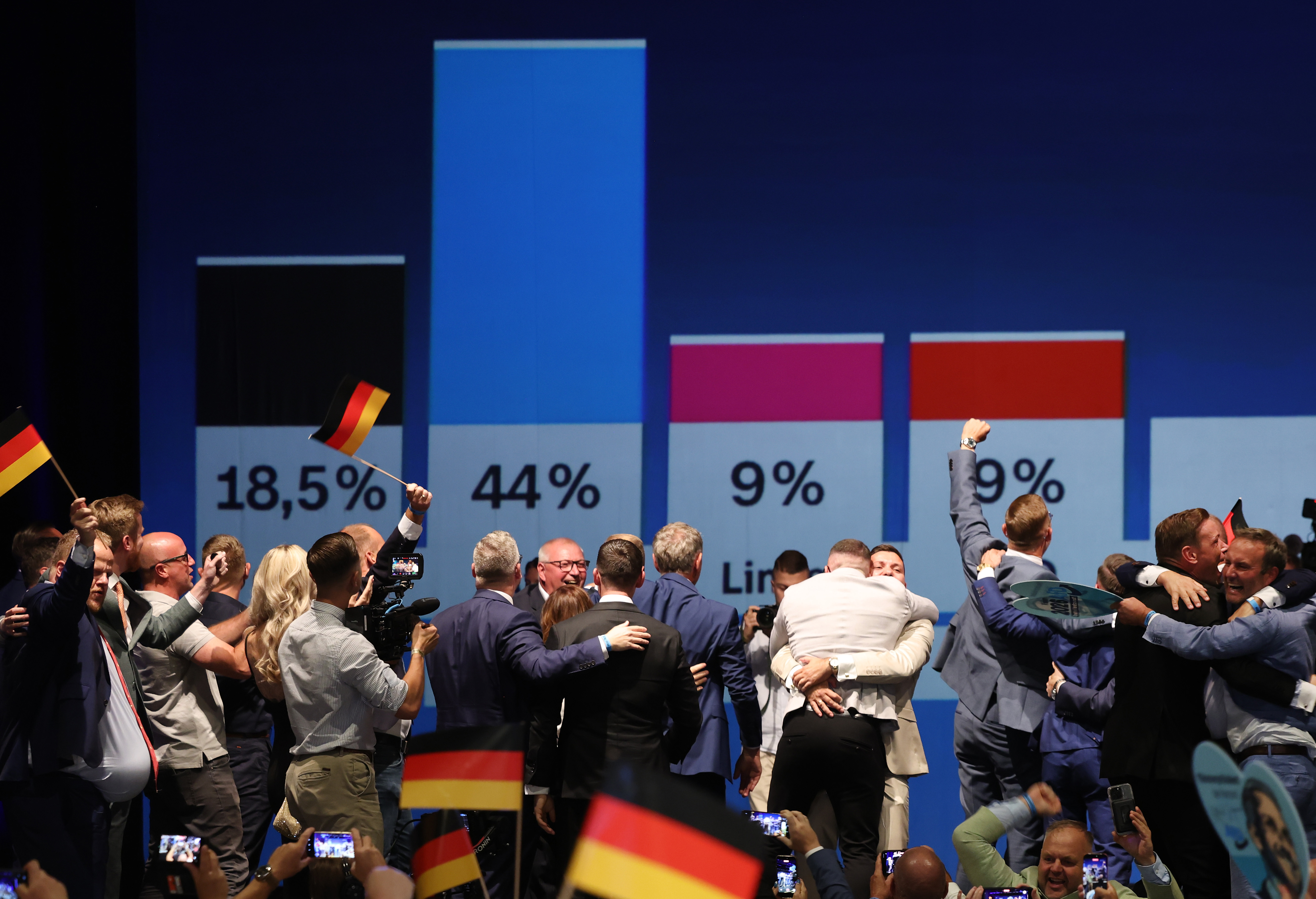 Supporters of the Alternative for Germany (AfD) cheer at the party’s election evening watch party as initial results show the party with 44 percent in Saxony-Anhalt state elections, in Magdeburg, Germany, on Sept. 6, 2026. (Sean Gallup/Getty Images)
Russian Energy Pledge
The AfD won support not just with its pledges to curb immigration, but with a plan to revive the Nord Stream gas pipeline from Russia, which terminates in Mecklenburg-Western Pomerania.
The nationalist party drew some 28,000 voters from Merz’s conservative CDU and 45,000 from the center-left SPD, according to polling done by Infratest Dimap.
Mecklenburg-Western Pomerania Premier Manuela Schwesig of the SPD said opposition to aid to Ukraine and support for the defunct Nord Stream pipeline with Russia were two reasons why voters in the former East German region migrated to the AfD, which is regarded as Moscow-friendly.
In Berlin, the Left Party gained at the expense of both the Greens, often a kingmaker in German politics, and the SPD, according to preliminary data.
After less than 17 months in the job, Merz has described the outcome as a “disaster” as he attempts to hang on to the job amid a clamor for him to resign.
The largely rural Mecklenburg-Western Pomerania outcome marked the worst result for the CDU in any state election since 1949. Voters appeared to lose faith in Merz’s ability to revive Germany’s struggling economy and bring down the cost of living.
Merz doubled down on his pledge to reform the economy, saying in a televised address from CDU headquarters on Sunday night that what needed to be done now required “backbone, steadfastness, and patience.”
“I would go so far as to say that these reforms are the antidote to the authoritarian poison that is penetrating ever deeper into our society, driven by the allure of authoritarianism,” he said in his address after the exit polls were released.
Reuters contributed to this report
 Friends Read Free
Copy
Facebook
Tweet
Friends Read Free
Copy
Facebook
Tweet