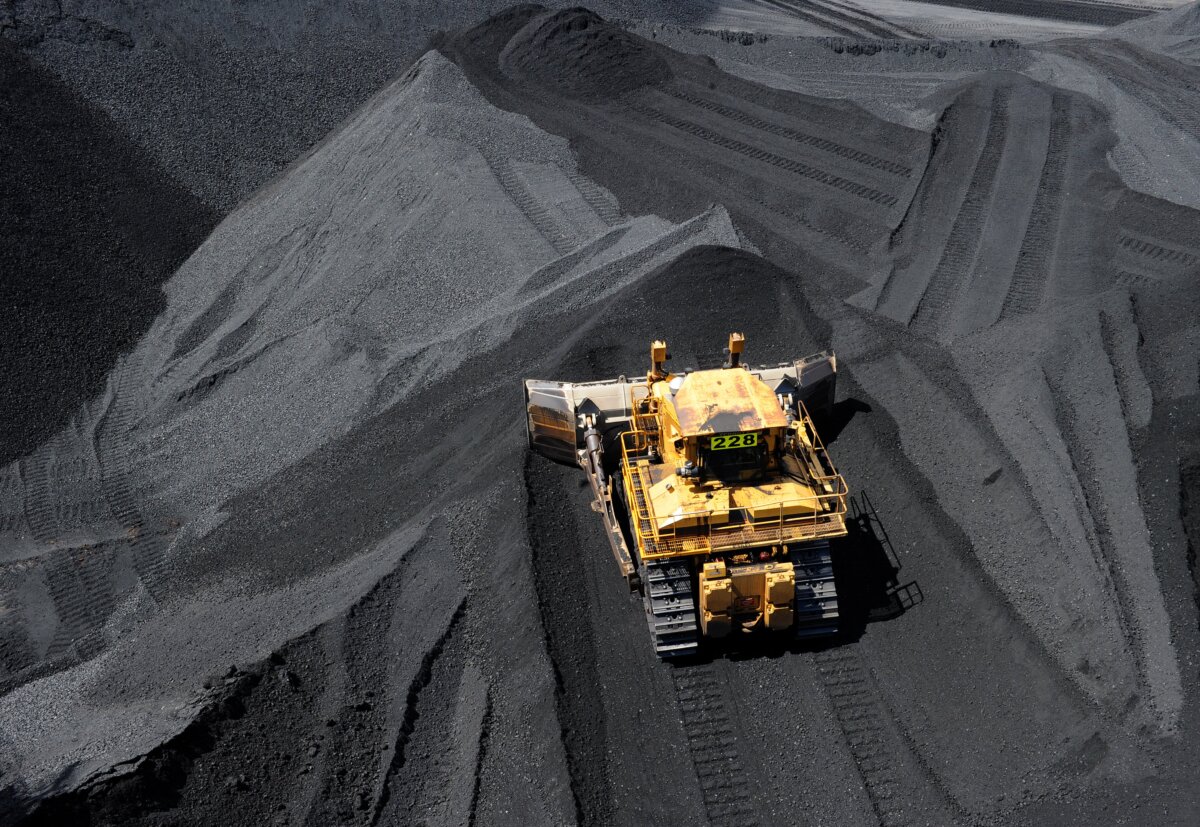

Surging commodity prices and higher mining tax revenue are set to deliver a multi-billion-dollar boost to the Labor government’s federal budget.
The Minerals Council of Australia predicted higher commodity prices will likely add about $8.1 billion (US$5.74 billion) in extra company tax revenue in 2025-26 compared to last year’s Federal budget estimates.
According to an analysis obtained by The Epoch Times, iron ore prices remain elevated, coal has surged since February, and gold has skyrocketed over the past 12 months.
Specifically, iron ore is trading at US$95–105 per tonne, well above its long-term anchor of US$60. Metallurgical coal has has climbed to US$220–230 from US$140, while thermal coal has risen to US$110–120 from US$70.
Gold stands out, with prices at US$4,500–5,000 per ounce and no clear long-term anchor, unlike bulk commodities. LNG is holding at US$10–20 per million British thermal units, compared with a long-run benchmark of US$10.
Minerals Council of Australia CEO Tania Constable said the mining sector contributes more tax to the government when commodity demand is strong.
“When global demand is strong and commodity prices are high, Australians see the benefit through higher company tax payments from mining,” she told The Epoch Times.
“An additional $8.1 billion in company tax revenue is a direct dividend for Australians, helping strengthen the Budget and helping fund Medicare, hospitals, schools and infrastructure without adding pressure to household budgets.”
Constable noted the mining sector was doing the heavy lifting and providing revenue stability at a time of global uncertainty and cost of living pressures.
“Mining is the backbone of the Australian economy, supporting jobs, living standards and government revenue right across the country, but it cannot be taken for granted,” she said.
“That contribution depends on continued investment, productivity and Australia remaining competitive in global markets.
“A strong and competitive mining industry underpins Australia’s fiscal position by delivering reliable revenue when prices are high and continuing to invest when conditions change.”
What’s Ahead in the Federal Budget?
Ahead of the May federal budget, Chalmers said the government would deliver three key reform packages covering savings, productivity and investment, and tax.
“We are working on more tax reform in the budget–how much we can do in May depends on fiscal considerations, international developments and cabinet deliberations,” Chalmers said in his pre-budget speech in March.
At a recent press conference, the treasurer acknowledged the government still has “a long way to go” on key budget decisions.
“But the government’s focus, and the budget’s focus, is on resilience and reform, not resilience or reform. We choose both, rather than choosing one or the other,” he said.
“The budget will balance the pressures here and now with our obligations in intergenerational terms, and that’s how we’re approaching this budget.”
Meanwhile, Shadow Treasurer Tim Wilson has criticised the Labor government for failing to control the budget and manage inflation.
“Australian households are going to pay the price of a government and a Treasurer who has lost control of his budget,” he said.
“The biggest question is going to be when the treasurers is actively running the Australian economy down and I say this with absolute sadness, you’ve got record small business insolvencies, what are we going to have that’s left that we’re going to be able to build from?”
The Epoch Times has reach out to the office of Treasurer Jim Chalmers for comment.
 Friends Read Free
Copy
Facebook
Tweet
Friends Read Free
Copy
Facebook
Tweet