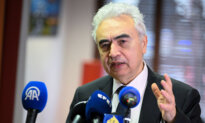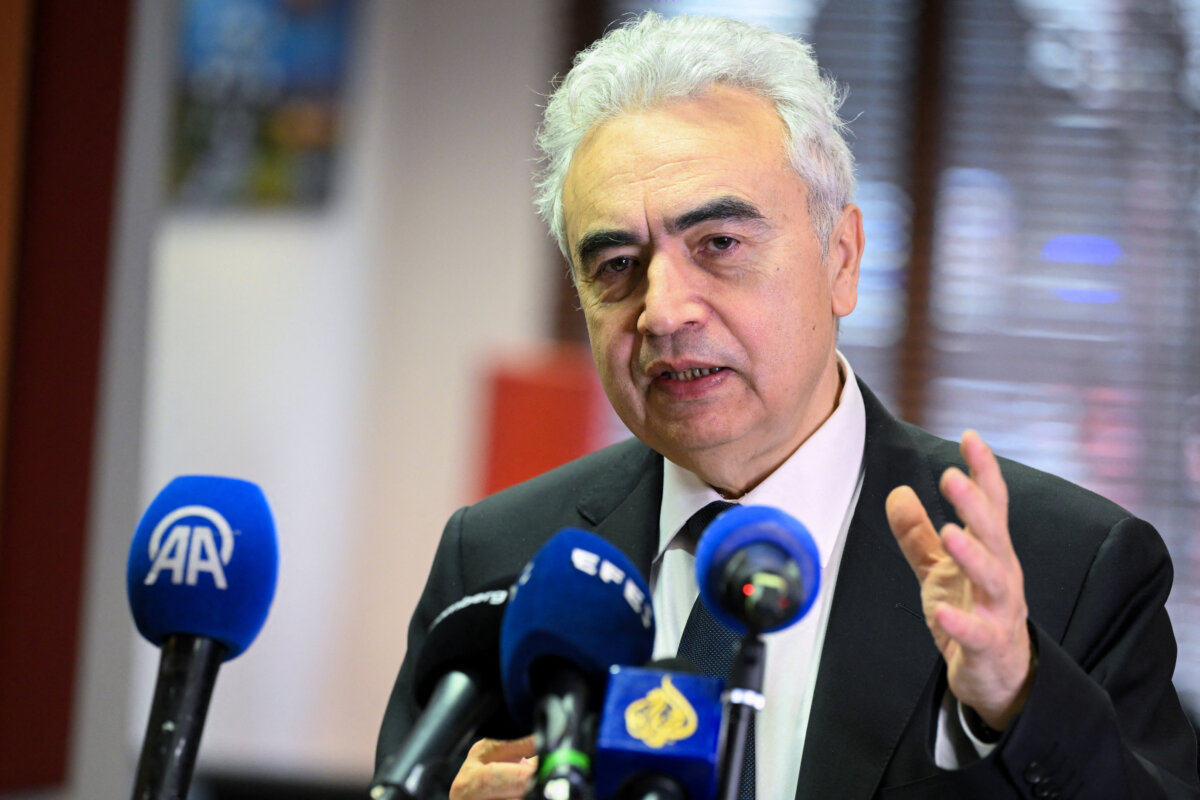

The International Energy Agency (IEA) said on March 16 that it has more emergency oil reserves available if needed, as the war between Iran and the United States and Israel continues.
IEA Executive Director Fatih Birol said at a press conference at the organization’s headquarters in Paris that the combined quantity of emergency reserves, after the release of about 400 million barrels initiated on March 11, is more than 1.4 billion barrels.
“Which means we can do more later, as and if needed,” he said.
Birol said the ongoing war had already caused “the largest supply disruption in the history of the global oil market.”
“The volume of oil supply now offline is already higher than the supply loss during the oil shock of 1973 and higher than any of the big disruptions we have witnessed since then,” Birol said, noting that it was also causing issues with the global supply of liquified natural gas, both of which have major implications for energy security, energy affordability, and the global economy.
However, he noted that the action already taken by the IEA, which decided to release the largest-ever quantity of emergency stocks in its history on March 11, had already had a “chronic impact on markets.”
“Oil prices today are significantly lower than they were one week ago,” Birol said, but noted that although stock releases could provide a “buffer,” they were not “a lasting solution.”
“The single most important thing for a return to stable flows of oil and gas is the resumption of transit through the Strait of Hormuz.”
U.S. President Donald Trump has intensified pressure on allies to help secure the vital shipping lane, through which about 20 percent of global oil supply normally passes.
Trump said on March 15 that he had asked roughly seven countries dependent on the waterway to contribute to its protection. A day before that, Trump said he hoped that China, France, Japan, South Korea, and the UK would deploy ships to help patrol the Strait of Hormuz while U.S. forces continue targeting what remains of Iran’s naval capabilities.
However, Germany, Spain, and Italy on March 16 ruled out participating in any mission in the Persian Gulf, at least for now, while other nations were more circumspect. The UK and Denmark stated that they would consider ways they might help, but emphasized a need to de-escalate and avoid getting dragged into the war.
Oil Prices
Brent crude oil futures hit a high of $106.50 per barrel in late trading on March 15.
Prices hit a high of nearly $120 per barrel on March 8, followed by a decline to the low 80s by March 10. Oil prices then surged once more, closing at $103.89 on March 13. Late on March 15, prices hit a high of $106.50, after which they declined to $103.93 as of 9:55 p.m. ET.
On March 16, Brent crude was sitting at $101.50 per barrel as of 11:35 a.m. EDT.
Despite this drop-off in price, ING Think, the research and analysis arm of ING Bank, has said that the action by the IEA is not enough to offset the losses to the oil market brought on by the effective closure of the Strait of Hormuz.
ING Think on March 16 called the release of 400 million barrels by the IEA a “temporary solution,” saying that the record reserve release will only cover a little more than 25 days of the supply being disrupted at the moment, and that the oil will “flow out of government reserves at a much slower pace.”
“While we are also likely to see a supply response, particularly from the U.S., it will be too little too late,” ING Think stated. “Additional supply from the U.S. would likely take at least six months to come online, and the volumes will be a fraction of the losses we are currently seeing.”
The bank said that in its worst-case scenario, “energy flows remain at almost a full standstill until the end of May, before gradually recovering between June and August.”
“Oil prices spike to record highs under this scenario, and prices will need to remain elevated to balance the market through demand destruction, given the limited solutions on the supply side,” ING stated.
 Friends Read Free
Copy
Facebook
Tweet
Friends Read Free
Copy
Facebook
Tweet