
New Zealanders aren’t getting booster shots of COVID-19 vaccines, prompting doctors to warn the virus is still present in the community and that the protective effect of the shots wanes over time.
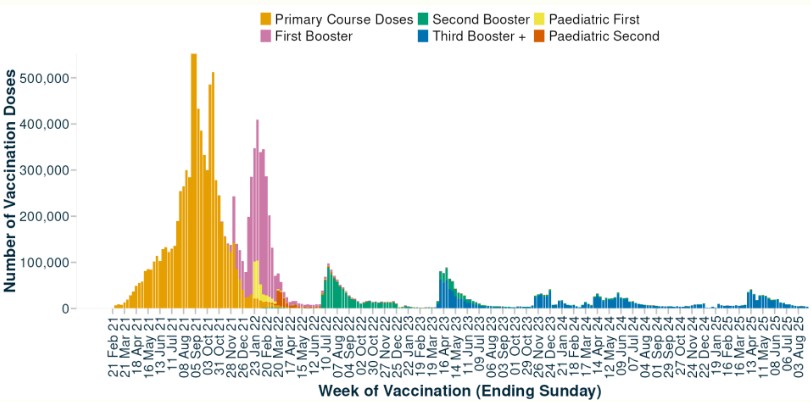
To date, the country’s 5.4 million people have received nearly 14 million doses of the vaccine—an average of 2.6 doses for every person.
However, according to the Aotearoa Immunisation Register (AIR), only 1.6 million people (29.63 percent of the population) have received the third or any subsequent boosters.
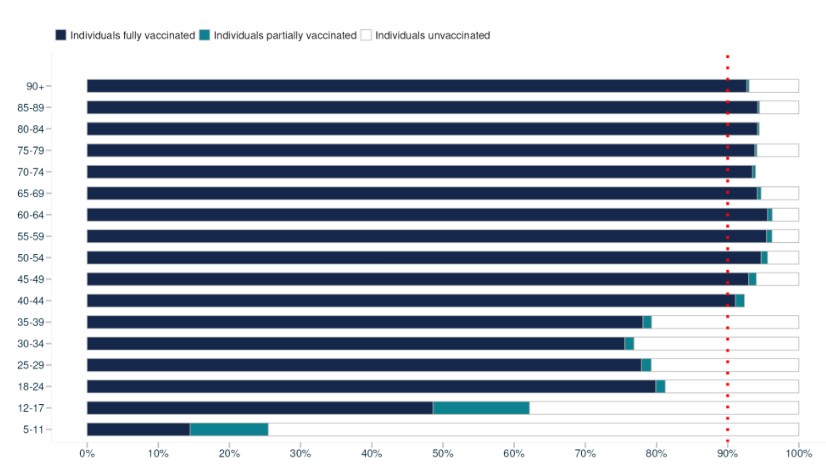
Health NZ considers any person who has received the initial dose and second doses to be “fully vaccinated,” and data shows most age groups over 40 have reached the 90 percent target.
But the lower level of uptake among younger people reduces the overall average to 83.4 percent of the total population.
But several doctors argue that two doses are insufficient and want to see far greater numbers of people getting regular COVID-19 vaccinations, as people do for the flu each year, warning that failing to do so could put the population at risk from future strains of the virus.
Professor Nikki Turner, medical adviser to the Immunisation Advisory Centre, acknowledged that people had grown tired of hearing about COVID, but warned that it was still infecting and, in some cases, killing people.
“Older people and people with significant medical problems, they are still dying of COVID. And we shouldn’t forget that,” she said.
Despite that, more people had said yes to flu vaccines this year compared with COVID boosters.
Turner attributes this to the fact that the flu has been affecting more people for much longer than COVID.
“Flu has been with us for a long time and people know the value of flu vaccination,” she explained. “With flu, it’s much easier to keep track: beginning of winter, flu’s coming, time to get your flu vaccine.
“With COVID, it’s much harder because it hasn’t yet fallen into a winter peak. So we tend to see around the world now, almost twice a year peaks.”
Her concerns were echoed by cellular immunologist Lisa Connor, head of the Infection and Vaccinology Group at the Malaghan Institute of Medical Research. The antibodies created by vaccines could wane over time, she warned.
“That’s something we’re trying to understand, but we do think some vaccines and some infections will induce shorter-lived antibodies, which means they will decrease in our bodies,” she said.
“And we have seen that with the COVID vaccines, that you do get this waning, where the antibody levels reduce.
“For healthy individuals, an annual COVID-19 booster is recommended to help reduce the severity of illness, as the virus continues to circulate year-round with periodic surges.
“For those with weakened immune systems, a booster is recommended every six months to provide extra protection against severe disease. While COVID-19 vaccines may not completely prevent infection, they remain highly effective at reducing serious illness and hospitalisations.”
Questions Around Boosters
Meanwhile, some studies are warning of potential side effects of COVID-19 vaccines.
A study published on Aug. 9 by Nature Communications Medicine found that people who received at least one dose of a COVID vaccine are more likely to experience an influenza-like respiratory illness or symptoms.
However, another study by researchers at Stanford University found that the vaccines prevented 2.5 million deaths globally, primarily among older age groups.
An advisory committee for the U.S. Centers for Disease Control and Prevention launched a review on Aug. 20 into the effectiveness and safety of COVID-19 vaccines, particularly the mRNA types.
NZ Health says COVID-19 booster shots are available to everyone above the age of 15, and recommends that people aged 65 and over and severely immunocompromised people keep up to date with their shots.
 Friends Read Free
Copy
Facebook
Tweet
Friends Read Free
Copy
Facebook
Tweet