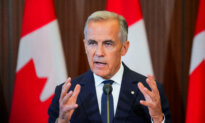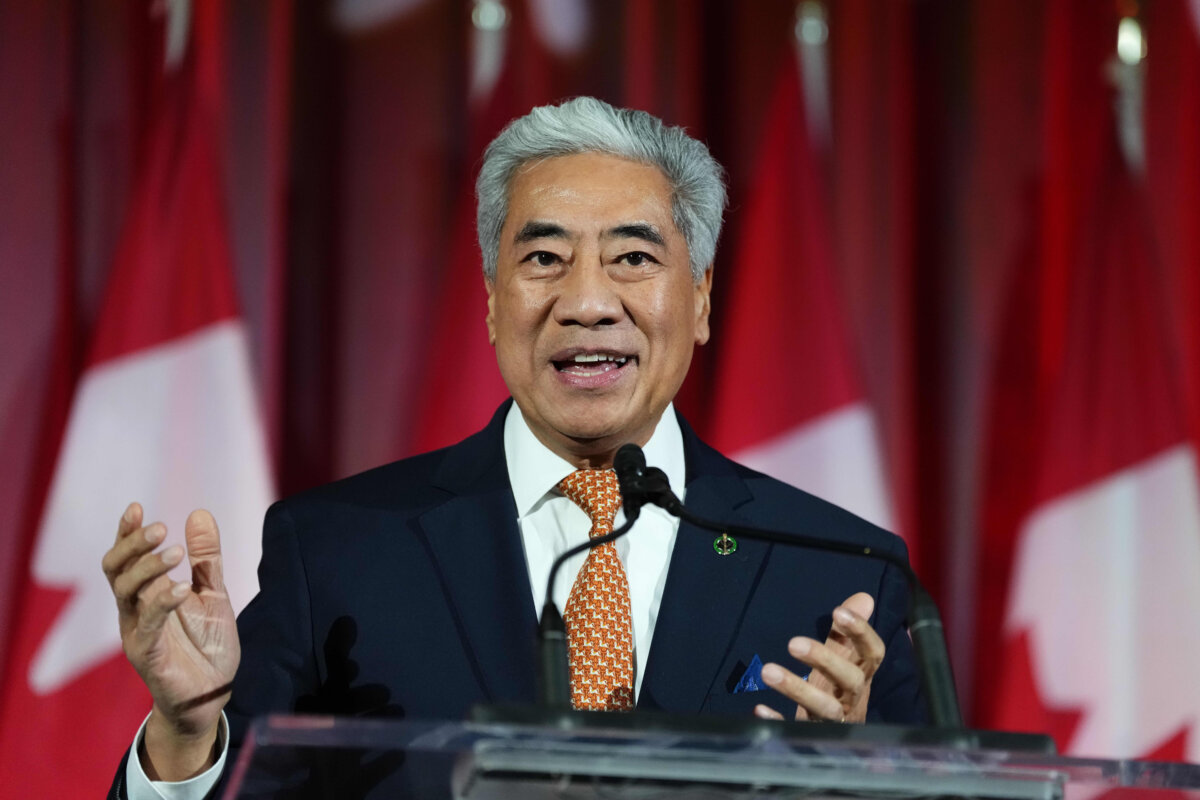
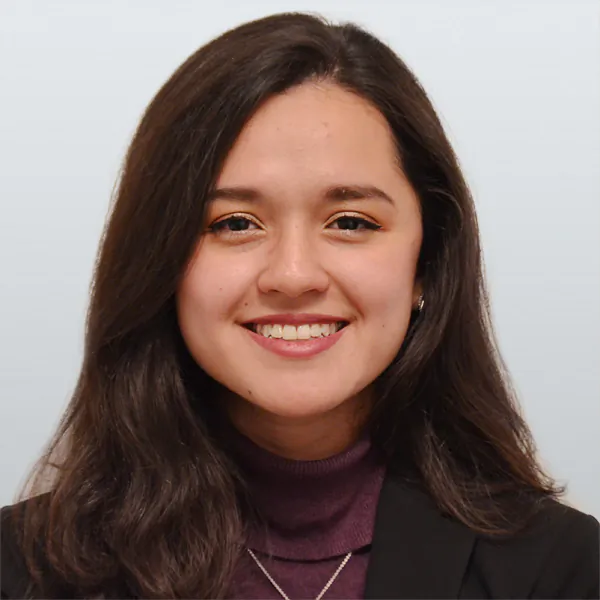
Michael Ma, the second MP to leave the Conservatives to join the governing Liberals, is facing protests from some constituents and others who say he no longer represents those who voted for him, with some raising questions about his associations with pro-Beijing groups.
Ma’s constituency office in Markham, Ont., has been the site of several protests since he announced on Dec. 11 that he would join the Liberals, with demonstrators carrying signs calling for his resignation and the holding of a byelection. Ma, the MP for Markham-Unionville, said he decided to switch parties after consulting with his family and constituents “on the direction of our country.”
In addition, an online petition calling for Ma to resign, launched on Dec. 12, has attracted more than 37,000 signatories as of Dec. 19. It is unclear how many of the signatories live in Ma’s riding. Petitioners say Ma’s floor crossing “nullifies the democratic choice made by his constituents.”
Another rally at Ma’s constituency office is planned for Dec. 20.
In announcing his decision, Ma said he entered politics to address Canadians’ concerns, including the cost of living, public safety, and the economy, and that he concluded Prime Minister Mark Carney is offering a “steady, practical approach” to tackling these issues.
Speaking to CP24 this week, he said he made the decision only after meeting with the prime minister earlier on the day it was announced, and believed he could better serve his constituents as a Liberal.
“I have now better access to ministers and the prime minister to deliver those voices on behalf of Markham-Unionville,” Ma said. “I think this is a better approach than, you know, creating very negative views and not finding solutions.”
Carney said in a social media statement on Dec. 11 that he was “proud” to welcome Ma to his caucus and that he looked forward to “working together to build our country, protect our communities, and create more opportunities for the people of Markham-Unionville and all across Canada.”
Ma’s switch to the Liberals raises their seat count to 171, just one short of a majority government.
Concerns
Protesters at Ma’s office also carried signs with messages raising concerns about Beijing’s interference in Canada.
Ma was born in Hong Kong and immigrated to Vancouver at the age of 12. He worked as a business executive before entering politics and becoming an MP after the April 28 election. In recent years, he has attended events or taken part in initiatives with people who express views in line with Beijing.
In August, he attended an event marking the 131th anniversary of the Toronto branch of the Chinese Freemasons, a group that has supported the “peaceful” reunification of China and the self-ruled island of Taiwan. China claims Taiwan is part of its territory, and has used economic and military coercion to reinforce that position.
Photos from the event, posted by the Canadian Multicultural Media Confederation–an umbrella organization for ethnic media–show Ma sitting at the same table with China’s vice-consul in Toronto, Cheng Hongbo, as well as posing for pictures together.
An account of the event published by the Chinese Consulate in Toronto says Cheng affirmed the Canadian Chinese Freemasons’ contribution to the “reunification of the motherland,” and spoke about the need for the group to “uphold the stance against separatism and promote reunification.”
Photos shared by the Canadian Multicultural Media Confederation also show former lawyer Ping-Teng Tan in attendance. He is a long-time figure in the Toronto Chinese community who has for years participated in events and initiatives that favour Beijing’s positions.
Meanwhile, Ma doesn’t appear to have made any public statement to date endorsing Beijing’s positions on issues such as Taiwan and Hong Kong.
He was part of the Chinese Canadian Conservative Association (CCCA) board when they held an event calling on then-Conservative party leader Erin O’Toole to resign, saying he had cost the federal party votes in the Chinese community due to his tough-on-China stance. The CCCA is an organization representing Chinese Canadian members of the Conservative Party but has no formal affiliation with the party itself. O’Tooles platform for the 2021 election had an extensive section on how to confront China’s aggressions and protect diaspora from Beijing’s transnational repression.
Ma was elected to the board on Nov. 28, 2020, according to a report published on the WeChat channel of the Chinese-language outlet Canadian Life Weekly, and he remained in the role at least until Nov. 27, 2021, when the association held another board election, according to a report posted on the Chinese-language platform Classweb. The CCCA held its press conference calling for O’Toole’s resignation during that period, on Oct. 7, 2021.
Ma is also seen in a picture posted by Chinese-language outlet cc.news, sharing a toast with Wei Chengyi, executive director of the Confederation of Toronto Chinese Canadian Organizations (CTCCO), during an Oct. 19 event in Toronto. A post on the website of Public Safety Canada titled “Beijing’s Political Warfare in Canada,” which summarizes proceeds of a 2020 workshop organized by the Canadian Security Intelligence Service, notes that CTCCO has been holding events and activities in line with Beijing’s interests. This includes participation in a 2019 event in Markham, Ont., denouncing Hong Kong democracy protesters, and lobbying for the Toronto District School Board to partner with Beijing’s Confucius Institutes.
Chinese Interference in Canada
During the federal election, Ma ran against Liberal candidate Peter Yuen, who joined the race late after the previous Liberal candidate and incumbent MP, Paul Chiang, stepped down. Chiang left the race after previous comments of his surfaced suggesting that a political opponent, Conservative candidate Joe Tay, be handed over to the Toronto Chinese consulate to collect the bounty placed on him.
Tay is a Canadian citizen and one of several pro-democracy activists targeted by Hong Kong authorities, who have issued international bounties on Tay and other activists. Tay was originally running in the riding of Markham-Unionville, but the Conservative Party later switched him to the Toronto riding of Don Valley North.
Ma won the Markham-Unionville seat with 50.7 percent of the vote, while Yuen finished a close second with 47.1 percent.
Carney had faced calls from the Conservatives and the NDP to drop Chiang as a candidate, but he rejected the demands, saying that although Chiang had a “terrible lapse in judgment,” it was a “teachable moment” and Chiang had acknowledged his mistake. Chiang apologized to Tay shortly after his bounty comments surfaced and later announced his resignation on March 31.
Canadian intelligence officials revealed in April that Tay had been the target of a Beijing-linked transnational repression operation conducted on social media platforms widely used by Chinese-language speakers in Canada.
According to Canada’s Foreign Interference Commission’s final report, released Jan. 28, China is “the most active perpetrator of foreign interference targeting Canada’s democratic institutions.”
 Friends Read Free
Copy
Facebook
Tweet
Friends Read Free
Copy
Facebook
Tweet