
The Chinese ambassador’s warning to Canada not to send parliamentarians to Taiwan or Canadian navy ships to the Taiwan Strait is not sitting well with some MPs across party lines.
Conservative, Liberal, and Bloc Québécois MPs reacted in recent days to comments made by China’s ambassador to Canada, Wang Di, in an interview with the Globe and Mail in late April.
Wang said it will be “hurtful” to Canada-China ties if Canadian parliamentarians conduct “any official engagement” with Taiwan. He added that sending navy ships through the Taiwan Strait is “harassment, and even provocation.”
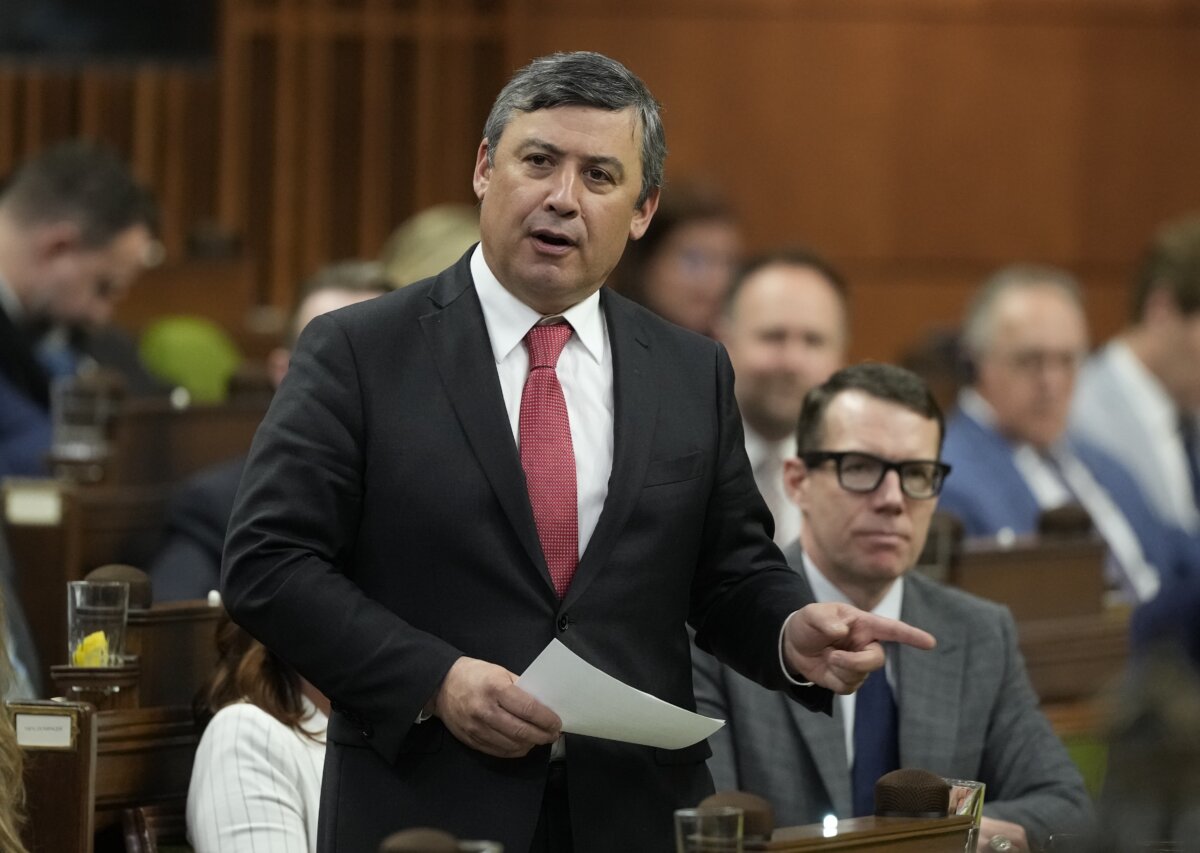
Conservative MP Michael Chong, who serves as his party’s foreign affairs critic, said Prime Minister Mark Carney “needs to make clear that these comments are unacceptable.”
“Mr. Carney needs to make clear that as an independent sovereign country, Canada does not take its instructions from foreign governments about where its MPs can go or where its warships can transit in international waters,” Chong wrote in a May 4 X post.
The Epoch Times contacted the Prime Minister’s Office and Global Affairs Canada for comment but didn’t immediately hear back.
Deputy Tory Leader Melissa Lantsman echoed Chong’s comments, saying Canada “does not take its instructions from foreign ambassadors — the prime minister should make that clear.”
An MP from the government caucus also commented on Canada-Taiwan ties this week. Without specifically mentioning the Chinese ambassador’s comments, Liberal MP Judy Sgro said the friendship between Canada and Taiwan is “priceless.”
“Protecting Canada’s diplomatic sovereignty means standing by our partners and refusing to allow external pressure to dictate our international engagement,” Sgro said in a May 4 statement. Sgro is the chair of the Canada-Taiwan Friendship Group in Parliament.
Taiwan Strait
Chong noted in his comments that ships have the right to freely navigate in international waters. Royal Canadian Navy ships have transited through the Taiwan Strait a dozen times in the last decade, often accompanying U.S. Navy vessels.
The latest occurrence was in September 2025, when frigate HMCS Ville de Québec transited alongside Australian destroyer HMAS Brisbane. The Canadian military said at the time that Canada “supports a free, open Indo-Pacific.”
China criticized the move as a provocation, while Taiwan said it affirmed the strait as international waters and supported freedom of navigation.
The CCP considers Taiwan a breakaway province and seeks to place it under Beijing’s rule.
The self-ruled island nation has remained independent since 1949. It was once recognized as the official seat of the Chinese government. Most countries have switched to recognizing the People’s Republic of China in recent decades, following broad shifts in diplomatic recognition in the 1970s.
Canada has a “One China policy” that does not recognize Taiwan as a state, but maintains economic and cultural ties.
Taiwan Ties
Canada-Taiwan relations have stirred controversy in recent months as the Carney government has pursued closer ties with Beijing.
Taiwan’s representative in Canada says Ottawa appears to be delaying the signing of a trade agreement with Taipei to avoid upsetting Beijing. The agreement was finalized a year ago.
“This is a result of very long-term synergy and it is there, readily available,” Harry Tseng told Radio-Canada in February.
Carney said in February that Canada has trade relations with Taiwan but is “focusing on strengthening our trade relations with China.”
Weeks earlier, as Carney was about to depart for China, two Liberal MPs visiting Taiwan as part of a parliamentary delegation were recalled before the end of the trip.
Parliamentarians make regular trips to Taiwan sponsored by the Taiwanese government. Liberal MPs Helena Jaczek and Marie-France Lalonde were part of a delegation that also included three Tory MPs.
“It’s important that we avoid confusion with Canada’s foreign policy, given the overlap with the Prime Minister’s engagement in Beijing, which was only confirmed last week,” the Liberal MPs said in a statement in January.
The move was criticized at the time by MP Chong, who said the government is “kowtowing to Beijing.”
Chong repeated the accusation this week, adding the government’s “silence” on the Chinese ambassador’s threats suggests it is “‘keeping the sign in the window.’”
This is an apparent reference to Carney’s January speech in Davos, Switzerland, in which he quoted Soviet-era Czech dissident Vaclav Havel’s story of shopkeepers displaying political slogans they did not believe in to avoid conflict. The quote was part of Carney’s call on middle powers to stop complying with the current global order. The speech expressed thinly veiled criticism of U.S. policies while touting “new strategic partnerships” with China and Qatar, both non-democratic states.
Chong said Canada should not yield to China’s intimidation and noted the Canadian Security Intelligence Service (CSIS) views the PRC as the top foreign interference threat.
Bloc Leader Yves-François Blanchet struck a similar note in his reaction to the Chinese ambassador’s comments. He said Carney showed “imprudence” when he got closer to the Chinese regime months ago.
“This naivety is catching up with him: China believes it is entitled to intimidate Canada’s elected officials, to intimidate the Prime Minister of Canada,” Blanchet said in a May 2 X post.
Blanchet said Ottawa should sign the trade agreement with Taiwan and maintain a naval presence around the island.
 Friends Read Free
Copy
Facebook
Tweet
Friends Read Free
Copy
Facebook
Tweet