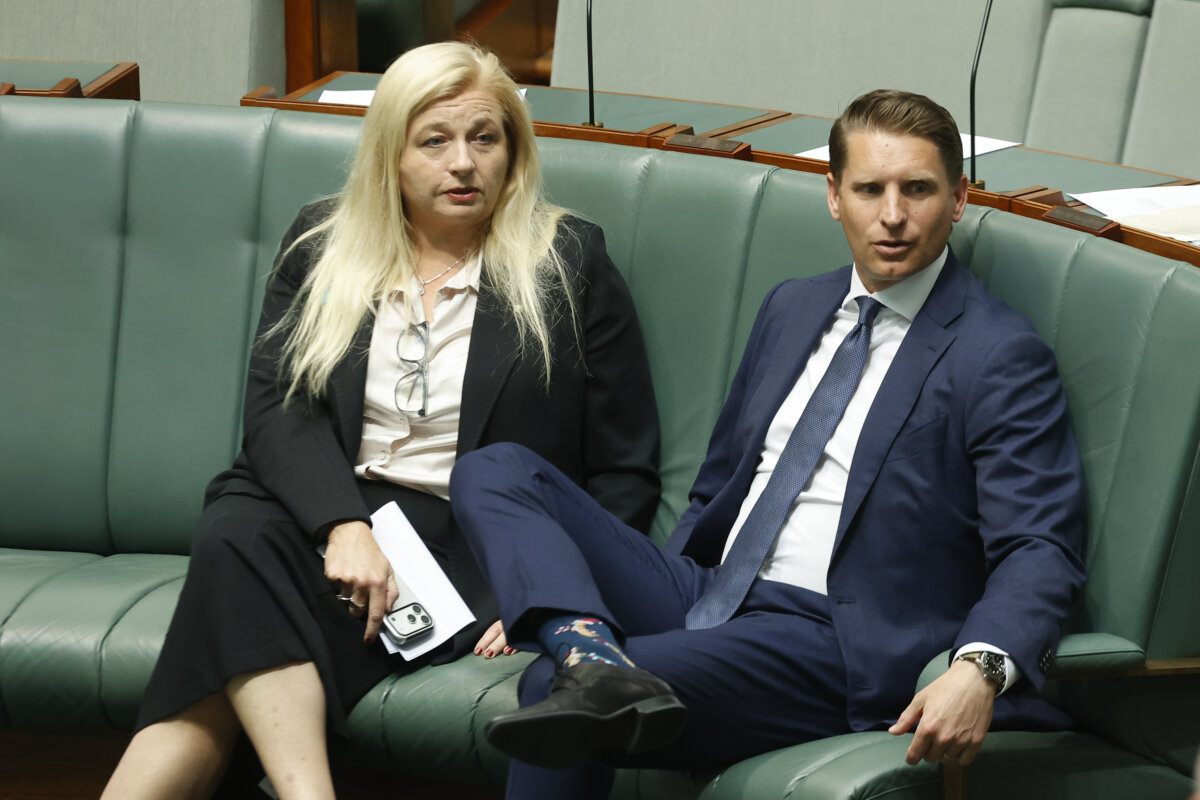

Clear gender definitions and protections for women-only spaces are back in federal parliament, with Nationals MP Alison Penfold introducing legislation to amend the Sex Discrimination Act.
The proposed amendment, introduced on May 25, seeks to define “man” and “woman” based on biological sex and strengthen legal protections for women-only spaces, services, and activities.
Introducing the bill in the lower house, Penfold said she was speaking for women who felt their concerns were being ignored.
Penfold pointed to the recent Federal Court ruling in the Giggle v Tickle case as evidence of what she called growing legal uncertainty around sex-based rights.
She said the ruling had exposed a serious problem in Australian law because “women’s sex-based protections are no longer clearly guaranteed.”
“When the law cannot clearly preserve women-only spaces, women lose confidence that their rights to privacy, dignity, safety, and choice remain secure,” she told the Parliament.
However, Penfold said the issue was not a criticism of the court system.
“The court interpreted the law that this parliament wrote. The fault lies here,” she said.
The MP also argued that parliament created uncertainty in 2013 when it introduced gender identity protections into the Sex Discrimination Act without clearly addressing conflicts with sex-based rights. The debate on the bill was deferred for a later day.
Restoring Legal Clarity
Penfold claimed the bill aimed to restore “clarity, certainty, and common sense” to the law.
Under her proposal, definitions of “man” and “woman” would be reinstated in the legislation. References to “different sex” would be replaced with “opposite sex,” and legal protections for women-only spaces, services and activities—including online spaces—would be strengthened.
“The law must recognise and favour biological reality, because laws only function properly when they are grounded in objective facts that can be consistently understood and applied,” Penfold said.
“Biological sex is not a social construct created by Parliament. It is not a matter of personal opinion. The role of the law is not to deny reality, it is to responsibly govern within it.”
The MP also said biological sex remained important in areas such as sport, health, privacy, safety, and women’s services.
“That does not mean transgender Australians should be treated without dignity or respect.”
The bill would retain protections against unfair discrimination for transgender Australians where there is no conflict with sex-based rights.
Penfold also suggested a joint select committee to review the operation of the Sex Discrimination Act and examine the bill’s provisions.
“The days of dismissing this issue are over. This is not a culture war, it’s reality,” she said.
Giggle v Tickle Case
Penfold’s new bill comes amid the fallout from the legal dispute between Sall Grover, founder of the women-only networking app Giggle for Girls, and Roxanne Tickle, a transgender woman who filed a discrimination claim after being removed from the platform.
In 2024, the Federal Court ruled that Grover had “indirectly discriminated” against Tickle by denying her access to the app based on her appearance in a profile photo, and ordered Grover to pay Tickle $10,000 (US$7,200) in damages.
Grover’s appeal was dismissed in May 2026, with the Federal Court ordering her to pay increased compensation of $20,000, in addition to Tickle’s legal costs.
The ruling prompted criticism from conservative politicians who argued Australian law did not adequately protect single-sex spaces.
One Nation Leader Pauline Hanson also renewed calls for changes to the Sex Discrimination Act and said she would reintroduce proposals she had previously put forward.
Meanwhile, Opposition Leader Angus Taylor said he would amend the current law if the Coalition won the next federal election.
“A Coalition Government will fix that by amending the Sex Discrimination Act to ensure protections for single-sex spaces are based on biological sex,” he said.
 Friends Read Free
Copy
Facebook
Tweet
Friends Read Free
Copy
Facebook
Tweet