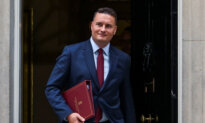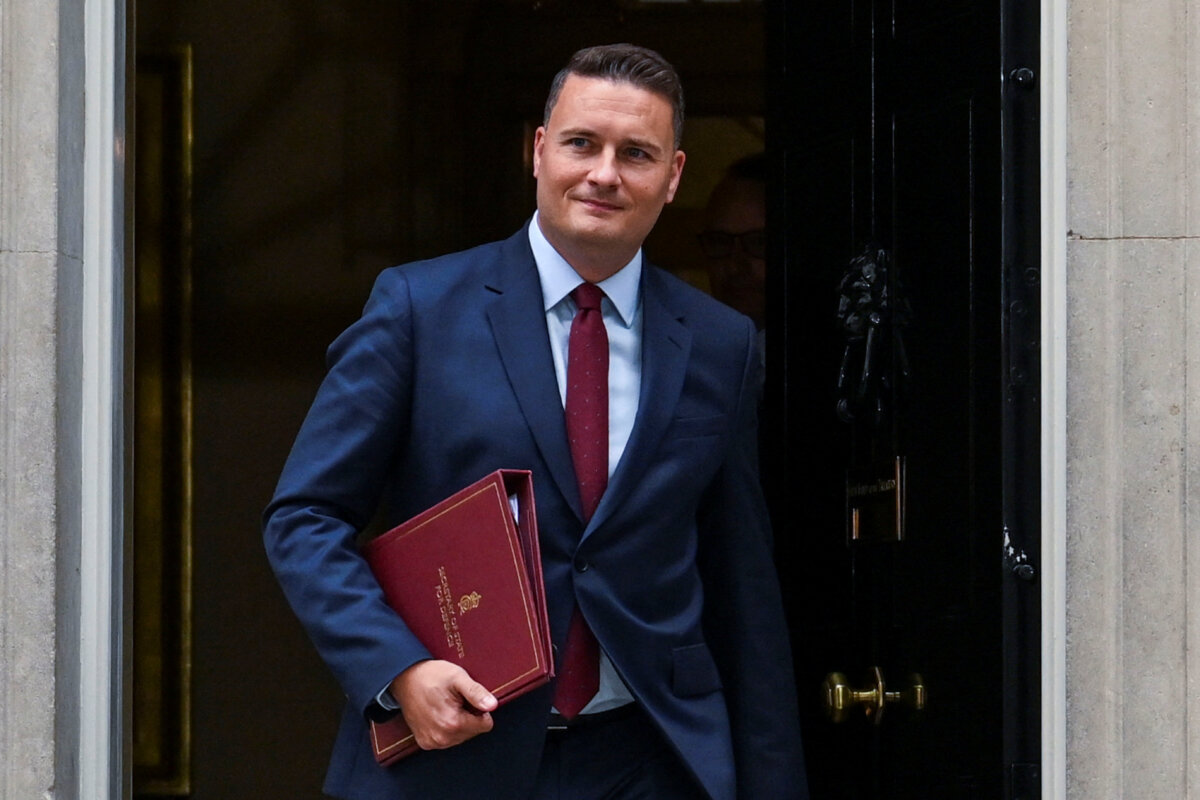

Newly appointed British Defence Secretary Wes Streeting said on July 26 that Europe will one day thank U.S. President Donald Trump for “shaking us out of our complacency” on defense spending.
Speaking to British broadcaster Sky News, Streeting said that he genuinely believes “when this period of history is written, Europe will thank President Trump for shaking us out of our complacency and forcing us to stand on our own two feet and end the period of overreliance on the United States for defense.”
Former Health Secretary Streeting was appointed to the defense role on July 20 by the new British Prime Minister Andy Burnham after he reshuffled the Cabinet following the resignation of his predecessor Keir Starmer.
“What he’s said about Europe isn’t unique to President Trump, the MAGA movement or the Republican Party. This has been a long-standing grain of U.S. frustration with Europe under Democratic and Republican presidents,” Streeting said, adding that “in the world we live in, it is right that we can act to secure ourselves.”
Trump has repeatedly called on the UK and other European countries to spend more on defense and become less reliant on the United States for the continent’s security.
The push for NATO allies to do more to secure their own defenses came as the United States reoriented its defense and security priorities.
Asked if he trusts Trump, Streeting said, “I don’t know him, but I do trust the United States,” adding that in his first week in the role he has had “a unique insight into just how close and integral that relationship [between the UK and the United States] is when it comes to defense and security.”
Discussing his conversation with U.S. Secretary of War Pete Hegseth, Streeting said he was “clear that we’ve not supported offensive action in Iran and we won’t support offensive action [in] Iran,” but added that there are “plenty of things that we can and should do together when it comes to securing the Strait of Hormuz.”
Streeting’s predecessor but one, John Healey, who now has the role of chancellor of the exchequer, the UK’s equivalent to treasury secretary, resigned his post last month in protest over the previous government’s reluctance to adequately fund defense spending, in a move that contributed to Starmer’s eventual downfall.
Healey announced his resignation in a highly critical public letter posted on X, in which he accused Starmer and the Treasury of being “unable” and “unwilling” to “commit the resources that the nation needs to defend the country at this time of rising threats.”
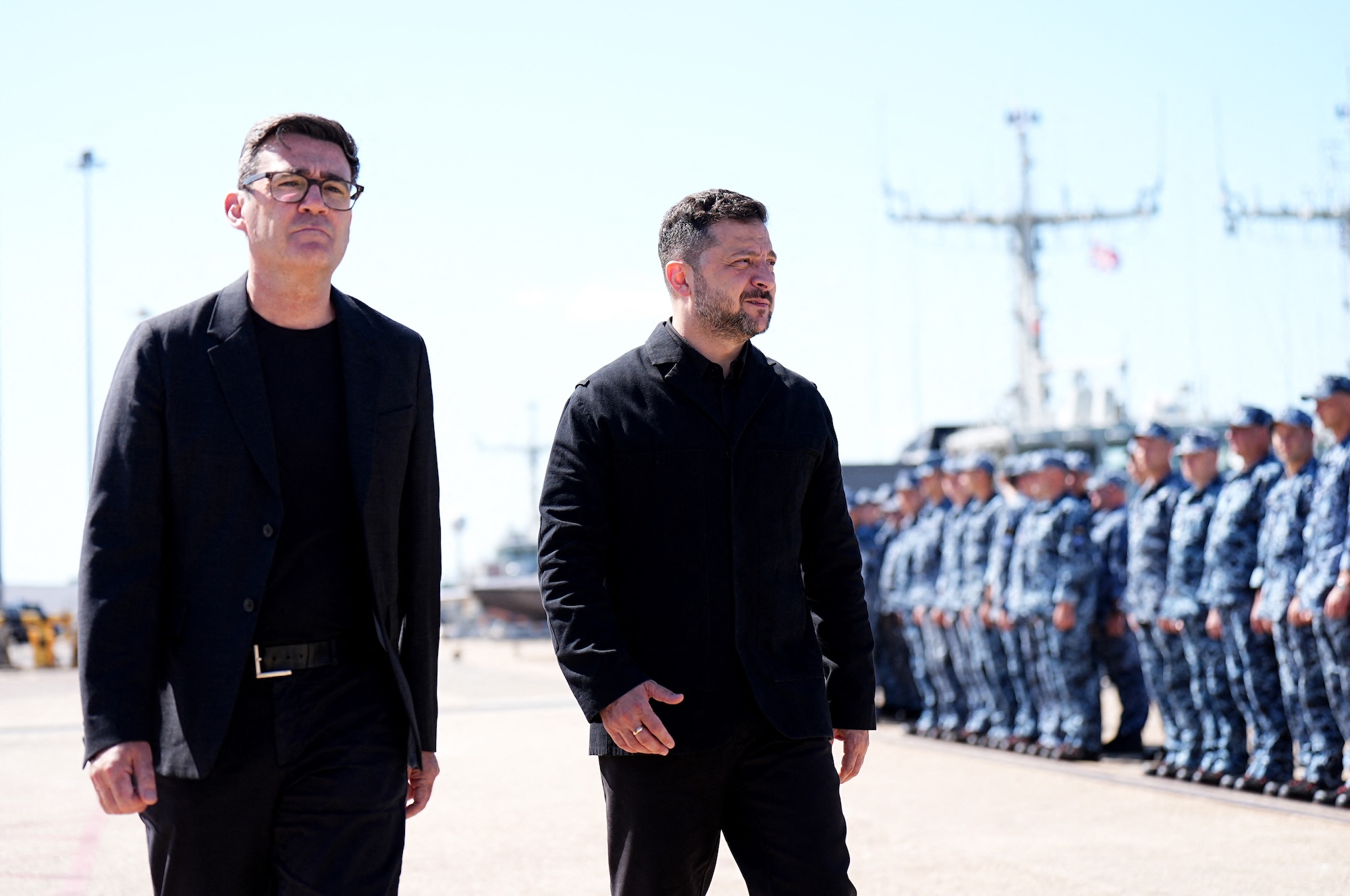 British Prime Minister Andy Burnham (L) walks with Ukraine’s President Volodymyr Zelenskyy (R) at a naval base in Portsmouth, England, on July 27, 2026. (Aaron Chown/AFP/Getty Images)
The UK has pledged to spend 3.5 percent of GDP on defense by 2035, in line with a new NATO target.
Burnham said that when he appointed Healey to be chancellor he was “very aware of what he had said about the critical importance of defense spending and the position that he had taken about that.”
“The first challenge facing us both is to ensure that the defense investment plan is fully funded and that’s the thing that’s right in front of us and we need to work that through as we go towards the budget later this year.”
Burnham also stated that he would be prepared to publicly disagree with Trump if British and American interests didn’t align but added that he had had a good first exchange with the president, finding him to be “really warm.”
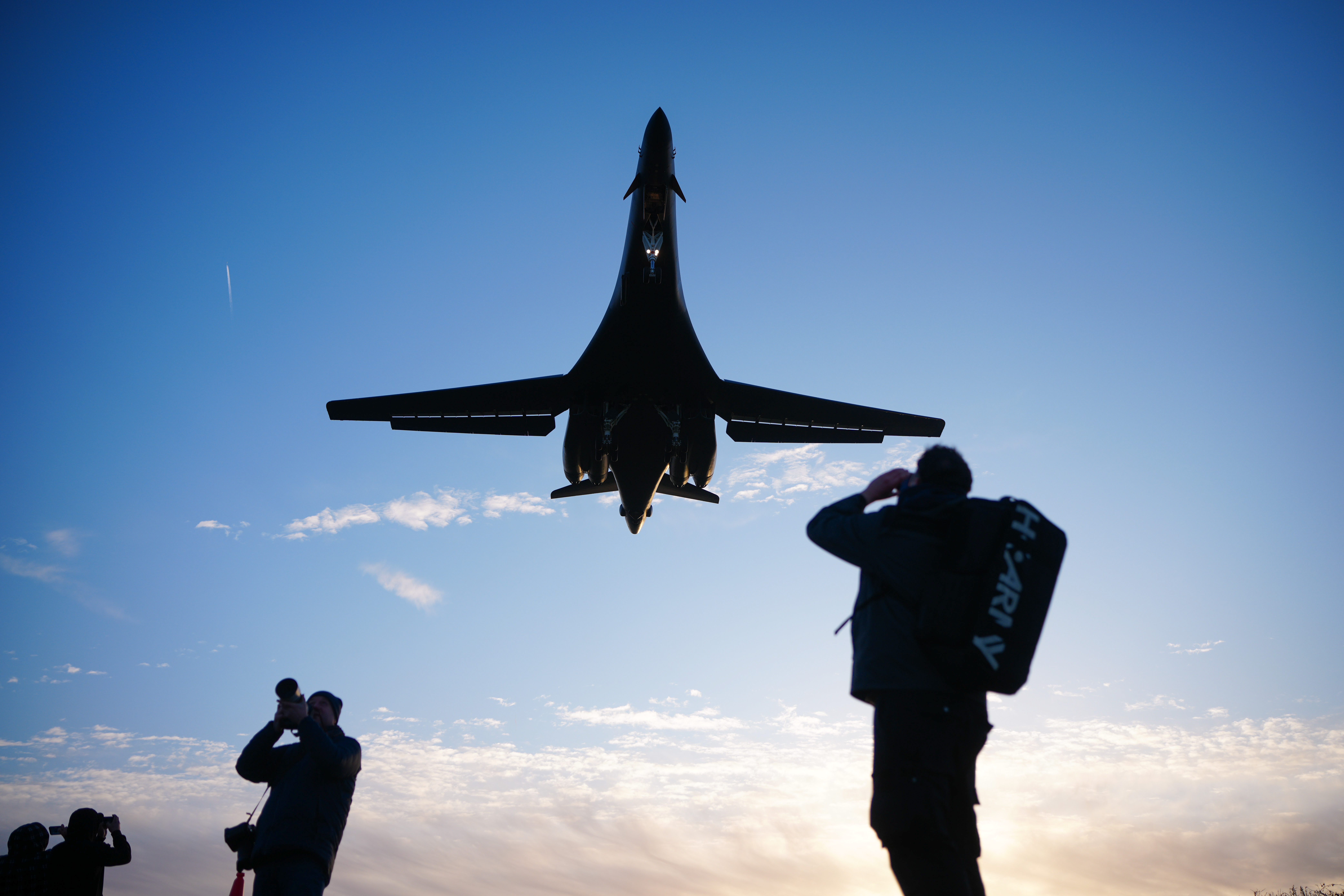 A U.S. Air Force B-1 bomber comes in to land at RAF Fairford in Fairford, England, on March 11, 2026. (Christopher Furlong/Getty Images)
“We discussed many subjects, including the outstanding relationship we have had with the UK. We will be meeting in the not too distant future for topics of mutual interest,” Trump said, adding that Burnham “has got a big job ahead of him, but he will be able to do it and, of course, the U.S.A. will be there to help!”
He added that they discussed “North Sea Oil, Trade, the Military Alliance, Demining of the Hormuz Strait, and many other topics,” and said the call “went very well.”
 Friends Read Free
Copy
Facebook
Tweet
Friends Read Free
Copy
Facebook
Tweet