The new Hungarian government will fully open the files of the country’s communist-era secret police, a senior official in the incoming administration said on April 22.
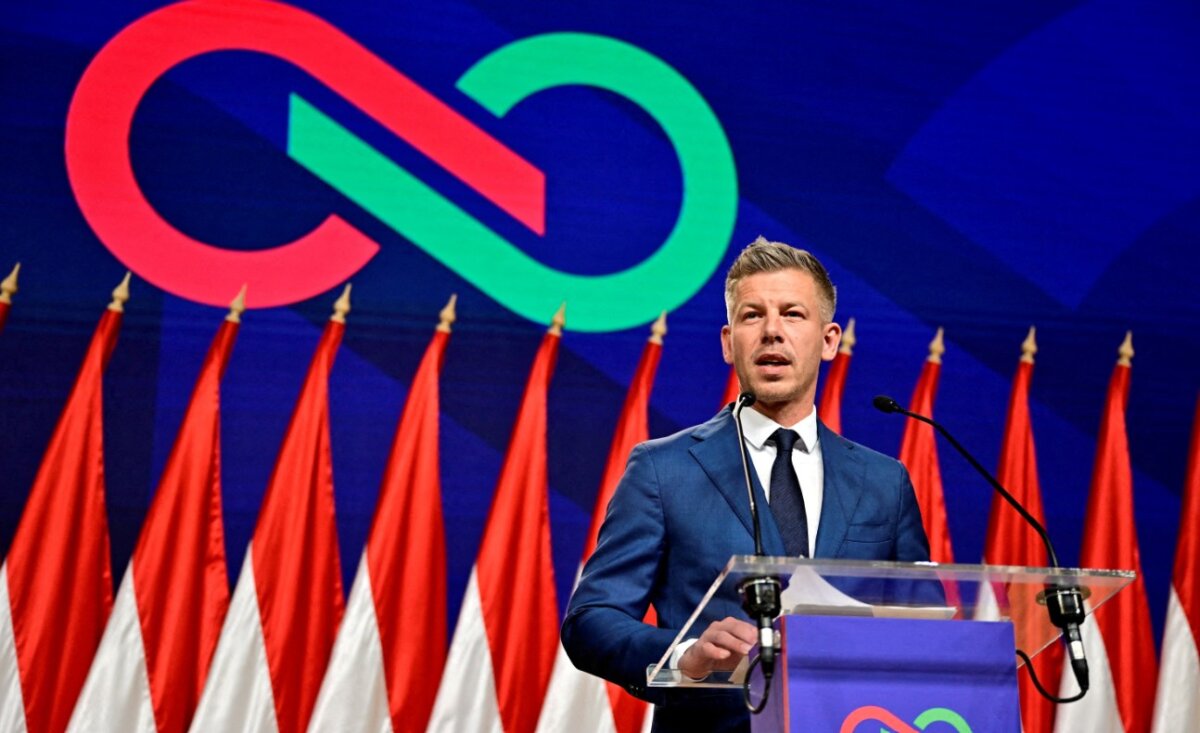
The center-right Tisza party, led by Peter Magyar, defeated long-time Prime Minister Viktor Orban’s Fidesz-KDNP alliance on April 12.
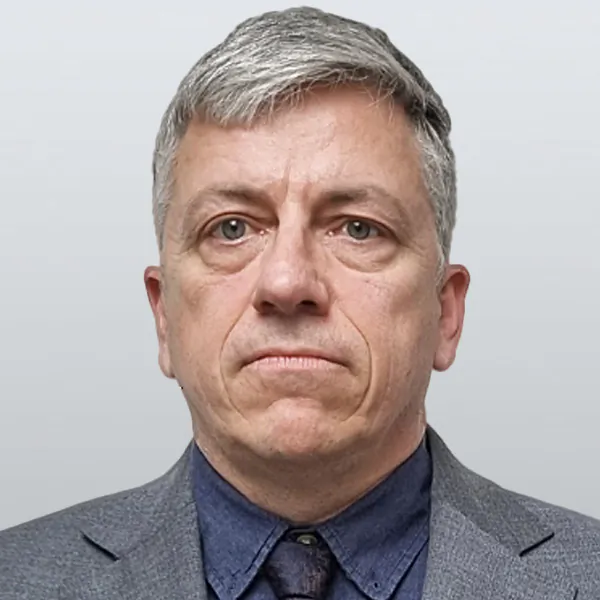
Magyar is set to become the new prime minister on May 9, and on April 22, he confirmed Balint Ruff, a lawyer and political consultant, as his nominee to run the prime minister’s office.
Ruff told media outlet Valasz Online that opening the secret police files would be a priority for the new government. Individuals can access their own files but not, for example, materials about others, including past informants.
“From day one, the ministry will work to make the secret police files public as soon as possible, with as little redaction as possible,” he said.
Ruff told Valasz that the new government wanted to learn “from the mistakes of the 1990 regime change” and from what he called the “missteps” after Orban became prime minister in 2010 to create a “functioning, humane, normal country.”
After Soviet tanks crushed the anti-communist uprising in Budapest in 1956, the Moscow-backed regime of Janos Kadar reorganized Hungary’s security apparatus within the Ministry of the Interior
That security apparatus was disbanded when the communist regime collapsed in 1990.
Ruff said it had not been possible previously to explore the crimes of the Kadar regime because “everything was swept under the rug” in the 1990s.
“This is a task for historians, but I will be able to ensure that the next government provides a framework for this, that is, that it will provide the opportunity to research without political pressure,” Ruff said.
Unlike in Poland, the Czech Republic, or former East Germany, the names of communist-era secret police collaborators in Hungary have never been revealed, although there has been a steady drip-feed of allegations in the media.
Magyar was elected on a platform of improving relations with the European Union—securing the release of billions of euros in frozen EU funding—and altering course on the Ukraine conflict, where Orban had cordial relations with Russian President Vladimir Putin and frequently clashed with Ukrainian President Volodymyr Zelenskyy.
Hungarian officials said on April 22 that Russian oil was once again flowing through the Druzhba pipeline, after a halt of several months.
Hungary had vetoed a 90 billion euro ($105.4 billion) EU loan to Kyiv, with Orban’s government accusing Ukraine of deliberately holding up oil supplies.
In March, Hungarian police detained seven Ukrainian citizens, including a former intelligence officer, on suspicion of money laundering and seized two armored cars carrying $80 million in cash and $1.5 million worth of gold.
This led to an exchange of allegations on social media between Budapest and Kyiv.
“We are talking about Hungary taking hostages and stealing money. … This is state terrorism and racketeering,” Ukrainian Foreign Minister Andrii Sybiha wrote in a post on X.
Reuters contributed to this report.
 Friends Read Free
Copy
Facebook
Tweet
Friends Read Free
Copy
Facebook
Tweet