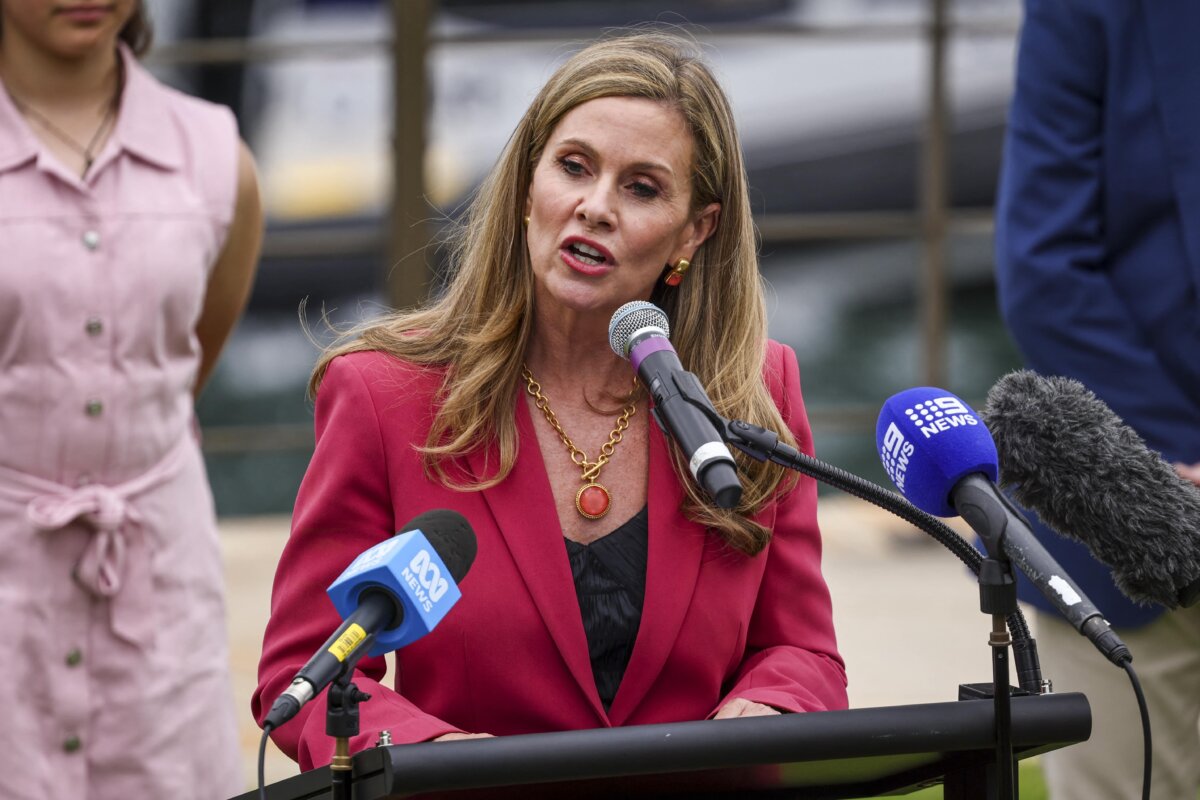

Australia’s eSafety Commissioner Julie Inman Grant says there is no “fine issuing button” when it comes to forcing Big Tech firms to comply with the government’s under-16 social media ban.
Questions were raised about enforcing the ban during an Senate Estimates hearing, more than five months after the landmark bill was passed.
Under the bill, social media companies could face maximum penalties of up to $49.5 million.
By March, it was revealed Facebook, Instagram, Snapchat, TikTok and YouTube were all facing investigation because a “substantial proportion” of teens were circumventing the ban.
“I know there is a strong interest in why fines have not yet been issued,” Inman Grant told the Senate Environment and Communications Legislative Committee on May 27.
“Unfortunately, we don’t have a fine issuing button, rather, systemic non-compliance needs to be proven in court with solid evidence and complex legal proceedings.
“We’re no stranger to such cases either, having just concluded a three-year enforcement action against X Corp for failing to comply with the transparency notice around child sexual abuse material.”
In that case, X Corp admitted liability and paid the government $650,000 plus $100,000 in costs.
But it was not a quick case—it took three years and also involved an extensive tribunal process.
“Such outcomes are hard won and they demonstrate that careful, methodical enforcement with a substantial evidence base delivers results, and, as I have said consistently, even before this law came into effect, this is a complex reform,” Inman Grant said.
“It seeks to unwind more than 20 years of social media entrenchment in our daily lives and dismantling of platform architecture that was engineered to be immersive and addictive for underage users.
“We really need to be clear-eyed about what this regulation is asking platforms to do, to cut off a lucrative pipeline of revenue now and into the future.”
Liberal Senator Sarah Henderson queried where the ban was failing.
“Do you accept that many of the reasons that teenagers are still not complying, and they’re on various social media accounts, and there’s a very high non-compliance rate, is also because teenagers are circumventing the ban?” she asked.
Henderson also asked if it was the case that youths were using VPNs to access social media in Australia, to which Inman Grant said it was not on teenagers to abstain, but on tech companies to enforce the rules.
A VPN, or virtual private network, is a tool that hides a user’s real internet location by routing their connection through another server, often in a different country.
“And, in fact, if you read our regulatory guidance, we had extensive conversations with the platforms about the signals that they can pick up to identify VPNs, and we put very technical information about the signals that platforms should be looking for to be able to detect and prevent the use of VPNs,” Inman Grant said.
When asked by Henderson for an example of poor implementation of the ban, Inman Grant noted one platform allowed users 24 tries a day to pass an image verification test to determine their age—allowing children to potentially “jailbreak” the system.
But the eSafety Commissioner’s office, including General Manager of Health Heidi Snell, said it was not appropriate to expose companies who were less compliant due to active investigations.
“It’s not a matter of just sitting down with the platform and asking them to talk us through how things are working, so it’s a matter of issuing a notice, getting the information to that, and then working out where we need to dig deeper,” Snell said.
 Friends Read Free
Copy
Facebook
Tweet
Friends Read Free
Copy
Facebook
Tweet