
The International Energy Agency (IEA) said on March 6 its members had no plans to release emergency oil reserves amid the ongoing conflict in the Middle East.
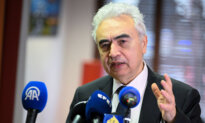
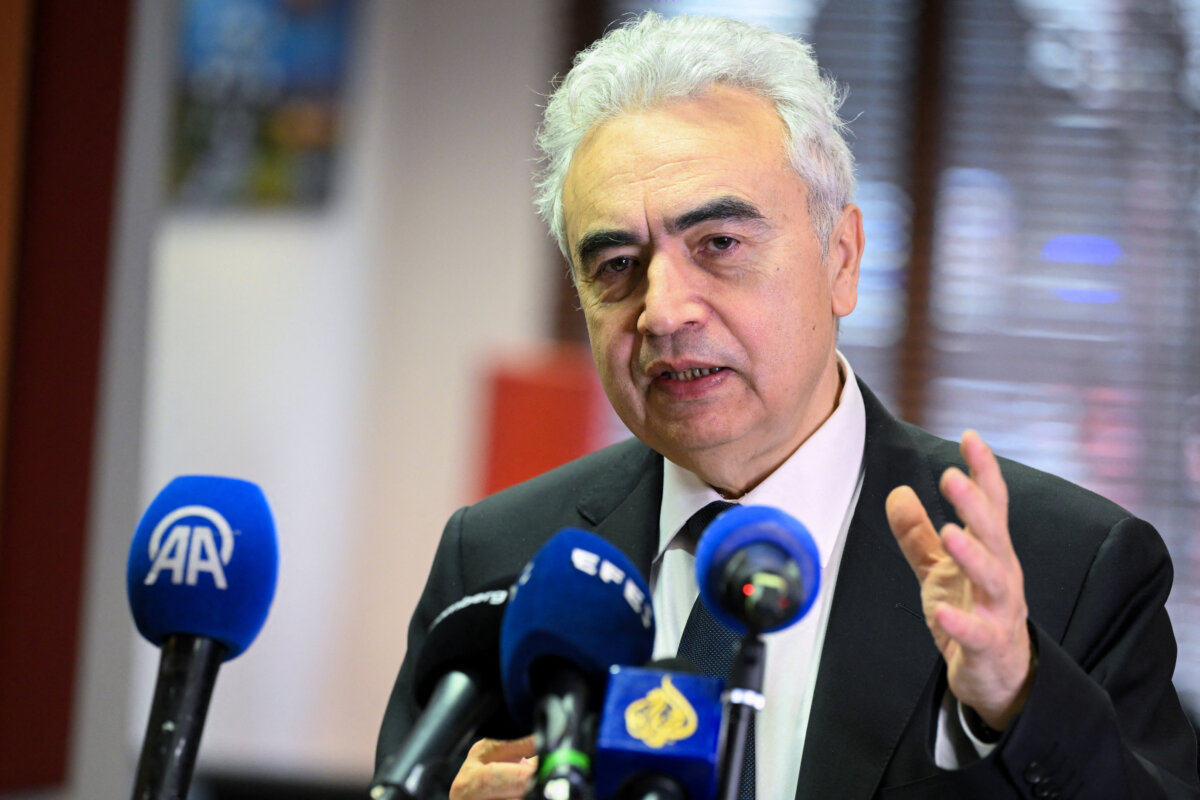
IEA Executive Director Fatih Birol told reporters in Brussels that “there is plenty of oil in the market,” saying the problem was about logistics, not a lack of supply.
When asked about releasing emergency reserves, Birol said member governments were keeping “all options on the table” but currently saw no need for coordinated action.
“Based on my discussions with IEA member governments and looking at current market conditions, there are no plans for a collective action at this stage. We are facing a temporary disruption—a logistical disruption,” he said.
Though Iran has so far not officially closed off the Strait of Hormuz, the fighting in the region has virtually brought all movement through the vital shipping lane to a halt.
About one-fifth of the world’s seaborne oil trade flows and 20 percent of liquefied natural gas travel through the strait, according to the U.S. Energy Information Administration.
Since the fighting broke out on Feb. 28, the price of Brent crude has rocketed from $72 a barrel to more than $89 as of March 6, the largest spike since 2022.
That price could rise significantly higher, with Qatari Energy Minister Saad Sherida al-Kaabi telling the Financial Times he expects all energy producers in the Gulf to shut down exports, a move he said could drive oil to $150 a barrel, according to an interview published on March 6.
Liquefied Natural Gas
The situation regarding liquefied natural gas (LNG), however, was different, according to Birol, who said the conflict could lead to competition between Europe and Asia for LNG in the short term.
“The bulk of the gas going from the Middle East is destined for Asia, and the implication for Europe would be, if the crisis continues in this way, the Asian buyers and the European buyers will need to compete for the LNG, which will get scarcer and scarcer,” Birol said, adding that this could be challenging for European countries.
Despite this, however, Birol warned Europe against pivoting back to Russia for its LNG supplies.
“One of Europe’s historical mistakes was the over-reliance of its energy sources on one single country, Russia,” he said, according to Reuters.
“Given the bitter experience Europeans had with Russia, given the very fact that there will be a lot of LNG anyways coming to markets, and the gas markets turning from the markets of sellers to buyers, I think looking at Russia as an alternative option for getting gas will be economically and, in my view, politically wrong.”
After Russia went to war against Ukraine in February 2022, the West moved quickly to cut its reliance on Russian oil and gas, in a bid to cripple the country’s economy.
Birol added that the IEA expects a large volume of LNG to reach the market over the next 5 years, which will put downward pressure on prices.
“We expect in the next five years a huge amount of LNG wave, about 300 BCM [billion cubic meters] of new LNG coming,” he said.
He added that the LNG industry had only been going for three or four decades, and that half of what the industry had built would hit the markets in the coming five years.
“This would mean there will be a downward pressure on the prices and most importantly, 75 percent of this LNG will be flexible,” he added.
“Flexible” in this context refers to LNG sold under contracts that do not specify fixed destinations.
This means suppliers can redirect shipments to different buyers or markets based on demand, pricing, or other factors, rather than being locked into long-term commitments to particular importers.
Reuters contributed to this report.
 Friends Read Free
Copy
Facebook
Tweet
Friends Read Free
Copy
Facebook
Tweet