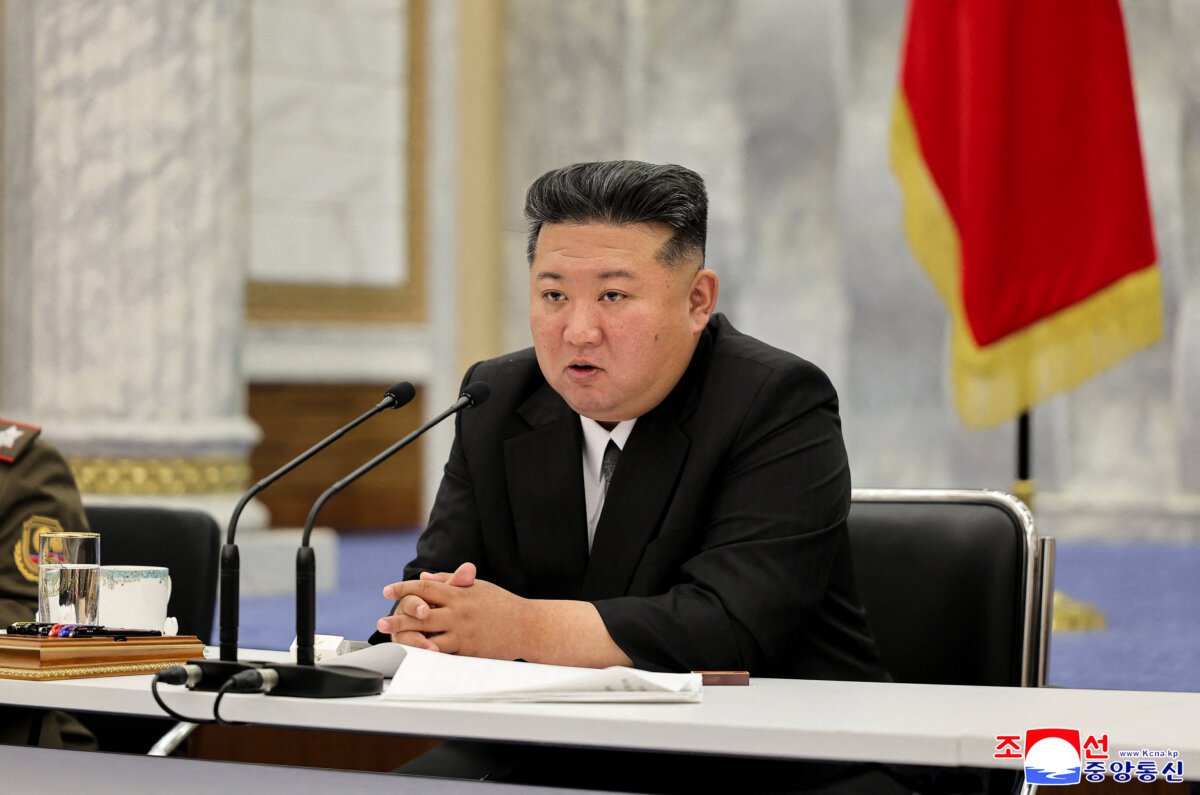

North Korean Defense Minister No Kwang-chol said on Nov. 8 that North Korea will “show more offensive action” against its enemies, condemning the arrival of a U.S. aircraft carrier in South Korea and recent security talks between Washington and Seoul.
Kwang-chol’s comments came a day after North Korea fired a ballistic missile toward its eastern waters, according to South Korea and Japan.
The minister’s remarks followed the visit of Secretary of War Pete Hegseth to South Korea, also known as the Republic of Korea (ROK), last week and the arrival of nuclear-powered aircraft carrier the USS George Washington in the port city of Busan, South Korea, on Nov. 5.
The port visit demonstrated the “enduring alliance” between the United States and South Korea, as well as their commitments to security in the Indo-Pacific region, according to Rear Adm. Sharif H. Calfee, commander of U.S. Naval Forces Korea.
Kwang-chol said the visit of the nuclear-powered aircraft carrier following U.S.–South Korean joint air drills had escalated tensions on the peninsula.
“We will show more offensive action against the enemies’ threat on the principle of ensuring security and defending peace by dint of powerful strength,” Kwang-chol said, according to North Korean state-run media KCNA.
Kwang-chol also condemned a visit on Nov. 3 by Hegseth and his South Korean counterpart, Ahn Gyu-back, to the Korean Demilitarized Zone (DMZ), a buffer area that separates North Korea and South Korea.
US–South Korea Alliance
The visit to the DMZ, according to Hegseth, underscored the U.S. military’s commitment to support President Donald Trump’s “efforts to bring lasting peace through strength.”
After security talks during his two-day visit last week, Hegseth described South Korea as “a strong, model ally” and expressed support for expanding its defense capability against North Korea.
“The U.S.–ROK Alliance is stronger than ever. Together, we’re sharing the burden of preserving peace in the region,” Hegseth said on X.
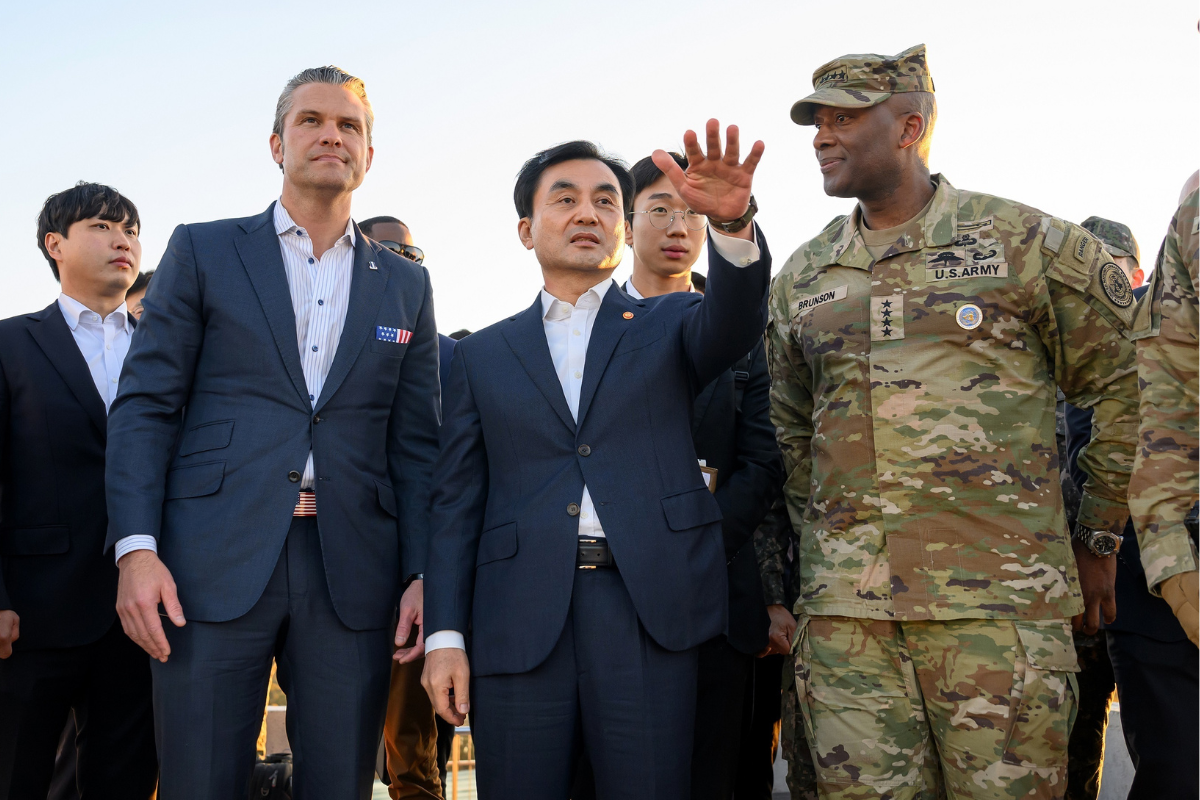
Kwang-chol alleged that Hegseth and Gyu-back were coordinating to boost deterrence against North Korea and integrate their nuclear and conventional forces.
“This is a stark revelation and an unveiled intentional expression of their hostile nature to stand against the DPRK [Democratic People’s Republic of Korea] to the end,” he said.
The Democratic People’s Republic of Korea is North Korea’s formal name.
Kwang-chol said that “all threats encroaching upon the sphere of the North’s security” will become “direct targets” and be “managed in a necessary way,” according to South Korea’s Yonhap news agency.
Missile Tests
North Korea has conducted missile tests in recent weeks, in violation of U.N. Security Council resolutions that ban Pyongyang from using ballistic missile technology.
North Korea launched a short-range ballistic missile on Nov. 7 from its northwest region near the Chinese border, South Korea’s military said, noting that South Korean and U.S. surveillance systems detected the launch in advance and tracked the missile during its flight.
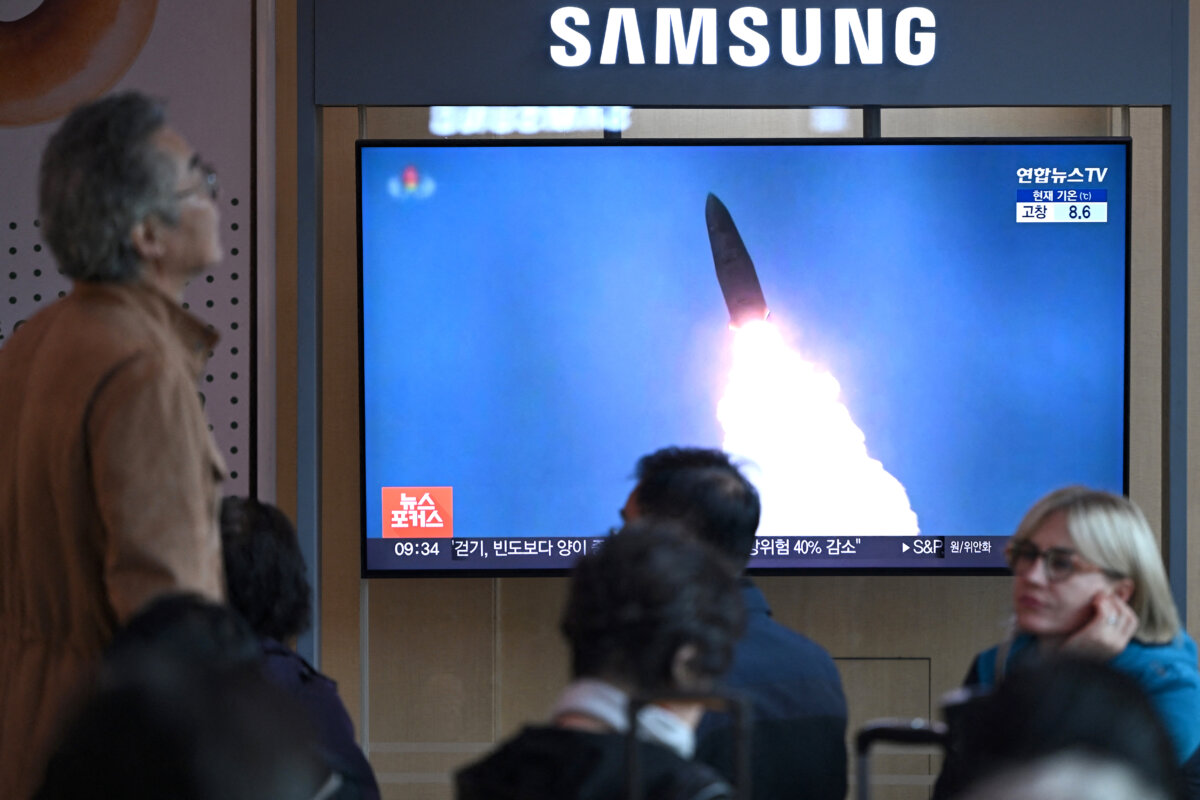
South Korea’s military also stated that North Korea test-fired multiple short-range ballistic missiles on Oct. 22. Six days later, North Korea announced that it had test-fired sea-to-surface cruise missiles ahead of Trump’s arrival in South Korea on Oct. 29 for the Asia-Pacific Economic Cooperation summit.
Last week’s suspected launch came after Washington sanctioned eight North Korean nationals and two entities accused of laundering money tied to cybercrimes.
Trump on North Korea
Ahead of his visit to South Korea, Trump—who met with North Korean leader Kim Jong Un three times during his first term—said he was open to another meeting.
In September, Kim Jong Un said a meeting could take place if the United States dropped the demand for Pyongyang to abandon its nuclear arsenal.
North Korea currently has about 50 nuclear warheads, according to the Federation of American Scientists.
Last week, Trump announced that the United States will share nuclear propulsion technology with South Korea to help it build a nuclear-powered submarine to counter threats from China and North Korea.
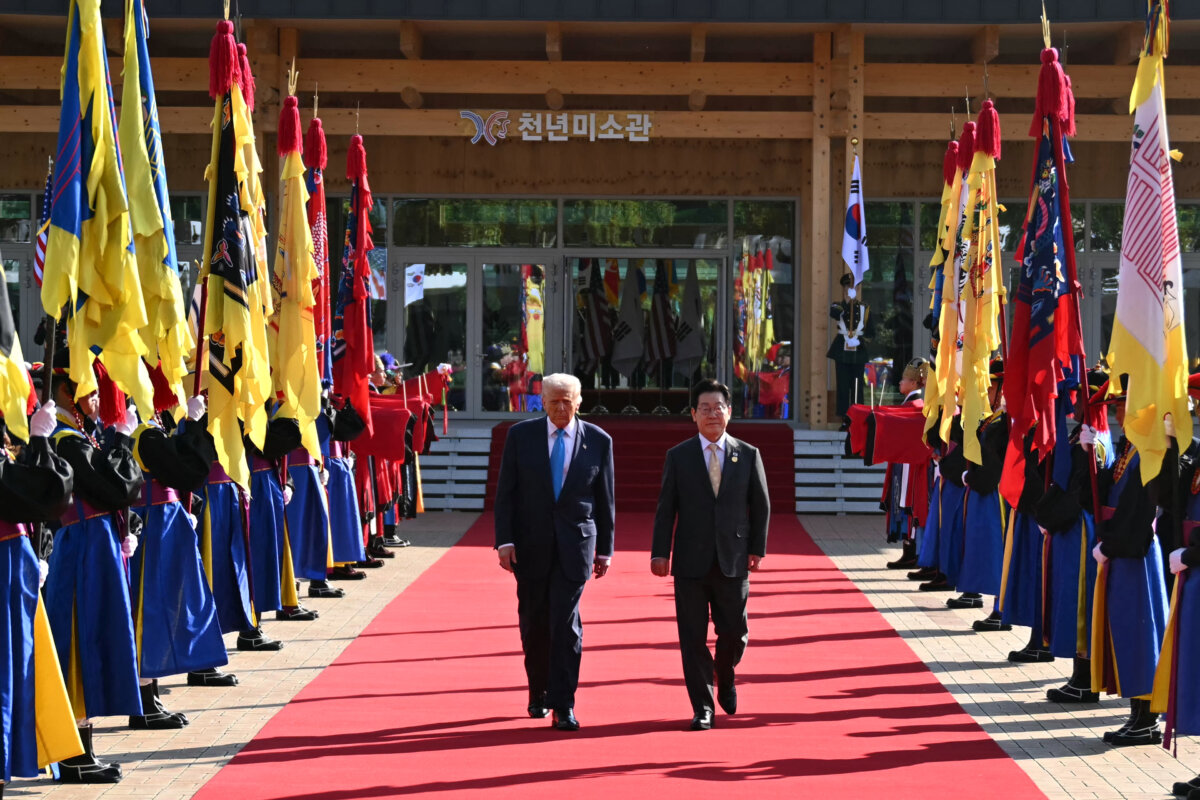
“Our Military Alliance is stronger than ever before, and based on that, I have given them approval to build a Nuclear Powered Submarine, rather than the old-fashioned, and far less nimble, diesel powered Submarines that they have now. A great trip, with a great President of South Korea!” Trump wrote on Truth Social on Oct. 29.
The announcement followed a summit with South Korean President Lee Jae Myung, where the two leaders also discussed defense and trade.
South Korea has pledged $150 billion in shipbuilding investments in the United States, with the submarine to be built at the Philly Shipyard, owned by South Korea’s Hanwha Group.
 Friends Read Free
Copy
Facebook
Tweet
Friends Read Free
Copy
Facebook
Tweet