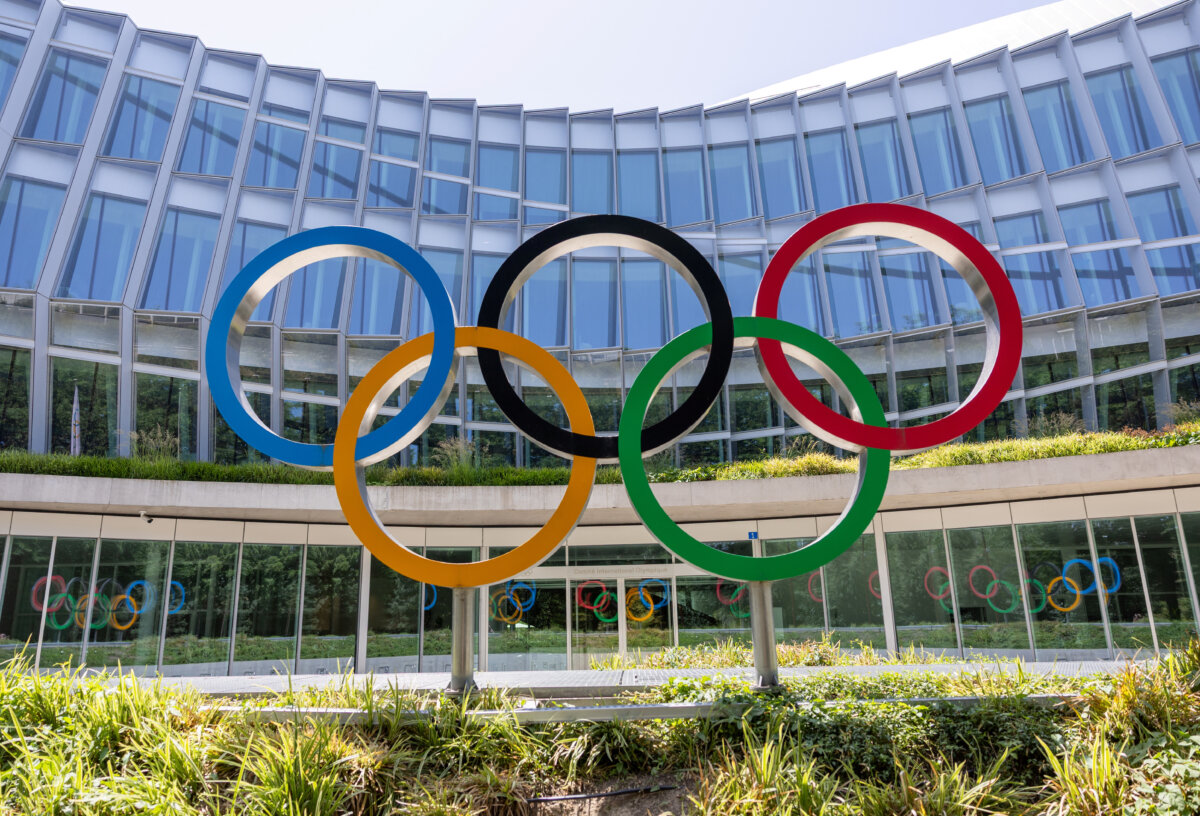

The International Olympic Committee (IOC) stated on Nov. 10 that a working group is considering whether to ban transgender-identifying athletes from all women’s sports in the Los Angeles Olympics but that no decision has yet been made.
The IOC issued a statement following British media reports that biological males will be universally barred from women’s events in all sports in the 2028 games—but did not deny this would be the likely outcome, following several sporting bodies tightening up their rules around entry in the female category.
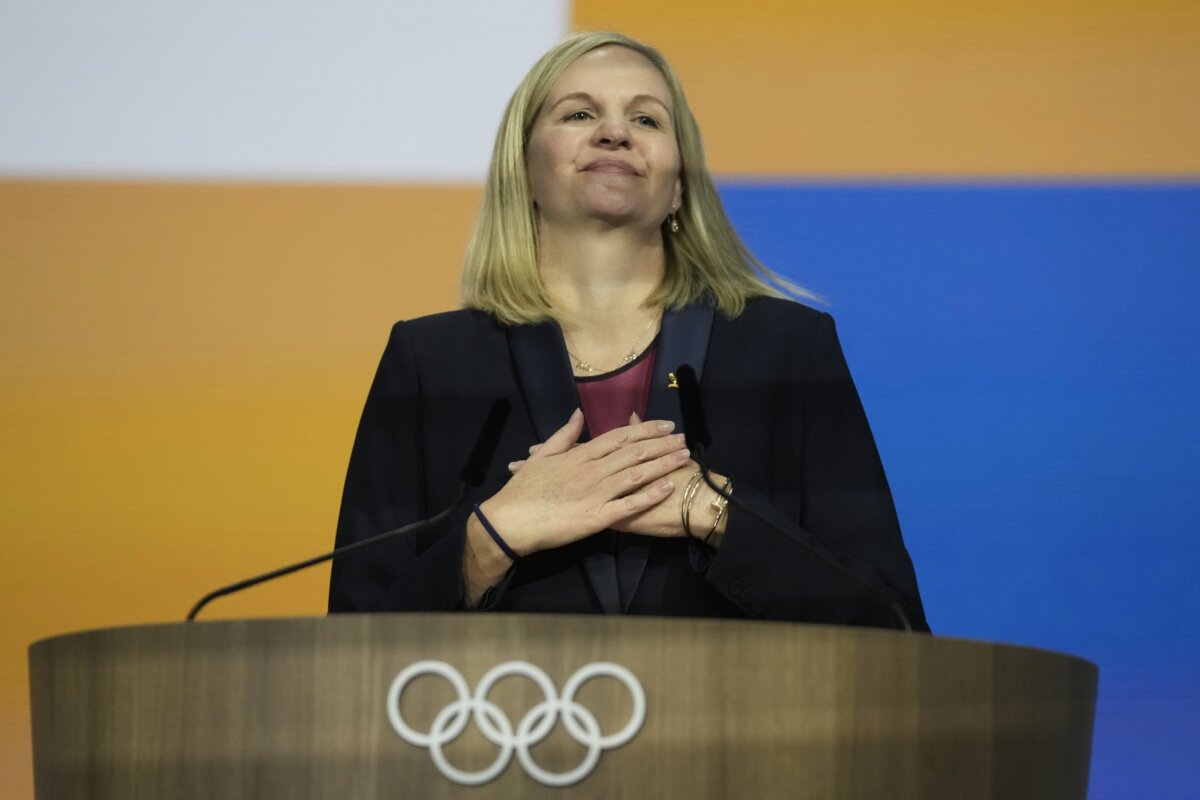
In September, new IOC President Kirsty Coventry established a working group of experts as well as representatives of international federations to look into how to safeguard women’s sports.
“An update was given by the IOC’s Director of Health, Medicine, and Science to the IOC members last week during the IOC commission meetings,” an Olympics spokesperson said on Nov. 10.
“The working group is continuing its discussions on this topic, and no decisions have been taken yet. Further information will be provided in due course.”
Male Advantage Persists
IOC Director of Health, Medicine & Science Dr. Jane Thornton, a former Olympic rower for Canada, has co-authored research published this year that highlights male advantage and transgender policies in the 15 most commonly played sports in the UK.
The paper, published by Keele University, found that male physical advantages continue even after transgender-identifying athletes took drugs and other measures to reduce their testosterone levels, confirming the objections of female athletes who have lost out on medals or places on their team to boys and men.
Previous scientific studies, one published in the British Journal of Sports Medicine in 2019, have consistently found that male physical advantage persists, no matter what surgery is undergone or what drugs are taken.
In February, U.S. President Donald Trump signed an executive order banning transgender-identifying males from competing in female sports events following widespread concerns about fairness and safety for girls and women.
Trump has said that if the IOC failed to update its ad hoc policies regarding sex testing, the United States would deny visas for trans-identifying athletes trying to compete in Los Angeles.
Coventry became the first woman to head the IOC when she took over from Thomas Bach in June.
A seven-time Olympic medalist for Zimbabwe, Coventry said she hoped a clear framework of rules could be established for all Olympic sports when she announced the formation of the Protection of the Female Category Working Group, in one of her first significant acts as president.
Patchwork of Policies
The IOC has previously refused to apply universal rules regarding the participation of transgender-identifying athletes in the Olympic Games, leaving various sports federations to come up with a patchwork of policies.
Currently, some sports—including athletics and swimming—ban transgender athletes from the female category, while other sports, including football, permit such athletes in the women’s teams as long as they have taken measures to reduce their testosterone levels.
The IOC’s 2021 guidelines focused on “inclusion” and promoted the concepts of “sex variation” and “gender identity,” saying there should be “no presumption of advantage” for transgender-identifying individuals.
The tide appears to have turned since the 2024 Olympic Games in Paris, however, following the controversy over Algerian boxer Imane Khelif winning the women’s welterweight gold.
Forty-six seconds into Khelif’s round-of-16 fight with Italian boxer Angela Carini, following two head blows delivered by the Algerian, the Italian withdrew in visible distress.
Carini declined to shake hands with her opponent in a gesture that drew worldwide attention and huge speculation about Khelif’s physicality and biological sex.
The IOC stopped blanket sex testing at the turn of the century.
It defended the participation of Khelif and Taiwan’s Lin Yu-ting in Paris by pointing to their passports, which said they were female, and stating that they claimed to have been born and raised as women.
Both boxers were disqualified from the 2023 Boxing World Championships after failing gender verification tests, which indicate the presence of male chromosomes.
Boxing introduced mandatory sex testing for athletes wishing to enter women’s events in 2023—but not for the Olympics—with athletics re-introducing sex testing the same year, following years of controversy over the participation of South African Casta Semenya in the women’s track events.
Responding to the Nov. 10 reporting of a so-called trans ban on social media, the UK-based group SEEN in Sport, which campaigns for fairness and safety for women, said on X: “There is no trans ban … making sure everybody is in the correct category—without it, it’s unsafe, unfair and women get excluded.”
The post from SEEN states that the wider debate was “not just about elite sport” but also affected clubs at the grassroots level, as well as Paralympic athletes.
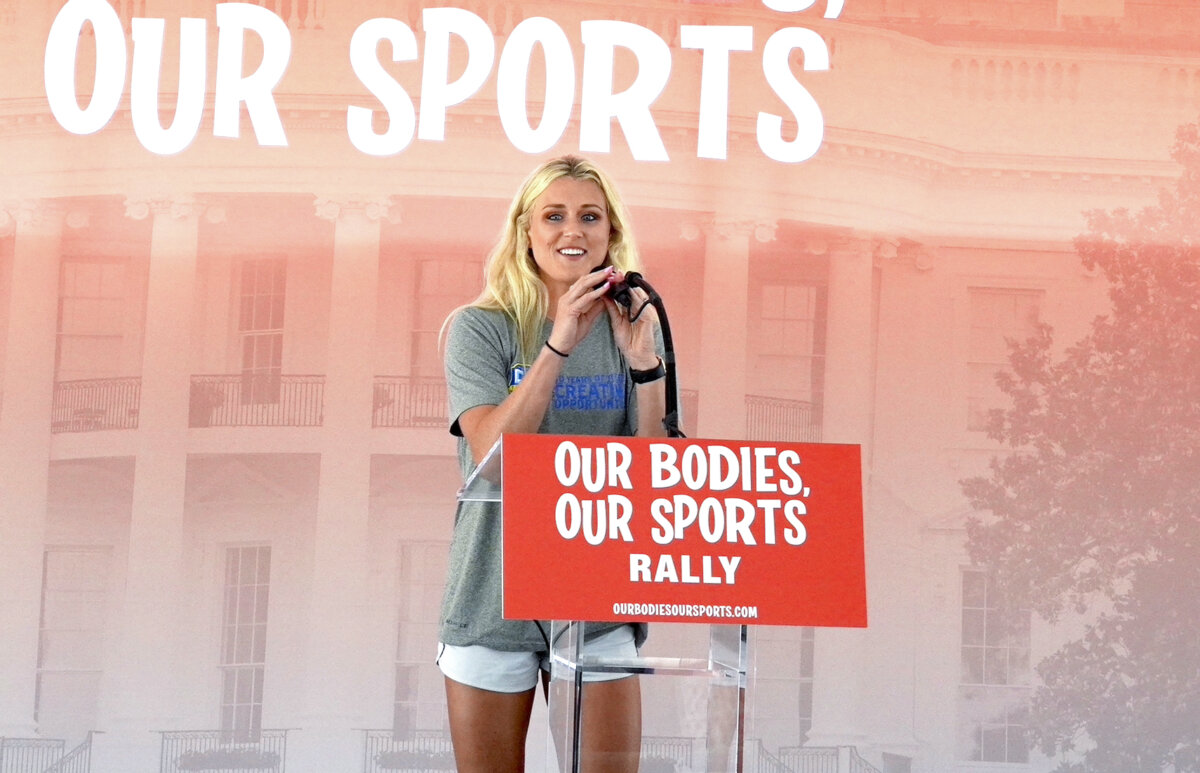
Female athletes who have competed against transgender-identifying males also responded to reports of the anticipated ban, with swimmer Riley Gaines posting on X: “Male athletes are now banned from competing in Women’s category at Olympics. Cool.
“Now strip these dudes of their gold medals and issue an apology to every woman who was cheated and brutally beaten.”
She shared a photograph of Khelif and Lin, who won gold in the women’s featherweight division in Paris.
Despite Khelif and Lin’s test results, the International Olympic Committee, which ran the boxing competition through a special unit separate from the International Boxing Association, allowed both athletes to compete in the Paris Olympics.
Neither Khelif nor Lin has ever claimed publicly to have an intersex condition, such as a chromosomal abnormality.
After Khelif’s controversial victory in Paris, the boxer told a press conference: “I am a woman like any woman. I was born a woman, and I have lived as a woman, but there are enemies to success, and they can’t digest my success. That also gives my success a special taste.”
Lin has been less vocal than Khelif over the gender row but gave an interview with CNA English News, claiming that the gender test result was “false.”
“[My appearance] draws a lot of attention. Sometimes when I go to the restroom, I get asked, ‘Is that the right one?’ Then I would tell them I’m a woman … I can’t control what others say … I don’t have to cater to stereotypes,” Lin said, according to a translation.
Laurel Hubbard, a weightlifter from New Zealand, was the first openly transgender-identifying athlete to compete at the Olympics in 2021.
Hubbard failed to record a successful lift in the women’s +87kg category and was eliminated from the contest.
The IOC is scheduled to meet in Italy early next year, where it could announce a new policy protecting women’s sports ahead of the Winter Olympics, which will take place in Milan and Cortina d’Ampezzo from Feb. 6.
Reuters contributed to this report.
 Friends Read Free
Copy
Facebook
Tweet
Friends Read Free
Copy
Facebook
Tweet