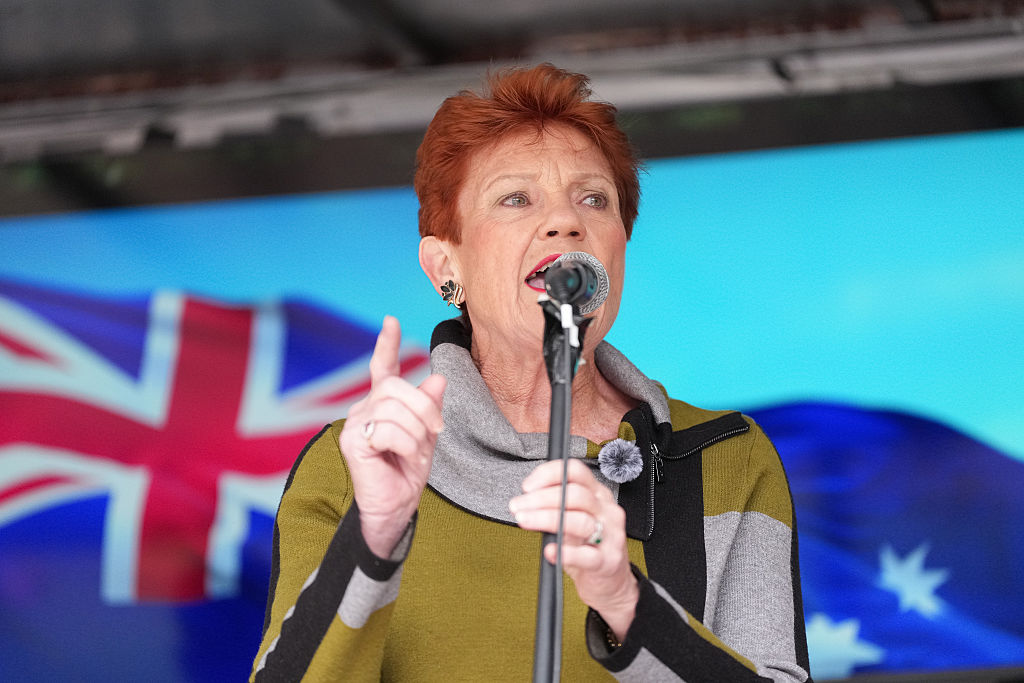

New polling data reveals the conservative-leaning minor party, One Nation, has now pipped the traditional centre-right Liberal-National Coalition for the first time.
The Newspoll figures released on Jan. 18 showed 32 percent support for Labor, 22 percent for One Nation, 21 percent for the Coalition, 13 percent for “other,” and 12 percent for the Greens.
The results are the latest in a series of polls conducted by various companies that show One Nation’s support in Australia—since the May federal election—has been trending rapidly upwards.
A DemosAU poll conducted on Jan. 5-6 placed One Nation level with the Coalition for the first time.
If the polling is reflected at the next election, it would be the biggest shake-up to Australia’s two-party political scene since the 1940s when former Prime Minister Robert Menzies established the current Liberal Party.
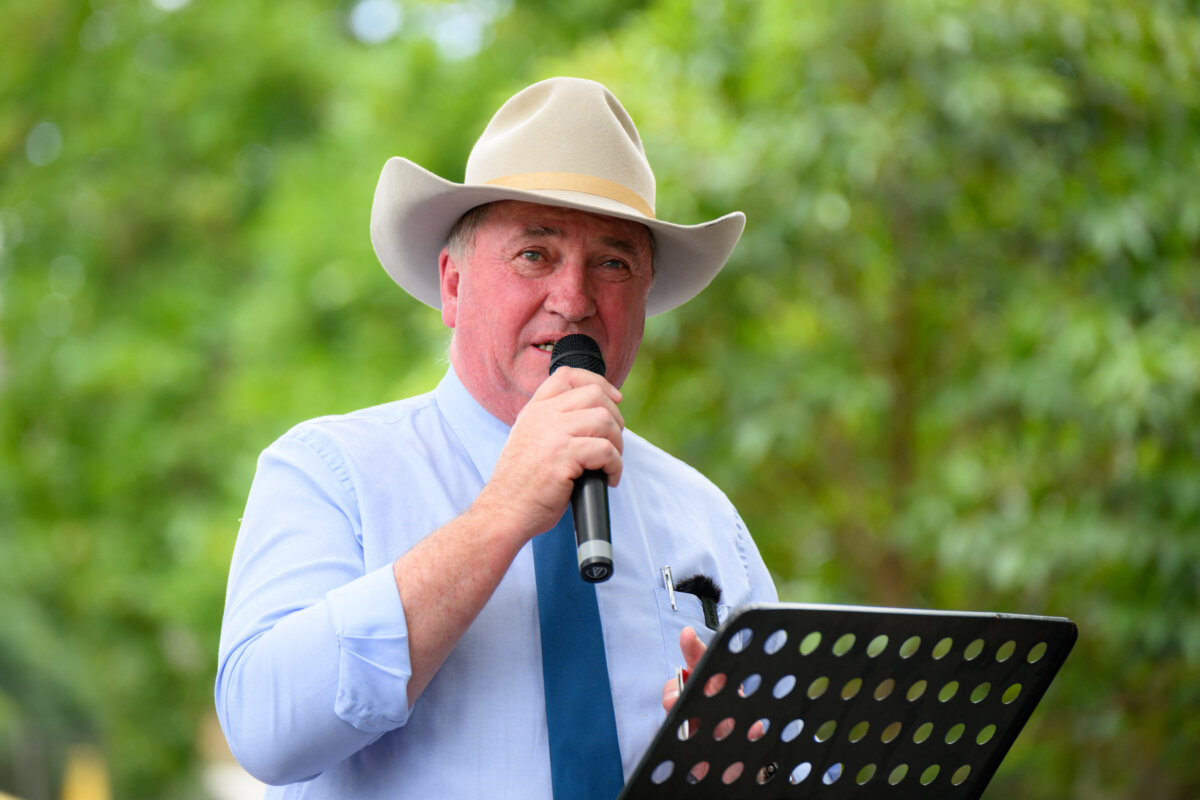
Speaking on the Sunrise program, former National turned One Nation member Barnaby Joyce said the Coalition and Labor were losing votes to his party.
“I’m overwhelmed when I got to areas that would traditionally be Labor Party families, Labor Party areas, and they have changed across to One Nation,” he said.
“You can see that in the Hunter Valley, you can see that in the seat of Blair in Queensland, I can see that even in areas of [regional] New England.
“People want a dynamic change. You [the government] talk about housing but you haven’t fixed housing. You’ve talked about cost of living, but you haven’t fixed cost of living, you’ve talked about immigration but you haven’t done anything about it.”
Joyce did caution that the indications are still early.
“It’s not a vote at an election, but it inspires us to continue the work, work very hard.
“And when you’ve got to make a choice between political correctness or looking after Australians, we’ll look after Australians first.”
One Nation established in 1997 aligns with similar movements overseas like Reform UK, the Brothers of Italy, and Donald Trump’s Make American Great Again, with a focus on rejecting strong progressive policies like high immigration, climate change, globalisation, broad welfare systems, and the Chinese Communist Party (CCP).
Albanese Warns of ‘Division’
Meanwhile, Prime Minister Anthony Albanese said he believed the poll results showed the Coalition had an issue with “coherent policies.”
“I think that was an issue at the last election. It remains an issue,” he told ABC Radio.
“Sussan Ley said when she became Opposition Leader that she would take the Liberal Party back more towards the centre-right, away from where it had positioned itself on the hard right of the political spectrum. And what we’re seeing now often is a contest on the right of politics for who can be more right wing.”
Albanese also accused One Nation of being a “divisive force” since the party’s formation in the 1990s, predicting the party would fail to put forward “real solutions.”
“And I don’t want to see One Nation with a higher vote than the Coalition,” he said.
“I think that the parties of government and alternative government, which change course in Australia over time, have served our nation pretty well, our political system, compared with what we see overseas.
“But we do see a rise in populism of a right-wing variety that can often cause considerable division.”
Labor Continues to Lead Against the Coalition
The most recent poll also showed Labor leading against the Coalition on a two-party preferred basis—with Labor leading on 55 percent to the Coalitions 45 percent.
Of those polled, 51 percent said Anthony Albanese was preferable to Sussan Ley as leader, with 18 percent “uncommitted.”
But polling also showed a higher rate of dissatisfaction for Albanese in his prime ministerial role, with 47 percent claiming disappointment.
For Ley, 42 percent said they were dissatisfied in her performance as opposition leader.
But the numbers flipped again when it came to satisfaction—47 percent said they were satisfied with Albanese, but only 35 percent said they were satisfied with Ley.
 Friends Read Free
Copy
Facebook
Tweet
Friends Read Free
Copy
Facebook
Tweet