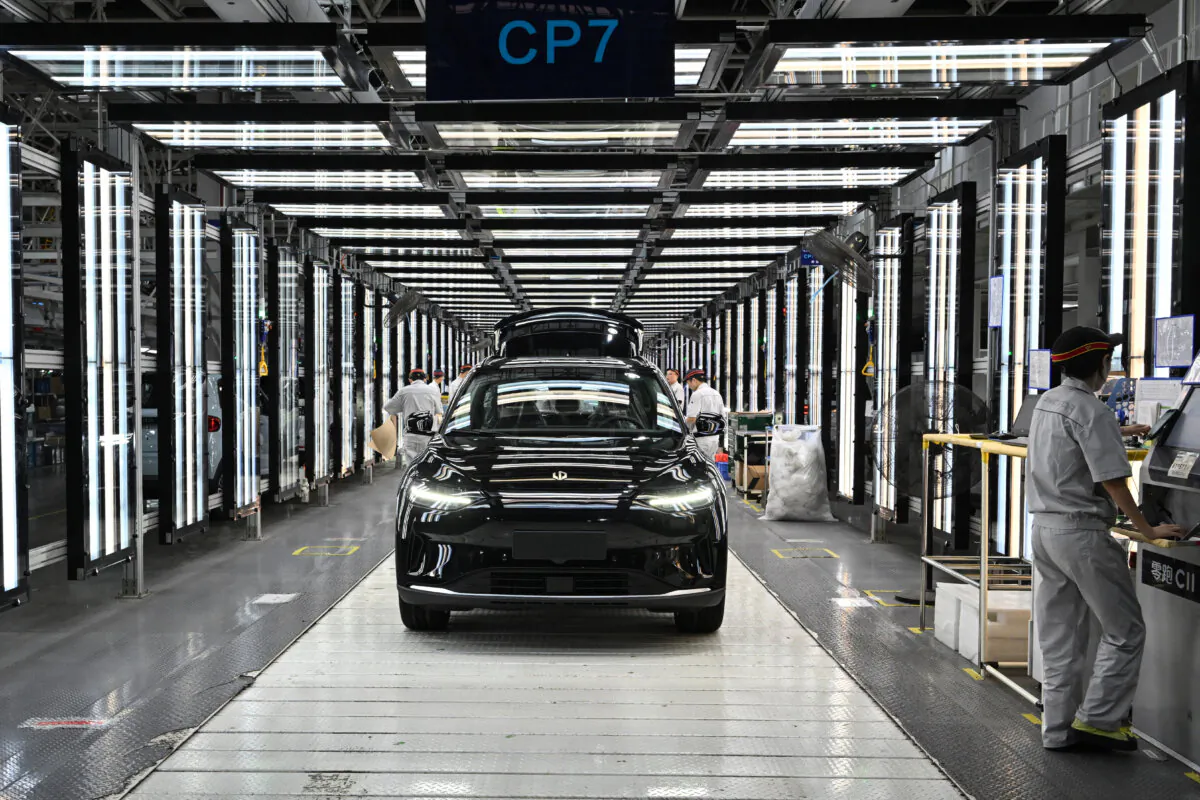

Ontario Premier Doug Ford says it’s “unacceptable” that Stellantis is reportedly discussing options for building Chinese electric vehicles at its idled plant in Brampton, Ont., in partnership with Chinese automaker Leapmotor.
The alleged talks between Stellantis and its Chinese partner, Zhejiang Leapmotor Technology Co., are in early stages, according to an April 1 Bloomberg report, which cited unnamed sources familiar with the matter.
Stellantis acquired a roughly 21 percent stake in Leapmotor in 2023, and the two automakers later formed a joint venture, Leapmotor International, to expand production outside China, with Stellantis holding a 51 percent stake.
Ford made the comments critical of the potential Brampton plant deal during an interview with CBC News in Dallas, Texas, where he is meeting with U.S. counterparts to oppose tariffs on Canadian goods ahead of the review of the United States-Mexcio-Canada Agreement on free trade in July.
Ford said an agreement to produce Chinese EVs in Brampton would undermine Ontario autoworkers as it would potentially involve the use of kits, where cars are largely built in China and then shipped overseas for final assembly.
“It’s unacceptable,” Ford told CBC. “We can’t have cheap Chinese parts and kits coming over to be assembled. We’re dead against this.”
An arrangement between Stellantis and Leapmotor to build Chinese EVs in Brampton would be the first major Chinese automotive investment in Canada since Ottawa struck a deal with Beijing, during Prime Minister Mark Carney’s visit to China in January. Carney announced plans during the visit to reduce tariffs on Chinese EVs and drive new Chinese investment in Canada’s auto industry.
The deal slashed tariffs from 100 percent to 6.1 percent on up to 49,000 Chinese electric vehicles for a year, which will increase to as many as 70,000 EVs after five years.
The Prime Minister’s Office said the agreement would drive “considerable new Chinese joint-venture investment in Canada with trusted partners” within three years, and more than 50 percent of the vehicles would be “affordable” EVs with a price of less than $35,000.
Unifor National President Lana Payne says the union has “serious concerns” relating to partnerships with Chinese auto manufacturers “based on a track record that clearly proves they don’t support auto manufacturing or supply chain jobs outside of China.” The union represents 40,000 auto sector workers in Ontario.
“The jobs are kept in China where the parts are made, and the vehicle is pre-assembled before it is shipped overseas for kit assembly,” Payne said in an April 2 statement.
“This is not manufacturing. These knock-down kit plants would employ a small fraction of workers while displacing tens of thousands of direct assembly and auto parts jobs.”
Payne said Unifor warned of this outcome when Ottawa initially signed its EV deal with Beijing.
“What we need from government is an auto policy that supports those companies that build and manufacture here in Canada,” she added, noting that Unifor expects Stellantis to “live up to the commitment that was made for product and supported jobs” at its assembly plant in Brampton.
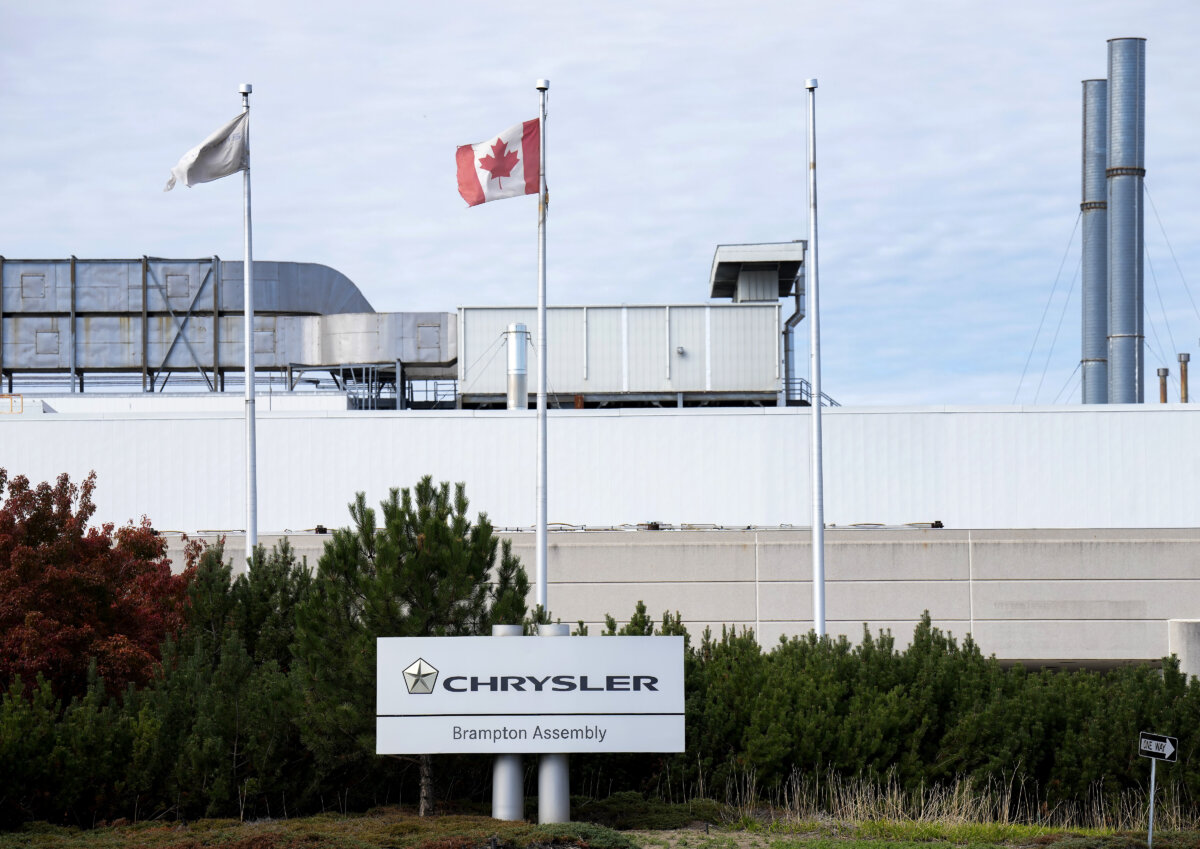
Brampton Assembly Plant
Production at the Stellantis facility in Brampton was paused in 2024 to allow Stellantis to update its assembly line for the production of the next generation of the Jeep Compass, but work was halted in February 2025 after the announcement of U.S. tariffs on Canadian goods.
The new electric SUV was originally scheduled to go into production at the Brampton plant later in 2025, but the company announced last October that it was shifting production of the Jeep Compass to Belvidere, Illinois, as part of a US$13 billion investment in the company’s manufacturing operations south of the border. The move impacted some 3,000 jobs in Brampton.
Industry Minister Mélanie Joly has said the production shift breached contracts Stellantis had with the Canadian and Ontario governments to “maintain its full Canadian footprint” in return for substantial financial subsidies, and warned Ottawa could pursue legal action.
A spokesperson for Joly’s office told The Epoch Times that the resolution process is ongoing and the federal government is actively engaging with Stellantis, Unifor, and the Ontario government.
Joly commented on the alleged discussions between Stellantis and Leapmotor to produce Chinese EVs in Brampton, during an unrelated press conference on April 2. She told reporters that it is “completely unacceptable” the automaker decided to end production at its Brampton plant, and said she has been clear that the government will get its money back unless Stellantis brings back production.
She noted that to resume production, the company needs to ensure there are proper labour standards and conditions for workers, that production supports the local supply chain, and that the software in the vehicles is secure, which she said is important for its obligations under the USMCA.
“We can’t bring cars in a kit to Canada,” Joly told reporters. “Why? Because one of the big parts of our auto industry is actually linked to the fact that we have a big auto parts sector–200,000 workers–and we have the three biggest companies in the world in auto parts… We’ll support these companies, we’ll support these workers.”
Joly said she would be speaking with Unifor later the same day.
Stellantis has not confirmed the reported discussions with Leapmotor, but said in a statement that it is “actively evaluating future programs” for Brampton and is in discussions with government officials and key stakeholders.
Ottawa’s deal with Beijing on Chinese EVs has been criticized by Conservative MPs, China experts, as well as the U.S. administration. Trump said China would “eat Canada alive,” while U.S. Commerce Secretary Howard Lutnick said it could jeopardize the upcoming review of the USMCA.
Jennifer Cowan, Reuters, and The Canadian Press contributed to this report.
 Friends Read Free
Copy
Facebook
Tweet
Friends Read Free
Copy
Facebook
Tweet