
Industry Minister Mélanie Joly is threatening automaker Stellantis with legal action if the company disregards its funding agreement with Ottawa and proceeds with its plan to manufacture midsize Jeeps in the United States rather than in Ontario.
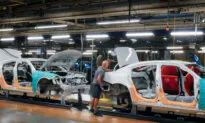
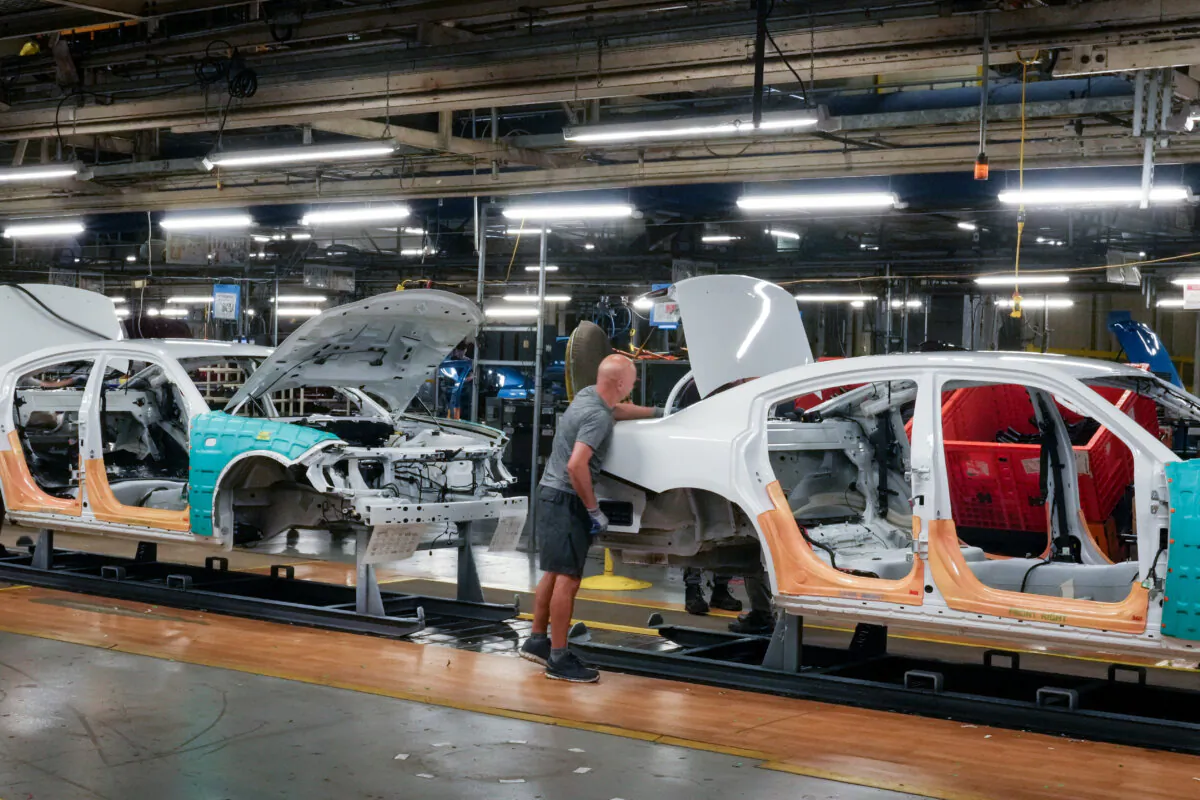
The move comes a day after Stellantis announced it will shift production of the Jeep Compass from the Brampton Assembly Plant in Ontario to Belvidere, Illinois, as part of a US$13 billion investment in the company’s manufacturing operations south of the border. The move will impact some 3,000 jobs in Brampton.
Joly sent a letter on Oct. 15 to Stellantis CEO Antonio Filosa that accuses the company of reneging on its commitments to the Canadian and Ontario governments to “maintain its full Canadian footprint” in return for substantial financial subsidies.
Stellantis entered an agreement with both Ottawa and the province two years ago that both governments would provide up to $15 billion in performance incentives contingent on the automaker satisfying a series of conditions, including meeting a production mandate in Brampton.
Joly called the company’s course reversal “unacceptable” in her letter, saying that “anything short of fulfilling that commitment will be considered as default under our agreements.”
“Should Stellantis choose not to respect its obligations, we will act in the interest of all Canadians and hold the company to full account, and exercise all options, including legal,” Joly said in the letter.
The minister said at an Oct. 15 press conference that Ottawa has “been engaging with the company for months now, knowing that the Brampton facility was going to be retooled.”
The Epoch Times attempted to contact Stellantis leadership for comment but did not hear back before publication.
Stellantis committed $3.6 billion in 2022 to retool the Brampton and Windsor, Ont., assembly plants to meet the company’s objectives for electric vehicle and battery development. Both the federal and provincial governments pledged $1.4 billion for the upgrade, bringing the total investment to $5 billion.
Production at the Brampton facility was temporarily paused in 2024 to enable Stellantis to update its assembly line for the production of the next generation of the Jeep Compass, but work was halted in February 2025 following the announcement of U.S. tariffs. The new electric SUV was originally scheduled to go into production at the plant later this year.
Tariff Ties
Prime Minister Mark Carney issued a statement on Oct. 14 about the Stellantis announcement, but declined to speak about the issue when questioned by reporters in Ottawa the following day.
His statement described the decision to move production to the United States as a “direct consequence of current U.S. tariffs and potential future U.S. trade actions.”
U.S. President Donald Trump has imposed a number of tariffs on Canada this year, including 25 percent tariffs on vehicles and auto parts in April. He has also announced 25 percent tariffs on all medium- and heavy-duty trucks entering the United States beginning in November.
Carney said investment decisions in Canada’s auto sector will continue to be impacted by tariffs until the United States-Mexico-Canada Agreement (USMCA) is reviewed in 2026, but said he still expects Stellantis “to fulfill the undertakings they have made to the workers of Brampton.”
The Opposition Conservatives commented on the Stellantis announcement, noting in a statement that the prime minister has yet to “negotiate a win” with the U.S. president.
“Mark Carney’s response is for auto workers to wait until he can renegotiate CUSMA,” the Oct. 15 statement said. “After failing to get the deal he promised three months ago, auto workers can no longer afford to wait. Thousands now have to worry about paying their mortgages, putting food on the table or having to tell their kids they can’t afford to register for hockey this winter.”
Ontario Premier Doug Ford also reacted to Stellantis’s announcement on moving its Jeep production, calling the move “disappointing.”
“They’re investing $13 billion in the US, but we’re an auto manufacturing powerhouse here,” Ford said during an unrelated Oct. 15 press conference in Kenora, Ont. “We can produce the best vehicles anywhere in the entire world, right here in Ontario. So I’m going to keep pushing like they’ve never seen before.”
Ford said he has spoken to company leadership since the announcement and was assured the Brampton plant will continue operations in the future.
“I had a conversation with the president of Stellantis yesterday,” Ford added. “He said they are going to postpone it for a year. They are going to find a new model.”
In the meantime, there are plans to add a third shift at the Windsor plant, potentially permitting 1,500 out of the 3,000 employees impacted to relocate to that site, Ford said.
Stellantis has confirmed in a media statement that the automaker has plans for its Brampton plant, but would only discuss them with the government. The Epoch Times attempted to contact Stellantis for additional comment but did not hear back before publication.
A company press release indicated that more than $600 million of the $13 billion investment plan will be allocated to reopen the Belvidere Assembly Plant. It also pledges $400 million for the Toledo Assembly Complex in Ohio, and $100 million to retool the Warren Truck Assembly Plant in Michigan.
Trump has increasingly leveraged more tariffs against Canada since spring, raising its 25 percent tax on all imports that do not adhere to the United States-Mexico-Canada Agreement (USMCA) to 35 percent on Aug. 1.
Aside from the 25 percent tariff on all cars and trucks not built in the United States and the upcoming 25 percent tax on heavy-duty trucks, the president has also implemented a 50 percent tariff on copper, aluminum, and steel imports, a 45 percent tariff on softwood lumber. More recently announced was a 100 percent tariff for Canadian pharmaceuticals, as well as a 50 percent levy on kitchen cabinets and bathroom vanities, and a 30 percent tariff on upholstered furniture.
Carney has responded by removing tariffs Canada had earlier slapped on American goods with the exception of its 25 percent tariffs on U.S. steel, aluminum, and auto imports.
Carney met with Trump in Washington recently to talk about tariffs and a potential trade deal. However, Trump said it would be more challenging for Canada to reach an agreement compared to other nations due to its close proximity to the United States, which he referred to as a “natural business conflict.”
 Friends Read Free
Copy
Facebook
Tweet
Friends Read Free
Copy
Facebook
Tweet