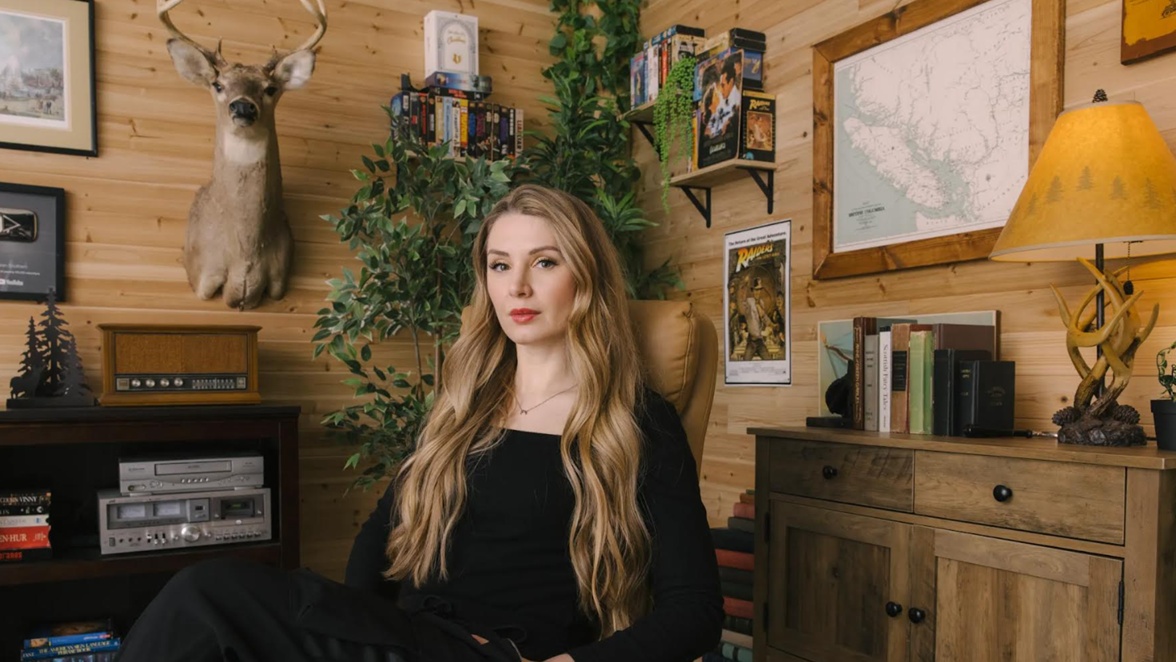

For nearly a decade, left-right politics and cultural issues were more than topics Lauren Southern followed. The fight over issues such as gender ideology, feminism, and free speech shaped her work, friendships, public identity, relationships, and understanding of the world.
Southern, a Vancouver-based conservative writer and commentator, now says she has left the world of online culture wars behind. She now warns that the battles around those divisive issues have become so ideologically rigid that they distort the perceptions of culture warriors on both sides.
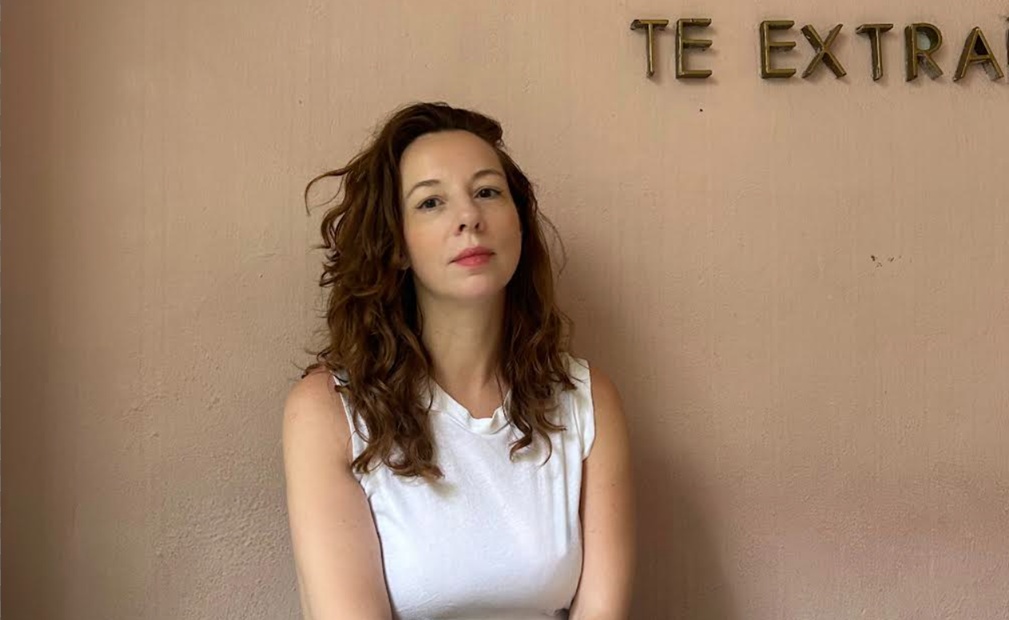
Canadian writer and podcaster Meghan Murphy, a feminist who drew national headlines for her prominent role in the fight over gender ideology, arrived at a similar conclusion from the opposite end of the political spectrum. She says she now rejects political labels and the tribalism she says increasingly dominates public debate, and eventually left Canada for Mexico.
Whether their experiences reflect a broader trend is difficult to measure. But both describe a desire to separate political beliefs from personal identity after years immersed in ideological conflict.
Although they come from different ideological backgrounds, both women say demands for ideological purity within their own movements ultimately pushed them away from identifying with any political or cultural tribe.
For Murphy, the turning point was the insistence among many on the cultural left that men can become women and that women who objected to males entering female-only spaces should be treated as bigots.
For Southern, it was what she describes as the mob mentality that developed within parts of the online right in reaction to the increasingly strident assertions of the left. After years of fighting the culture wars, she says, much of the right that she once fervently supported began resembling the left that it originally opposed, demanding ideological conformity over independent thought.
Neither woman says she has abandoned her beliefs or simply switched sides. Instead, both say they have rejected the central role that political identity and culture war loyalties once played in their lives—and that doing so has improved their mental health and quality of life.
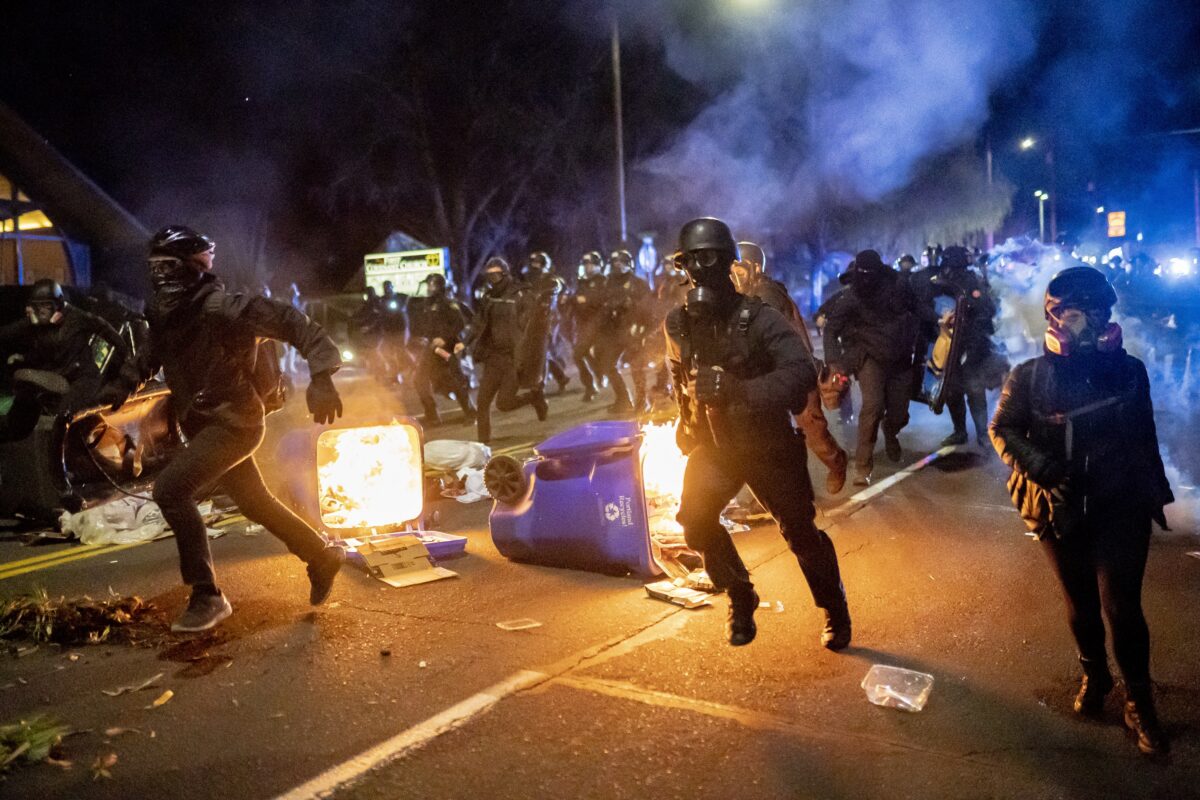
Culture Wars
“Culture wars” is a term popularized by American sociologist James Hunter in the early 1990s. It refers to conflicts over deeply held beliefs about how society should be organized and the values that should guide it.
Today, the term encompasses debates over issues such as race, religion, immigration, multiculturalism, free speech, national identity, sexuality, gender identity, abortion, and changing or preserving social norms.
Canada has not experienced the same level of political polarization as the United States, but many Canadians believe divisions are growing. A Digital Public Square survey conducted in July 2025 found that while only 7 percent of Canadians identified as being on the far right and 5 percent on the far left, most believed ideological polarization was worsening.
The organization concluded that affective polarization—where people increasingly distrust or dislike those they perceive to hold different political views—is a more significant challenge in Canada than ideological extremism itself. In other words, many Canadians occupy the political centre while still viewing those who disagree with them as unreasonable or extreme.
Wilk Wilkinson, director of media systems and operations at Braver Angels, a U.S. organization that brings together people with opposing political views through debates and workshops, said those divisions are often reinforced by social isolation.
“We get stuck in our own bubbles,” Wilkinson told The Epoch Times. “We spend all our time talking to people who think like we do.”
According to Wilkinson, that isolation makes it easier to reduce people on the other side to caricatures.
“What we start to do is we reduce that person in our mind, in our imagination, to a caricature of the worst things that we think about people like them, or the worst examples of people like them,” he said.
Wilkinson cautioned that disengaging from public debate altogether carries its own risks, leaving thoughtful discussion to the loudest and most ideological voices. At the same time, he said it’s understandable that some people are seeking less conflict and trying to engage across disagreements without resorting to dehumanizing rhetoric.
‘I’m Just Going to Talk About My Views’
Before publicly criticizing gender ideology in 2012, Murphy said she had little interaction with conservatives, libertarians, or others to the right. She assumed they had little of value to contribute to political debates.
That changed, she said, when conservatives and other right-of-centre voices became some of the only people publicly defending her right to question whether biological men should have access to female-only spaces.
“I started to question. I stopped trusting the left and feminists because I was like, ‘You guys won’t even hear anybody who thinks differently than you,'” Murphy told The Epoch Times from her home in Mexico.
“How could your opinions even be valid, and how can I be sure that my positions and opinions are valid if I’m not actually being challenged or challenging myself?”
Murphy said the cognitive dissonance deepened as feminist and socialist arguments she supported against pornography and prostitution increasingly gave way to pro-“sex work” and pro-pornography positions among influential segments of the progressive movement.
“At that point I was kind of just like, ‘I’m done with these people. I mean, this is crazy,'” she said.
Murphy also said threats to her physical safety from some members of Vancouver’s LGBT community reinforced her decision to stop identifying with a political or ideological “side.”
As she distanced herself from the left, Murphy said labels such as “socialist” and “feminist” also lost their importance.
“I don’t care. Call me whatever. I’m just going to talk about my views,” she said.
Concern for her safety, combined with opposition to COVID-era restrictions, prompted Murphy to relocate to Mexico in early 2021.
Murphy said she now lives in a community where people with a wide range of political views socialize without making ideology central to their relationships.
Murphy said the contrast with progressive enclaves such as Vancouver has been striking. She believes leaving that environment helped her escape a politically polarized bubble.
“People in Vancouver think that they’re representative of what the majority thinks, and they’re actually the minority,” she said. “They’re like hyper-progressive people who only know people exactly like them, who only know people who think and vote exactly like them, and can’t imagine that anyone would see anything differently than them.”
Murphy continues to write and podcast about gender identity, free speech, and Canadian and American politics. What changed, she said, is not her interest in public issues but the role politics now plays in her daily life.

‘Psychologically Disorienting’
Raised in a conservative Christian household, Southern was studying political science in April 2015 when a video she made criticizing feminism went viral. At 19, she quickly became one of the most recognizable young personalities on the online right.
“There’s none of the guardrails or protections or anyone to give you any idea what to do with it. And it was really psychologically disorienting,” Southern told The Epoch Times.
As her profile grew through work with alternative media and online platforms, politics and the culture wars increasingly shaped every aspect of her life.
“When you’re in a certain political sphere … that’s your friends, that’s your community, that’s your family, that’s the language you speak, that’s the people you date, that’s the people you grew up with,” she said.
“Leaving that is almost impossible after a certain amount of time.”
Southern said she became disillusioned with what she saw as hypocrisy and grievance politics within parts of the online right.
In 2019, she stopped producing political content and left public life in an effort to build a family around the traditional values she had long promoted. By mid-2021, however, her marriage had broken down, leaving her to rebuild her career while raising her son.
Since returning to a more conventional life, Southern said the issues that once dominated her online world have become far less important.
“I’ve been working a normie job, playing sports, being involved in my real-life community, building healthier relationships,” she said, adding that she is also pursuing a master’s degree in theology.
Southern said distancing herself from political labels has made her much happier, though she is skeptical many others will follow the same path.
“It’s very strange talking to people still fully submerged in culture war land,” she said. “You just don’t see the problems they’re talking about playing out in day-to-day life whatsoever,” she said.
“They’re pulling their reality from algorithms instead of anything around them.”
Tired of the Drama
Leaving the culture wars doesn’t necessarily mean abandoning one’s beliefs, Wilkinson said. Nor have Murphy and Southern changed their minds about every issue.
Wilkinson said what changed for him after joining Braver Angels was his willingness to listen to opposing arguments and understand the experiences that shaped them.
“Good conflict is always going to be important. We need to have differing opinions,” he said. “It really boils down to how we navigate that conflict and how we navigate our differences.”
Southern said the key is not allowing ideology to override reality.
“Ideologies are a very bad way to discern reality because you’re filtering reality based on a conclusion you’ve already decided upon, rather than taking these pieces of information and finding the real conclusion,” she said.
Murphy described reaching a similar realization after years of producing analysis she felt her ideological community expected.
“I was like, this is not why I’m a writer. This is not why I’m a journalist, just so that I can regurgitate the same analysis and ideology over and over again,” she said.
Southern said many people adopt opinions not because they genuinely believe them but because they want a sense of belonging.
“A lot of people are saying things they don’t believe so that they can fit into a social group, and they’re so terrified of being excluded from it,” she said.
She said people can mistake conformity within an alternative political community for independent thinking, particularly when they view themselves as outsiders.
“You can be hypnotized by a group that are repeatedly telling you you’re making your own decisions and that you’re a free thinker, but every side is saying that,” Southern said.
Murphy said she now has little interest in arguing with people who respond through predetermined ideological scripts.
“I often just change the subject because it’s just not interesting to me,” she said.
 Friends Read Free
Copy
Facebook
Tweet
Friends Read Free
Copy
Facebook
Tweet