
News Analysis
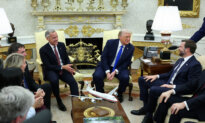
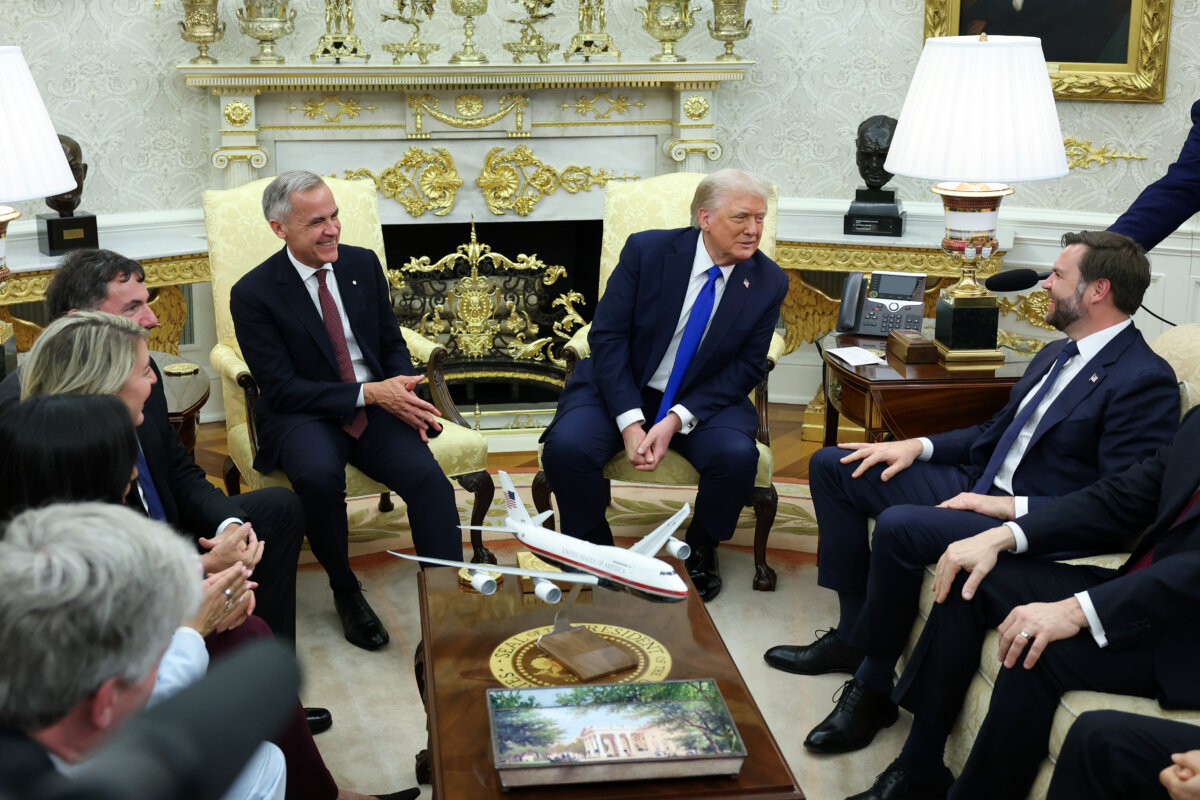
Prime Minister Mark Carney visited the White House to meet with U.S. President Donald Trump for the second occasion in five months, and this time around there was more optimism in the air.
Whether intentionally or not, the officials speaking anonymously to the media ahead of the meeting had created an atmosphere of low expectations for Carney’s encounter with Trump, with some hinting at the possibility of minor deals on sectoral tariffs.
No deal was announced after the meeting. Trump, however, sounded much more positive about such a prospect when he and Carney addressed the media before having a meeting behind closed doors on Oct. 7.
Potential Deal
During the first in-person meeting between the two leaders in May, Trump had told reporters there was nothing Carney could tell him that would make him drop tariffs on Canada. The Trump administration has imposed various tariffs since the winter, with those on metals, automobiles, and lumber having the greatest impact on the Canadian economy.
At the beginning of the second White House meeting, Trump said in opening remarks that an unspecified deal could be made. “We’ll make some deals, and we’ll do some things that are good for both of our countries and markets,” he said.
This was only one among other positive comments Trump made about a potential breakthrough with Canada.
“I think they’re going to be very happy,” he said when asked by reporters whether Carney would be leaving Washington with a deal on tariffs. “We have a lot of things that we’re working on that people don’t talk about.”
Trump did not want to comment on what Canada will be giving the United States in return, while adding: “I think the people of Canada, they will love us again. Most of them still do.”
Carney gave some hints of what Canada could bring to the table in a potential deal. Part of the deals that Trump struck with major economies in recent months involved pledges by countries to invest hundreds of billions of dollars into the United States.
Carney remarked during the meeting that Canada has injected half a trillion dollars in the United States in the past five years and said it could be brought to “a trillion” in the next five “if we get the agreement that we expect to get.”
Canada-U.S. Trade Minister Dominic LeBlanc spoke to reporters after meeting with Trump and his officials and said he saw “substantial progress” from the talks. “There is momentum we didn’t have this morning,” he said, adding he’s “happy” with the discussions.
LeBlanc said Trump and Carney directed their officials to “quickly land deals” in the sectors of steel, aluminum, and energy.
Deal Obstacles
Even though Canada and the United States share the longest undefended border, have an intricate trade relationship, and have been long-standing allies, Canada has remained a major economy without a recent trade deal.
Trump explained some of the reasons for that when taking questions from reporters. He said the reason is specifically that the two countries are neighbours. “It’s much better and easier” to deal with countries far away, he said.
Expanding on that, Trump said that Canada and the United States are in a “natural conflict” as they vie over the same industries, which in a lot of cases have operations on both sides of the border.
“We want Canada to do great, but you know there’s a point at which we also want the same business,” Trump said. “We’re competing for the same business. That’s the problem. That’s why I keep mentioning one way to solve that problem is a very easy way,” Trump added in reference to his idea of making Canada the 51st state. “He wants to make cars, we want to make cars, and we’re in competition.”
Trump has been seeking to shore up domestic car manufacturing and other key industries like steel by imposing sectoral tariffs. These are the tariffs that are having the greatest impact on the Canadian economy, given how integrated supply chains are.
Next Big Deal
Aside from a deal that could be reached on tariffs, Canada, the United States, and Mexico are ramping up for the review of the USMCA free trade agreement between the three countries coming up next year.
Thanks to this deal, when asked why no recent trade deal has been reached with Trump, Carney has repeated in past weeks that Canada is in an enviable position compared to other countries.
Trump negotiated the USMCA during his first term and had touted it as a major accomplishment. In his second term, however, he has been critical of it, specifically around issues like Canadian tariff quotas for the dairy industry.
During his meeting with Carney, he suggested there could be no future USMCA.
“That would be good, or we can just do different deals,” Trump said when asked whether he is committed to renegotiating the USMCA. “We’re allowed to do different deals. If we were, we might make deals that are better for the individual. I don’t care. I want to make whatever the best deal is for this country, and also, very much with Canada in mind.”
In the case of a renegotiation, Trump said there would still be tariffs between Canada and the United States. “We’re going to have tariffs between Canada and, you know, they have them with us, I will say, with our farmers,” he said.
Security
Along with seeking a new economic relationship with the United States, Carney also expected to discuss security issues with Trump.
The security dimension has been a core focus of Trump’s since before he took office. After his election win in November, he had threatened to impose tariffs on Canada because of illegal immigration and fentanyl trafficking across the border.
Ottawa reacted by announcing a $1.3 billion border plan last December, and in February 2025 it followed the U.S. lead in listing Mexican cartels and two transnational criminal organization as terrorist groups.
Measures taken so far by Canada have apparently not convinced Trump to remove the 35 percent tariff related to his security concerns.
Trump said during the meeting that the crisis involving fentanyl, a powerful synthetic opioid causing thousands of deaths on both sides of the border, is “never going to be over.” Nonetheless, he said the Canadian government has “worked hard” and is doing a “much better job than in the past.” Ottawa has said in the past that the amount of fentanyl entering the United States from Canada is very small and that it is taking action to curb the trafficking.
On matters of continental defence, both Trump and Carney previously said that Canada is interested in joining the new U.S. air defence program dubbed the “Golden Dome.”
Trump initially put the price tag for Canada to join at US$61 billion, in May, and about a month later hiked the price to US$71 billion. No announcement of formal cooperation has been made to date, but Trump mentioned this as a fait accompli during the meeting.
“We’ll be working together on a Golden Dome for the two countries,” he said.
The Epoch Times reached out to the Prime Minister’s Office for confirmation but didn’t hear back.
LeBlanc told reporters that the matter was discussed “positively” in private between the leaders, but he didn’t say that Canada has technically signed on to it.
“Nobody put the contract in front of us [for] signing with a witness,” he said. “We told the Americans we want to be a security and defence partner, and the Golden Dome is absolutely part of that conversation.”
Praise All Around
Much like during their first meeting at the White House, Trump and Carney praised each other this time around.
“He’s an extremely popular prime minister, and I’m very honoured to do it,” Trump said in taking credit for Carney’s popularity.
Carney ran an election campaign focused on standing up to Trump. During their first meeting, Trump said Carney had managed a “historical” comeback after the Liberals under his predecessor were staring at the electoral abyss.
“I liked him right from the beginning and we’ve had a good relationship,” said Trump. The president also said Carney is a “good man” and a “world-class leader.” He also called him a “tough negotiator” who can be “nasty, maybe as nasty as any.”
A reporter asked Trump what is holding up making a deal with Canada if he considers Carney a “great man.”
“Because I want to be a great man too,” Trump replied.
Carney was not as effusive with praise. In general, like during the first meeting, he barely spoke as Trump took most questions from reporters. He complimented Trump in a way that reinforced the assessment he had given to Trump back in May.
“I said at the time you are a transformative president,” Carney said on Oct. 7, adding that since then Trump has led a transformation of the economy, convinced NATO members to increase defence spending, helped to achieve peace in several conflicts, and disabled Iran as a “force of terror.”
Carney also recognized Trump’s effort to bring peace in the Israel-Hamas conflict, saying this is the “most important” for Canada.
“This prospect of peace that you’ve made possible, Canada stands foursquare behind those efforts, and we’ll do whatever we can to support,” he said.
Trump proposed a 20-point plan last week to end the conflict that is currently being discussed by stakeholders.
 Friends Read Free
Copy
Facebook
Tweet
Friends Read Free
Copy
Facebook
Tweet