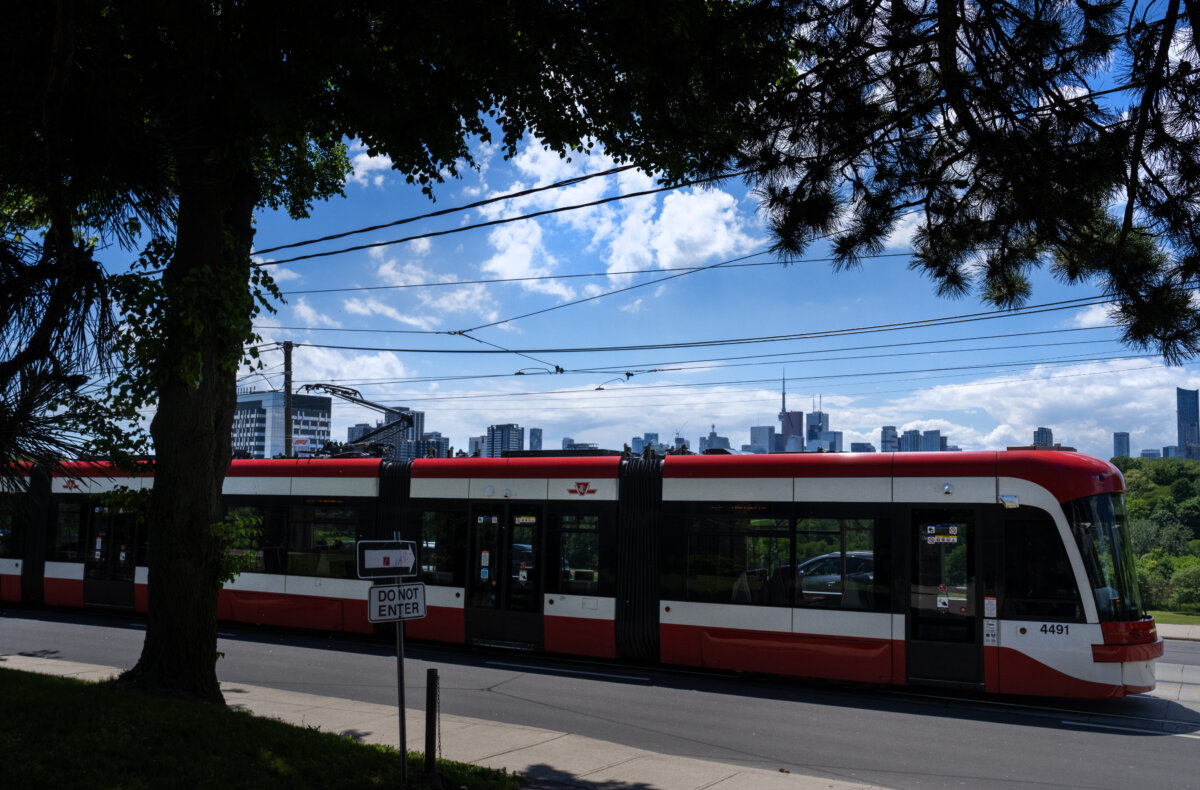

Ontario’s government is proposing changes as part of a larger public safety bill meant to give special constables more power to crack down on drug use on public transit.
The proposed new measures, announced May 4 by Ontario Solicitor General Michael Kerzner, include up to six months in jail and a $10,000 fine for those using drugs on public transit.
“Through these proposed changes we are giving law enforcement and their partners the tools they need to keep our communities and transit systems safe, while holding offenders and those who enable them accountable,” Kerzner said in a May 4 statement.
The measures are expected to be part of an upcoming public safety bill to be tabled by the provincial government. The bill is also expected to propose stricter rules on drug paraphernalia and penalties for landlords who knowingly permit the production of drugs on their properties.
The landlord provisions would not apply to homeless shelters, emergency shelters, retirement homes, and long-term care homes.
Special Constables
The proposal marks a push to further increase the enforcement powers of special constables in the province. Legislation passed last year gave some special constables the authority to carry firearms and gave Niagara Parks Commission officers the right to carry long guns.
Earlier this year, the province also proposed regulations that would give special constables some authority to issue tickets to individuals using drugs in public.
Special constables are sworn peace officers who have narrower powers than police officers. They often work for transit systems, universities, courts, and housing authorities. Most carry batons, handcuffs, and pepper spray, but are not generally authorized to carry firearms, with some exceptions, such as in Niagara.
Ontario’s proposed legislation would make drug use on public transit a specific provincial offence and give special constables more power to enforce it.
Public drug use currently falls into a legal grey area, with enforcement typically pursued only when other offences—such as causing a disturbance, violating transit bylaws or trespassing—are involved, often resulting in tickets.
The Supreme Court of Canada has also put stricter timelines on trials, incentivizing police to prioritize the most serious cases and avoid backing up the docket with lower-level crimes such as possession.
Although police in Ontario are already able to make arrests on public transit and in public for drug possession, drug dealing and drug production under the federal Controlled Drugs and Substances Act, police frequently issue warnings or seize illegal substances and refer drug users to treatment services instead of laying charges.
Kerzner said the province aims to implement the proposed expansion of special constable powers on public transit by July.
“Come July 1, what we want to do is make sure that people know that we will be using special constables on our transit to clean up the people who are using illegal drugs,” Kerzner told media. “And just like last year, when we said we’re cleaning up our parks, we’re cleaning up our transit.”
Of the planned changes to hold landlords responsible for drug production on their properties, Kerzner said it’s part of sending “a message to the landlords.”
“We know that people are making illegal drugs somewhere. We know that the precursor chemicals that are being used to make fentanyl and other terrible, harmful drugs are being made, and we want to send a message to the landlords, especially the commercial landlords: Don’t knowingly close your eyes and turn away,” he said.
Ontario Premier Doug Ford expressed support in February for granting special constables authority to arrest drug users on public transit, saying that anyone “using drugs or shooting up drugs on the subway” should be removed and arrested.
The Canadian Civil Liberties Association said in February that increased powers for special constables on public transit to arrest drug users could violate Charter protections around unreasonable search and seizure and lead to the detainment of marginalized individuals.
“Extending these powers to transit special constables would increase the risk of arbitrary detention, discriminatory enforcement, and the criminalization of non-violent conduct linked to poverty, substance use, and disability,” the organization wrote.
When asked about the civil liberties concerns previously, Ford noted the Ontario government’s ongoing investment in programs treating addiction.
 Friends Read Free
Copy
Facebook
Tweet
Friends Read Free
Copy
Facebook
Tweet