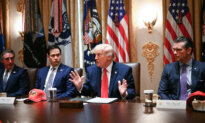

A bill introduced by the Ontario government would restructure school boards and reduce their role in certain areas, citing efforts to address governance and financial management concerns.
The Putting Student Achievement First Act, tabled on April 13, would cap trustees’ honorariums at $10,000, remove their ability to amend board budgets, and create two new executive roles: a CEO and a chief education officer (CEdO).
The proposed legislation would also limit the number of trustees at Ontario school boards to 12. Currently, only the 22-trustee Toronto District School Board exceeds that limit. Boards with fewer than 12 trustees would not have additional trustees added, Ontario Education Minister Paul Calandra said.
The bill is meant to strengthen school board oversight and accountability amid financial mismanagement and decision-making that prioritized politics over student outcomes, the government said in a press release.
The new role of CEO would be responsible for budgets and staffing, while the CEdO would focus on curriculum implementation and student achievement. Calandra said the restructuring would mainly formalize existing roles within boards.
“School boards across the province have a whole cadre of superintendents,” he said. “The goal would be to identify one of those superintendents, who can become the chief educational officer.”
The CEdO must have a background in education and be a member of the Ontario College of Teachers or equivalent.
The bill also proposes province-wide mandatory use of ministry-approved learning materials, standardized written final exams in Grades 9 to 12, and changes to how final marks are calculated. Attendance and participation would also factor into final grades, accounting for 15 percent in Grades 9 and 10, and 10 percent in Grades 11 and 12.
The province said the changes will also help address a worsening teacher shortage. Measures include shortening teacher education programs from two years to one, expanding practicum requirements, increasing training capacity, and allowing credit for prior experience in early childhood education or youth work.
The Ontario Secondary School Teachers’ Federation criticized the legislation, arguing that trustees remain an important democratic link in education governance.
“We know trustees are not perfect, but the role is an important part of our education system,” the union said in a statement. “They are accessible and accountable to the Ontarians who vote them in, and if trustees fail to serve their communities, they can be voted out.”
NDP MPP and education critic Chandra Pasma criticized the bill for being a “power grab,” saying, “By further controlling appointments, budgets, and restricting what trustees can even discuss, this government is centralizing decision-making in Queen’s Park and sidelining local voices.”
The province has raised concerns in recent years about financial management in school boards. In May 2025, the Ministry of Education appointed PricewaterhouseCoopers to review the Toronto District School Board’s finances and validate its fiscal position. The investigation found the board was relying on ministry-approved accounting exemptions to balance its budget and was projecting an in-year deficit of about $58 million for 2025–26.
Separately, an Ontario government-commissioned review released in 2025 into the Brant Haldimand Norfolk Catholic District School Board found that a trustee trip to Italy, which included about $100,000 in religious artwork purchases, was “symbolic of deeper structural problems” in governance and financial oversight. The report examined trustee expenses, travel practices, and decision-making procedures following the trip and concluded that while the incident drew public criticism, the underlying issue was broader weaknesses in the board’s accountability framework.
To address these issues, the proposed bill requires the CEO to oversee the development of the school board’s budget. Trustees continue to hold legal responsibility for approving and allocating the budget, but operate within a more tightly defined framework set by provincial funding rules and directives.
If there is a serious breakdown in governance or non-compliance by the board, the province has the power to step in, which could involve ministerial intervention or oversight measures.
 Friends Read Free
Copy
Facebook
Tweet
Friends Read Free
Copy
Facebook
Tweet