
News Analysis
A TV commercial that was meant to start a conversation has ended another.
Ontario’s anti-tariff ad broadcasted south of the border has indeed achieved Premier Doug Ford’s objective to generate discussion, but it has also been cited by U.S. President Donald Trump as the reason for cancelling trade talks with Canada.
“I don’t regret it at all. My intention was to make sure the American people were informed and have a conversation. And it really started a conversation,” Ford told ABC News on Oct. 27. He added his ad campaign has received over a billion views so far.
Ford also told reporters in Queen’s Park earlier that day it was “mission accomplished” for him.
In practical terms, however, Canada appears further away from reaching a trade deal with the United States to obtain tariff relief in key sectors. By all accounts, because of Ontario’s ad or other underlying factors not identified up front, the timer to reach a deal has been rolled back.
Trump on Oct. 23 said he was terminating all trade negotiations with Canada over Ontario’s ad campaign, which uses portions of a 1987 address from President Ronald Reagan praising free trade, including with Canada. Trump also said he would raise tariffs on Canada by 10 percent, but this has yet to materialize.
Trump pointed to a statement from the Ronald Reagan Presidential Foundation and Institute saying the ad misrepresented Reagan’s address. The address begins with Reagan explaining his decision to impose tariffs on Japan over unfair trade practices, something he said he was not keen on doing. Trump also charges that the ad was meant to interfere with an upcoming U.S. Supreme Court hearing into his administration’s use of tariffs.
For Ford, his main stated goal was to to get “Reagan Republicans” to fight with “MAGA Republicans” in order to stop the tariffs. He also said he wanted to get the message out to Americans that tariffs are harming workers and businesses, adding that his ad has “reached U.S. audiences at the highest levels.”
So what could happen now around this issue and potential future talks between Ottawa and Washington?
Splitting Republicans
The key decider on trade measures is Trump. He ran his presidential campaign on a tariff agenda and has pursued it aggressively since taking office.
While Ford said he had “no intention to poke President Trump in the eye,” Trump has called Ford’s ad “dirty pool” and “egregious behaviour.”
In this context, the Reagan ad was unlikely to have swayed Trump or his officials toward a stance for freer trade, to say the least.
As for Ford’s stated goal of creating an internal conflict within the Republican camp, while Trump admires Reagan, he has largely taken over the Republican Party with his own brand of politics. What internal opposition there is, from the likes of Sen. Rand Paul or Rep. Thomas Massie, is usually being met with Trump’s public scorn.
Could the ad create groundswell opposition to tariffs among Americans, or raise the profile of this issue enough to make it politically attractive to Trump’s detractors? It remains to be seen.
Inflation has been steadily rising in the United States since April, going from 2.3 percent to 3 percent in September. Some of that increase has been attributed to tariffs, according to a mid-October analysis from the Federal Reserve Bank of St. Louis. Trump says he is bringing back investments and jobs to the United States with his tariffs, citing examples such as Stellantis building its new Jeep plant in Illinois instead of Ontario as it had previously planned.
There are, however, other U.S. domestic political issues currently grabbing more attention from Trump’s opponents, including the illegal immigration crackdown, the use of the National Guard to tackle crime, the tearing down of the East Wing in the White House to build a ballroom, or speculation on whether Trump will seek a third term.
Full Plate
Trump, on top of handling those issues, has been travelling to Asia, making deals with several countries, and trying to solve armed conflicts. In other words, Canada might not be his top priority. Trump said on Oct. 27 he’s not interested in meeting with Prime Minister Mark Carney “for a while.”
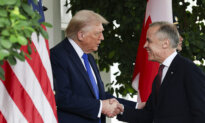
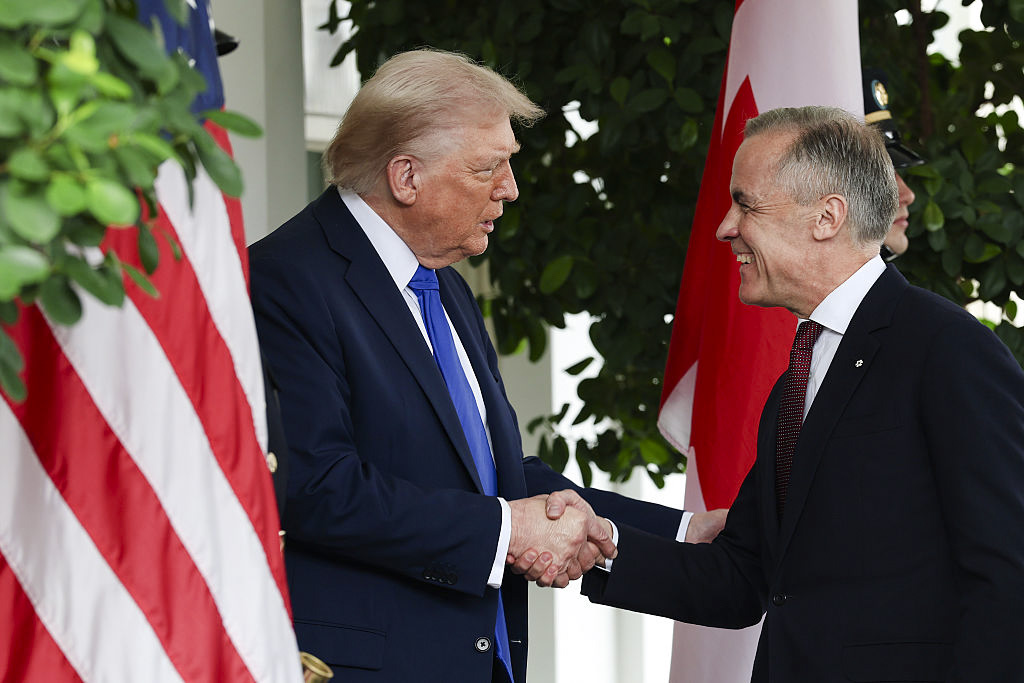
The ad controversy put an abrupt stop to trade talks that had gathered momentum after Carney met with Trump at the White House on Oct. 7.
The prime minister on Oct. 21 said he would be seeing Trump at the Asia-Pacific Economic Cooperation (APEC) forum in South Korea starting Oct. 31, noting it was “possible” that deals on steel, aluminum, and energy could be made.
Carney said he remains open to restarting the trade talks and has said that the federal government has had no part in Ontario running the Reagan ad.
“We chose not to run ads in the United States, OK? It was a choice. It was obvious for us not to do that,” Carney said on Oct. 27.
Meanwhile, Ford said on the same day that Carney and his chief of staff had seen the ad prior to it being aired. The Prime Minister’s Office has not responded to an inquiry on the topic.
The ad was not pulled immediately after Trump reacted to it, but went ahead to be broadcasted during the baseball World Series, reaching a maximum audience. Ford said on Oct. 24 that he decided to pause the ad on Oct. 26 after discussing Trump’s cancellation of trade talks with Carney.
Just the Ad?
A senior Trump official has suggested that there were issues beyond the ad that led Trump to cancel the talks with Canada. U.S. National Economic Council Director Kevin Hassett said on Oct. 24 that “frustration” had “built up” during talks.
Asked by reporters about the possibility of other factors impacting Trump’s decision, Carney said, “I would suggest you take the president at his word for his reason.”
“There were a series of very detailed, very specific, very comprehensive discussions, negotiations on the [steel, aluminum, and energy] areas … up until the point of those ads running,” he said.
Deals that looked imminent as of Oct. 21 now appear more remote. Trump said he’s “happy” with the current trade deal with Canada, in reference to the United States-Mexico-Canada Agreement (USMCA).
Carney has said in previous weeks that Canada has the “best deal” compared to other countries, given that 85 percent of goods cross the border tariff-free thanks to the USMCA. Nonetheless, the metals and automobiles industries have been hit hard by the U.S. sectoral tariffs.
U.S. Ambassador to Canada Pete Hoekstra said on Oct. 27 that he doesn’t see “any way” a deal could be reached before American Thanksgiving, which falls on Nov. 27. Giving a keynote address to the Coalition of Concerned Manufacturers and Businesses Canada, he also said a deal before year’s end is unlikely, reported CTV News.
It is not the first time that Canada has been placed in this situation. Trump previously cancelled trade talks over the Digital Services Tax in June, which was about to impact U.S. tech giants. Ottawa pledged to rescind the tax in order to restart negotiations. Talks also stalled in late summer, leading Carney to lift some of Canada’s counter-tariffs.
There has been no indication of what Canada will have to do to get back to the negotiating table this time around.
Foreign Moves
Some of Ottawa’s next foreign policy moves could also have an impact on how the Trump administration proceeds. Countering China has been a key objective for Trump, who is expected to meet with Chinese leader Xi Jinping at the APEC meeting.
Carney also plans to meet Xi, as his government is accelerating a diplomatic push to rebuild relations.
Beijing will undoubtedly try to benefit from the strained ties between Ottawa and Washington, and from Canada’s push to increase trade activity in Asia to offset harder market access to its southern neighbour.
Hoekstra said in August that the Trump administration sees Canada as a “very reliable ally to confront the threat from China.”
It will be interesting to see whether that remains the case in the next few weeks.
 Friends Read Free
Copy
Facebook
Tweet
Friends Read Free
Copy
Facebook
Tweet