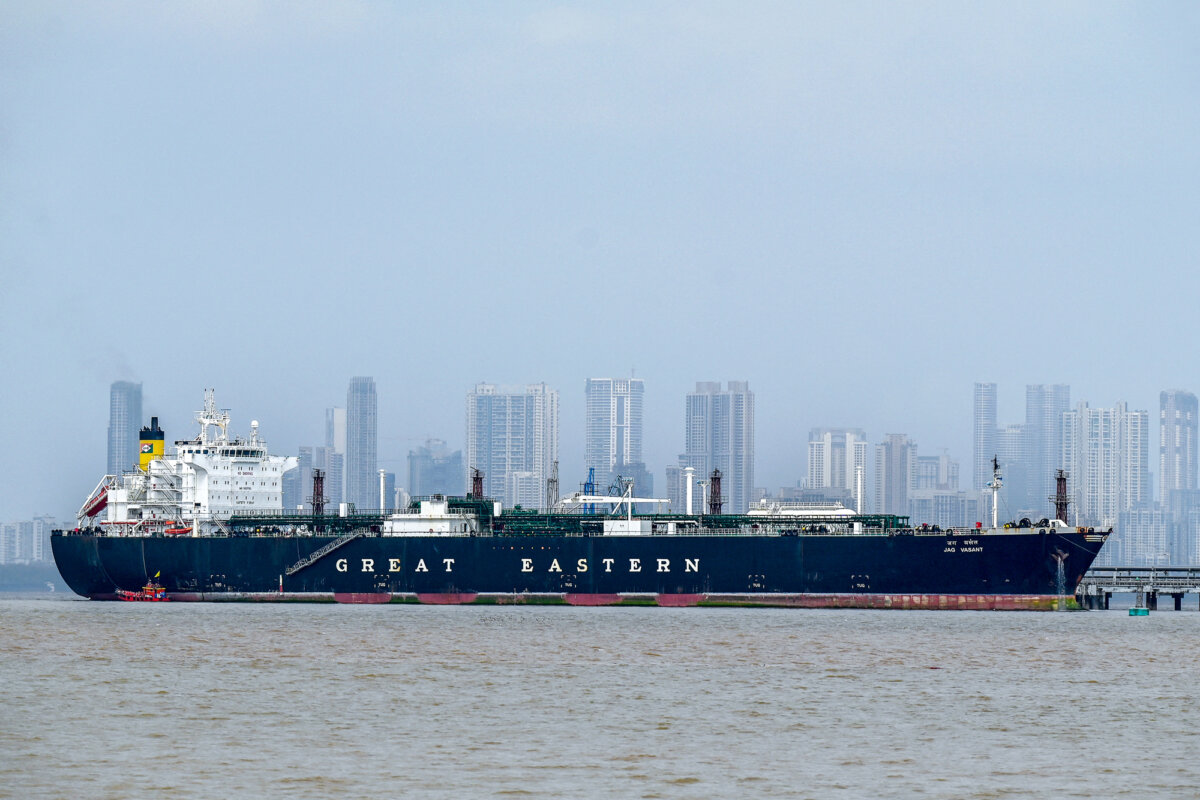

The international oil consortium OPEC+ agreed on April 5 to increase its oil output quotas in May by 206,000 barrels per day because key members are unable to increase production during the ongoing U.S.–Israeli war with Iran.
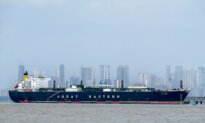
Iran effectively closed the Hormuz Strait after the United States and Israel launched coordinated strikes on Feb. 28.
Tehran also retaliated by launching a series of missile and drone strikes on critical oil and other infrastructure around the Persian Gulf.
The critical waterway is the world’s most important oil route, and since the war began, OPEC+ members, including Saudi Arabia, the United Arab Emirates (UAE), and Iraq, have been forced to cut exports while Tehran restricts passage. Those same member states were the only OPEC+ nations able to increase production before the war began.
Oil prices shot up last week. The U.S. West Texas Intermediate increased by 9.2 percent to $109.35 per barrel on April 2, a day after U.S. President Donald Trump signaled an escalation in the U.S.–Israeli war with Iran during a speech televised to the nation.
West Texas Intermediate crude increased again on April 5, rising to $111.54 per barrel, with some international indexes such as the Indian Basket seeing more than $120 per barrel.
The surging oil prices have raised transport fuel costs, hitting supply chains and consumer and business travel.
The 206,000 barrel-per-day increase is equivalent to less than 2 percent of the oil supply affected by Iran’s closure of the Strait of Hormuz.
OPEC+ members Saudi Arabia, Russia, Iraq, the UAE, Kuwait, Kazakhstan, Algeria, and Oman agreed to the quota increase during a virtual meeting on April 5, according to a statement.
“The countries will continue to closely monitor and assess market conditions, and in their continuous efforts to support market stability, they reaffirmed the importance of adopting a cautious approach and retaining full flexibility to increase, pause or reverse the phase out of the voluntary production adjustments, including reversing the previously implemented voluntary adjustments of the 2.2 million barrels per day announced in November 2023,” the statement reads.
The Gulf nations are not the only OPEC+ members currently unable to increase oil output. Russia has also been unable to increase production amid Western sanctions and after incurring infrastructure damage during its war with Ukraine.
Gulf states have been hit hard by Iranian missile and drone attacks that have devastated critical infrastructure. It could take months for normal operations to resume and hit production targets even if the war ended and Iran immediately reopened the Hormuz Strait, several Gulf officials have said.
Another OPEC+ panel, the Joint Ministerial Monitoring Committee, also met on April 5 and expressed concerns regarding the Iranian strikes on key energy assets. The committee stated that the infrastructure is expensive and that repairs are time-consuming, affecting oil supply.
“Accordingly, [the committee] stressed that any actions undermining energy supply security, whether through attacks on infrastructure or disruption of international maritime routes, increase market volatility and weaken the collective efforts under the [Declaration of Cooperation] to support market stability for the benefit of producers, consumers, and the global economy,” the statement reads.
“In this regard, the eight countries commended the [Declaration of Cooperation] countries that took the initiative to ensure the continued availability of supplies, particularly through the use of alternative export routes, which have contributed to reducing market volatility.”
The OPEC Declaration of Cooperation is a 2016 agreement between member states and non-OPEC producers to work in collaboration to stabilize the global oil market.
Reuters and Tom Ozimek contributed to this report.
 Friends Read Free
Copy
Facebook
Tweet
Friends Read Free
Copy
Facebook
Tweet