
The War Department on March 4 revealed the identities of the last two of six U.S. Army Reserve soldiers killed by an Iranian drone attack on a U.S. Tactical Operations Center at a Kuwaiti port amid U.S. Operation Epic Fury against Iran.
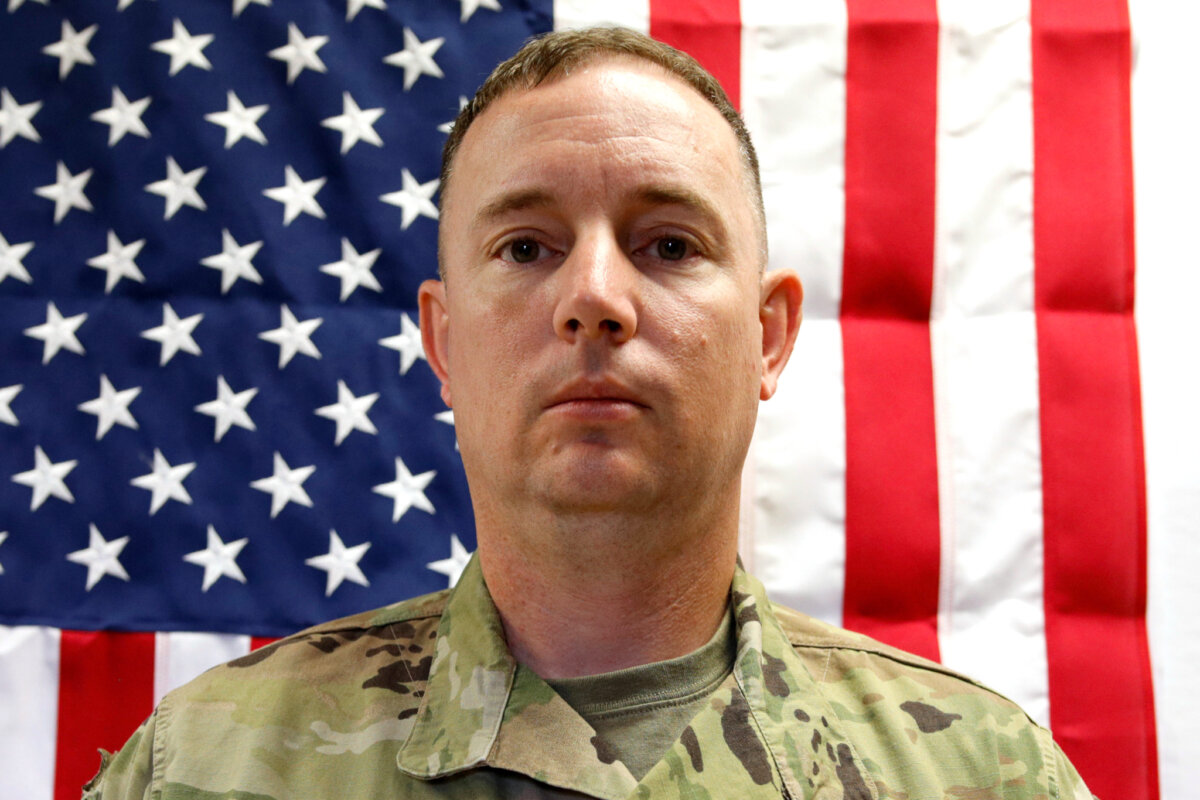
Maj. Jeffrey R. O’Brien, 45, of Indianola, Iowa, and Chief Warrant Officer 3 Robert M. Marzan, 54, of Sacramento, California, lost their lives March 1 in Port Shuaiba, Kuwait, in an unmanned aircraft system strike, according to the Pentagon.
All six U.S. servicemembers killed in the Iranian attack have now been identified.
Capt. Cody Khork, 35, of Winter Haven, Florida; Sgt. 1st Class Nicole Amor, 39, of White Bear Lake, Minnesota; Sgt. 1st Class Noah Tietjens, 42, of Bellevue, Nebraska; and Sgt. Declan Coady, 20, of Des Moines, Iowa, were also killed by the Iranian drone strike on Port Shuaiba, Kuwait, on March 1.
All were U.S. Army Reserve soldiers assigned to the 103rd Sustainment Command based in Des Moines, Iowa. They were deployed in support of the military operation against Iran.
U.S. Central Command reported that, as of March 2, six servicemembers had been killed in action overall and 18 have been seriously wounded. The drone strike in Kuwait accounts for all six fatalities.
The strike on the commercial and military hub Port Shuaiba happened as Iranian missiles and drones targeted U.S. forces throughout the Gulf following U.S. and Israeli airstrikes on Iranian military and nuclear sites that started on Feb. 28.
Kuwait’s military reported that it intercepted numerous projectiles aimed at bases with U.S. troops, including Ali Al Salem Air Base, where debris from downed missiles fell in the vicinity of the facility.
“This morning, the Kuwaiti Air Defense Force successfully intercepted them, resulting in fragments and debris from the interception operation falling in the vicinity of the base,” said Col. Staff Saud Abdulaziz Al-Otaibi, spokesperson for the Kuwaiti Ministry of Defense.
The Iranian Revolutionary Guard dubbed the attacks “True Promise 4,” targeting U.S. installations in Bahrain, Qatar, Kuwait, and the United Arab Emirates (UAE) as retaliation for the joint U.S.–Israeli operation that killed Iran’s Supreme Leader Ali Khamenei and much of the regime’s upper leadership.
In a separate incident on March 1, three U.S. F-15E Strike Eagles were accidentally shot down by Kuwaiti air defenses in a friendly fire mishap over Kuwait. All six crew members survived.
“At 11:03 p.m. ET, March 1, three U.S. F-15E Strike Eagles flying in support of Operation Epic Fury went down over Kuwait due to an apparent friendly fire incident,” U.S. Central Command stated.
The Kuwaiti Health Ministry reported one civilian death and 32 injuries from Iranian strikes in the country.
Casualties elsewhere in the region include nine killed in an Iranian missile strike in Israel’s Beit Shemesh, deaths reported in Tel Aviv amid 1,200 injured across Israel, and three killed in the UAE.
Just short of 100 hours into Operation Epic Fury, the United States has mobilized more than 50,000 U.S. troops, 200 fighters, two aircraft carriers, and bombers, according to Adm. Brad Cooper, commander of U.S. Central Command.
Joint Chiefs Chairman Gen. Dan Caine warned on March 2 that achieving U.S. President Donald Trump’s objectives against Iran would take time and could involve more losses.
“We expect to take additional losses, and as always, we will work to minimize U.S. losses,” Caine said at a Pentagon briefing.
The Trump administration’s four objectives in the ongoing military operation are to destroy the Iranian regime’s nuclear program, destroy its ballistic missile arsenal, degrade its proxy terror networks, and cripple its naval forces.
 Friends Read Free
Copy
Facebook
Tweet
Friends Read Free
Copy
Facebook
Tweet