
Manila and Paris have signed a visiting forces agreement that will allow their militaries to conduct joint operations in each other’s territories, marking the first such partnership the Philippines has signed with a European ally.
Philippine Secretary of National Defense Gilberto C. Teodoro Jr. and French Minister of the Armed Forces Catherine Vautrin signed the Status of Visiting Forces Agreement (SOFVA) on March 26 at the military academy in Paris, according to a statement from the Philippine Department of National Defense.
The department said the SOFVA will facilitate wider cooperation between the French and Philippine forces, including the ability of both militaries to work together in maritime security and in disaster and emergency response.
“This is a function of stewardship in several things, in enhancing both our individual and collective defense capabilities; and secondly, also equally important, is to protect the international order under the regime of international law, to include fundamental peremptory treaties in the world in [the] 1982 UN Convention on the Law of the Sea,” Teodoro said.
The 1982 U.N. Convention, which entered into force in 1994, sets out the rules and rights governing the world’s oceans, including the allocation of nations’ jurisdictions over maritime spaces.
The Department of National Defense’s statement said that this “seminal Agreement with France paves the way for the Philippines’ greater defense cooperation with partners in Europe and beyond to uphold the principles of international law and protect the rules-based order.”
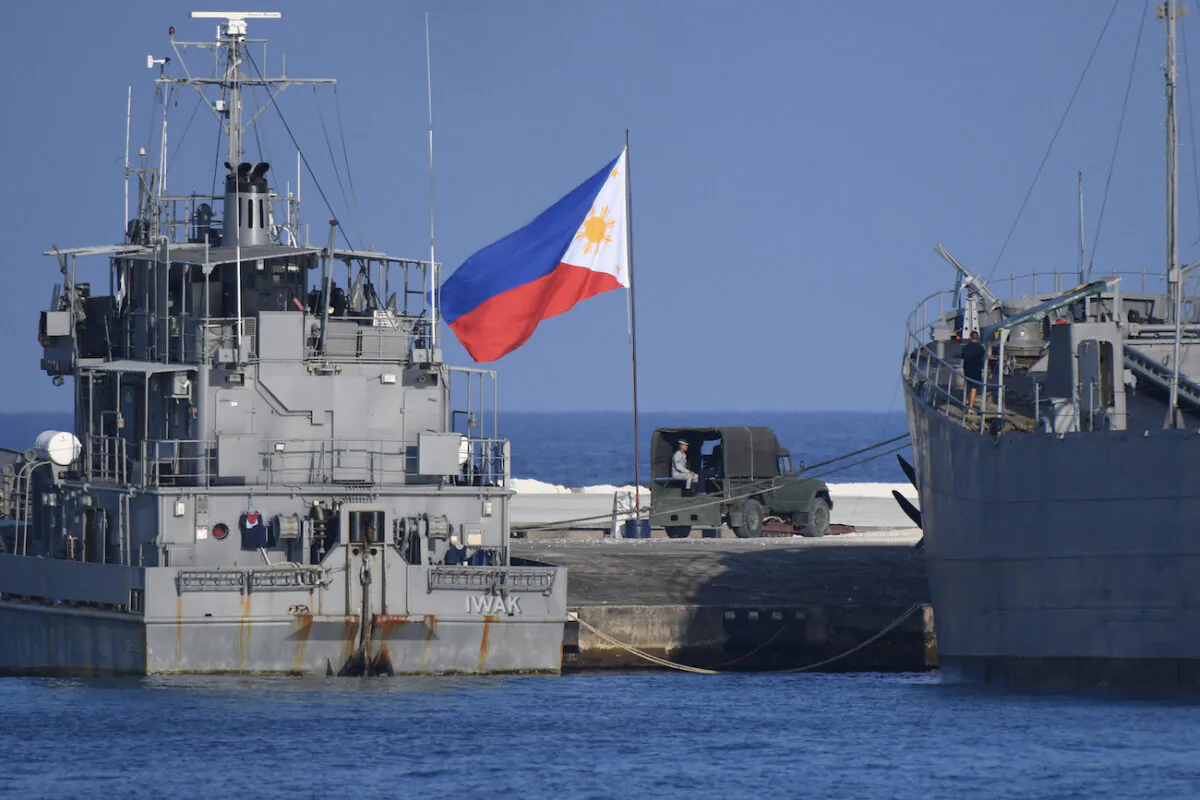
The landmark military deal with a European ally comes as Manila expands its military ties with regional and global partners amid tensions with Beijing in the South China Sea.
Aside from France, the Philippines also has similar visiting force agreements with the United States, Japan, Australia, and New Zealand.
Last month, the Philippines conducted two multilateral maritime cooperative activity operations in the South China Sea with allies, one with Japan and the United States, and another with Australia and the United States.
Tensions With Beijing
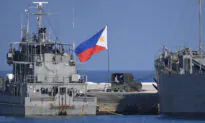
On March 25, the Philippine military said a Chinese missile frigate “executed an unsafe and unprofessional manoeuvre” against a Philippine Navy vessel conducting a maritime operation near Thitu Island, one of Manila’s key outposts in that waterway.
Since 2023, the Philippines has worked with several countries to assert its rights and maritime entitlements in the West Philippine Sea, which Manila calls the parts of the South China Sea within the Philippines’ exclusive economic zone.
China claims most of the resource-rich waterway, rejecting a 2016 international arbitration ruling that has voided Beijing’s claims to the area.
Japan–China Defense Pact
Other nations in the region have been impacted by the Chinese communist regime’s aggression at sea, including Japan in the East China Sea.
On Jan. 15, the Philippines and Japan signed a new defense pact that allows their forces to exchange supplies and services to aid joint exercises and training.
The agreement was signed in Manila by Japanese Foreign Minister Toshimitsu Motegi and Philippine Foreign Secretary Maria Theresa “Tess” Lazaro.
The Japanese Ministry of Foreign Affairs said in a statement released after the meeting that the two ministers “shared serious concerns over the continuation and the intensification of the unilateral attempts to change the status quo by force or coercion in the East China Sea and the South China Sea and concurred to continue closely working together.”
While the Japanese ministry did not name China specifically in its statement, the remarks about the East and South China seas appear to be a rebuke of Beijing’s increased aggression in the region.
Reuters contributed to this report.
 Friends Read Free
Copy
Facebook
Tweet
Friends Read Free
Copy
Facebook
Tweet