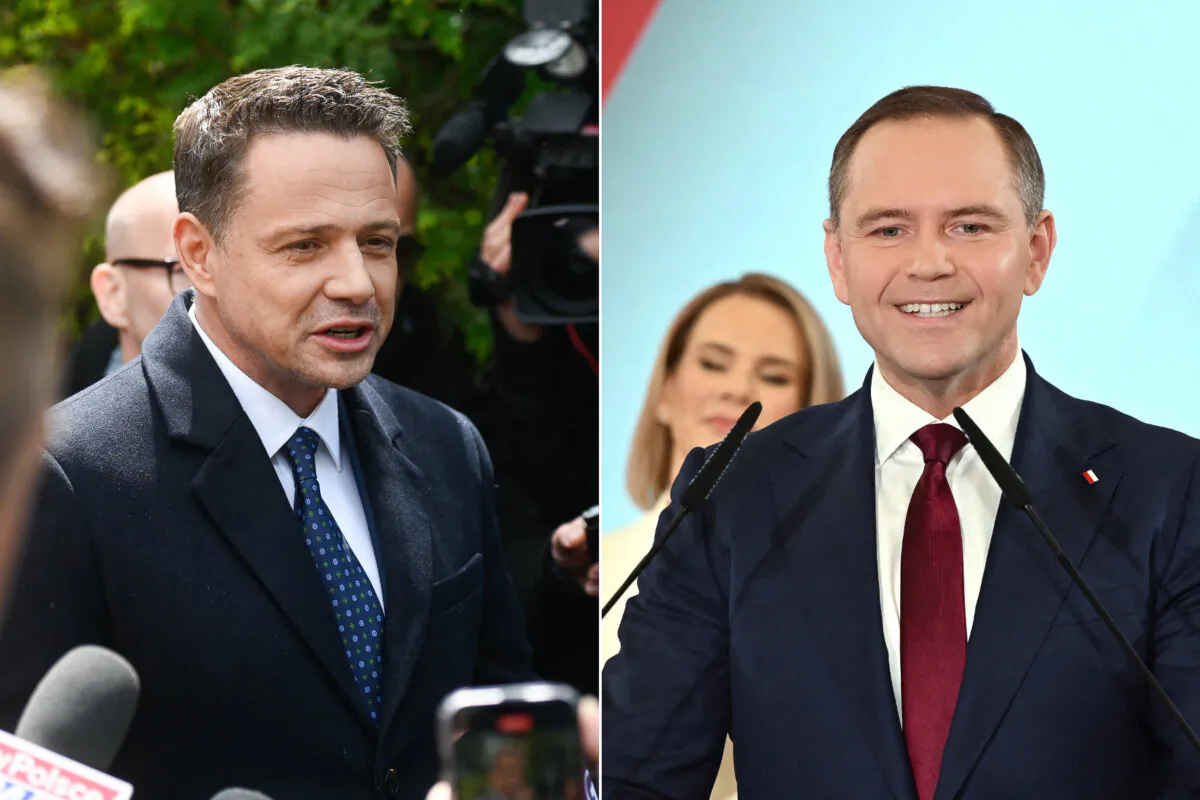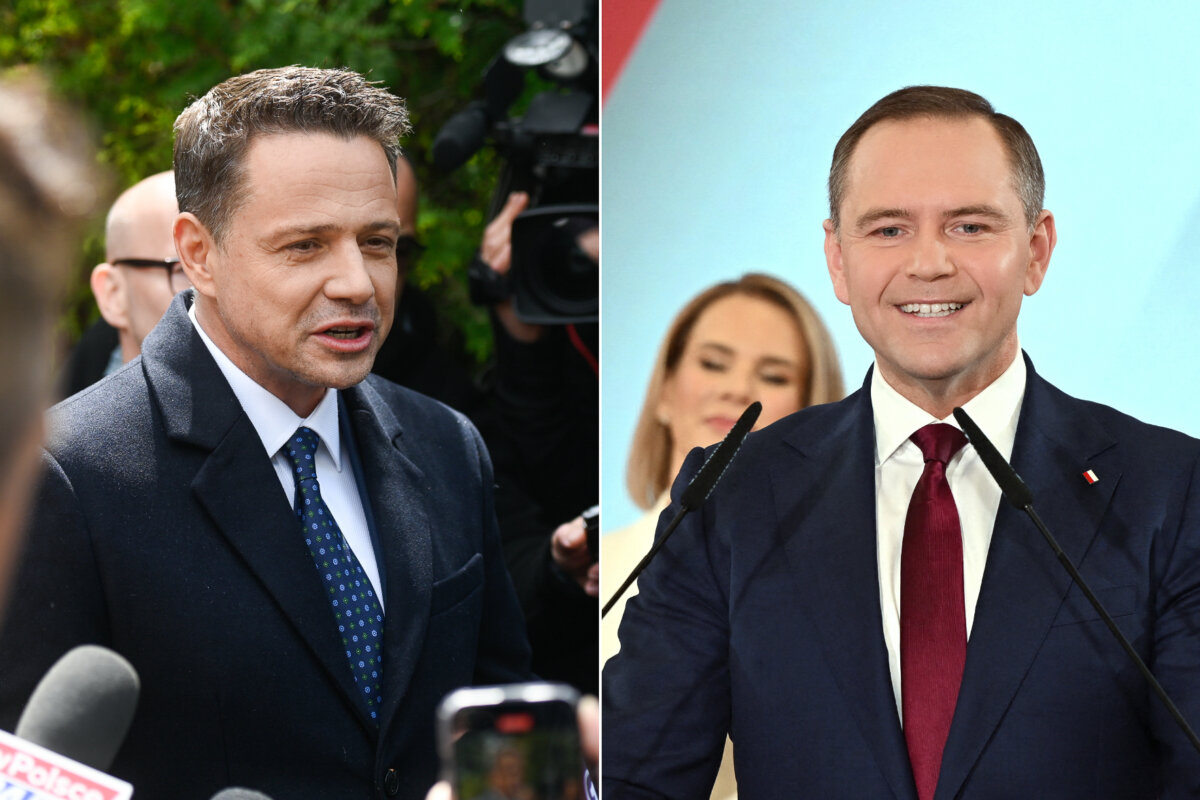

Poland will hold a presidential runoff election on June 1, in which a right-wing historian will face off against the liberal mayor of the nation’s capital, in a race that will be closely watched both within and beyond the country’s borders.
The vote follows the first round, held on May 18, in which Warsaw Mayor Rafal Trzaskowski came first with 31.36 percent of the vote, while academic Karol Nawrocki finished a close second with 29.54 percent.
Eleven other candidates were eliminated from the contest.
The Eastern European state is one of NATO’s and the European Union’s most strategically important members, especially with its location on the border of war-torn Ukraine.
Whoever emerges victorious will take over as head of state from the conservative incumbent, Andrzej Duda, whose second term ends this summer.
The Contenders
Karol Nawrocki
Nawrocki is a 42-year-old historian with no previous experience in political office.
He was not a member of a political party before he was approached by the Law and Justice Party as part of their bid to revitalize the organization after losing power in 2023 to a coalition led by Polish Prime Minister Donald Tusk.
Nawrocki’s current job is head of the Institute of National Remembrance, which investigates crimes committed by the Nazi and communist regimes.
He is in favor of tougher border controls and raising defense spending to 5 percent of GDP, and is against liberalizing abortion and advocating LGBT issues.
His campaign slogan is: “Poland first, Poles first.”
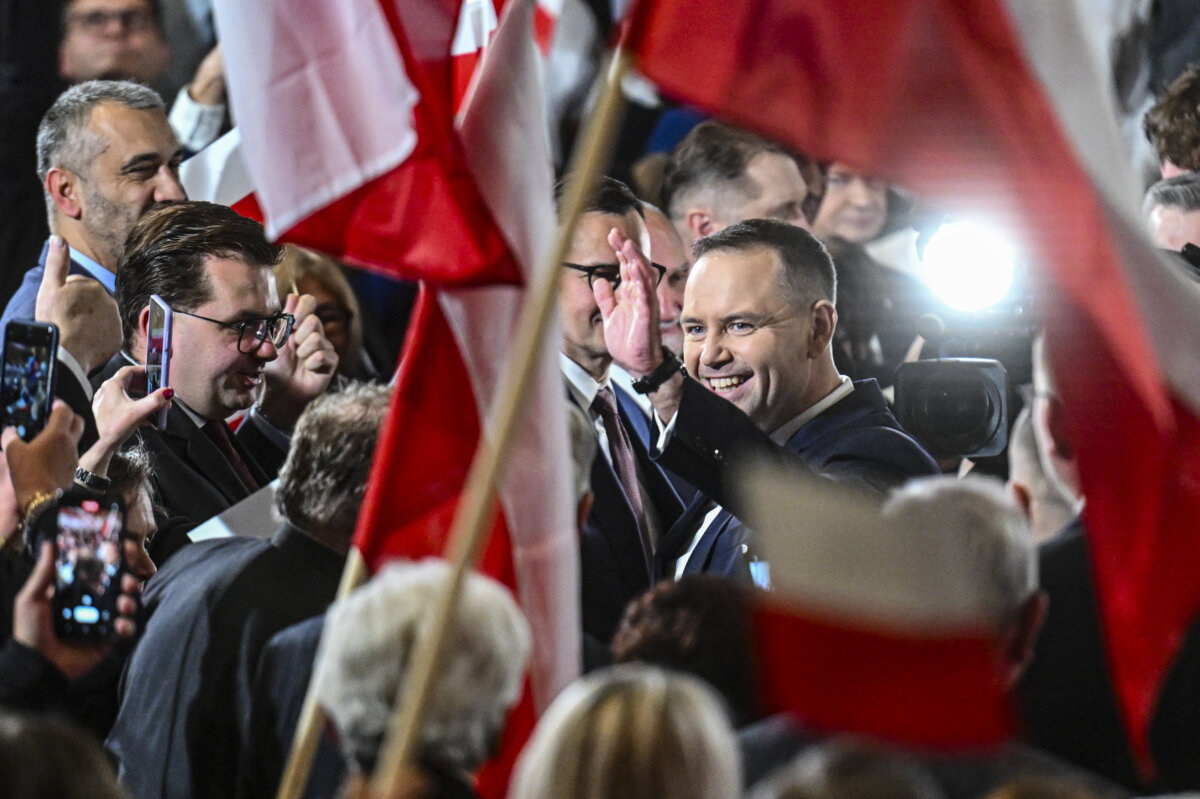
U.S. President Donald Trump is a fan of Nawrocki and invited him to the Oval Office in March. U.S. Homeland Security Secretary Kristi Noem called for Poles to throw their support behind him at the U.S. Conservative Political Action Conference’s (CPAC) first meeting in Poland.
“Donald Trump is a strong leader for us, but you have an opportunity [to] have just as strong of a leader in Karol if you make him the leader of this country,” she said.
He also received the backing of another Trump ally, Hungarian Prime Minister Viktor Orban, at the same event a day later.
Rafal Trzaskowski
Trzaskowski, the liberal mayor of Warsaw, is a close ally of Tusk and his ruling coalition. He has been a high-profile figure in Polish politics for years.
A deputy leader of the pro-EU Civic Platform, he has been prominent in national politics. This is his second bid for the presidency after he lost to Duda in 2020.
Trzaskowski, 53, supports liberalizing Poland’s abortion laws and expanding LGBT rights.
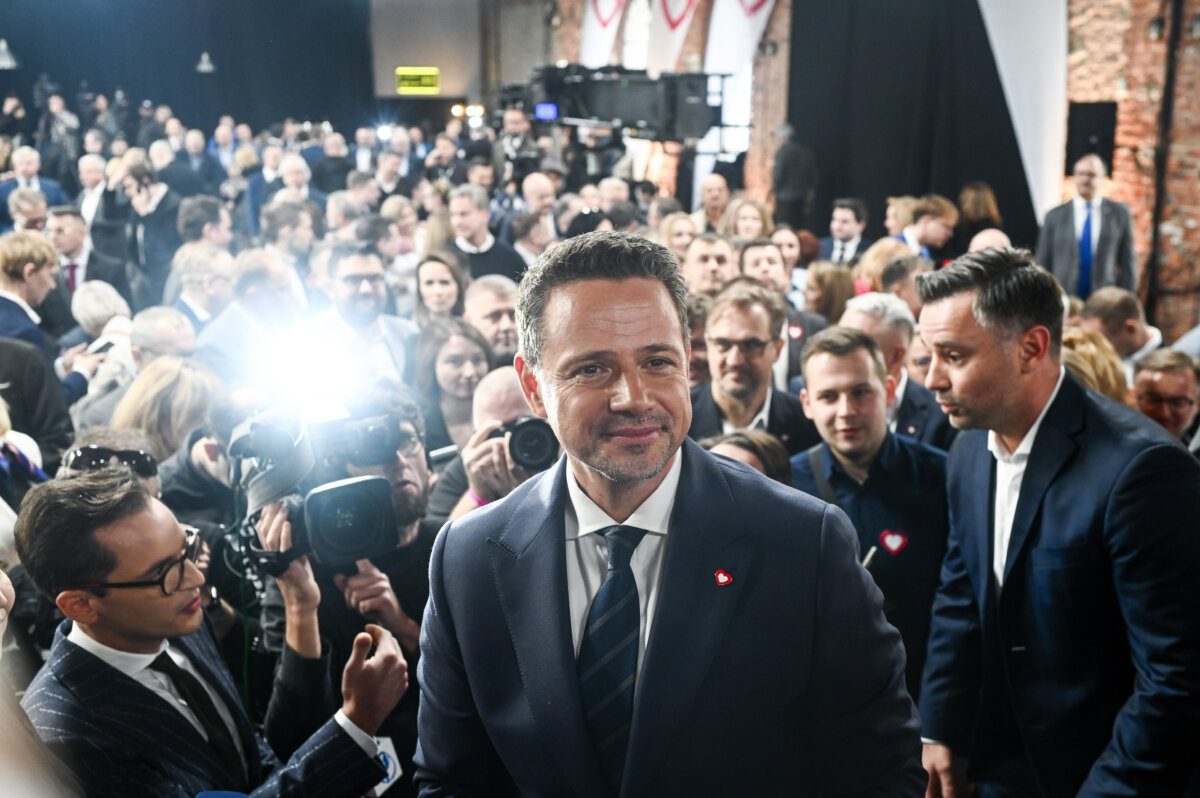
Trzaskowski has received support from Romania’s newly elected centrist president, Nicusor Dan, who was guest of honor at the May 25 “March of Patriots” event in Warsaw.
“A week ago, all of Romania won; next week, all of Poland will win,” Dan told the crowd in Polish to rapturous applause. He has offered Trzaskowski close cooperation between the two nations inside the EU if he is victorious.
Trzaskowski and Nawrocki agree on the need to increase defense expenditure to 5 percent of GDP.
Who is Likely to Win?
Opinion polls so far have shown Trzaskowski narrowly leading Nawrocki.
According to the most recent poll by IBRiS for the Onet website, published on May 29, Trzaskowski is predicted to take 47.7 percent of votes, with Nawrocki at 46 percent and 6.3 percent undecided.
Nawrocki performed better in the first round than was expected, suggesting that his support may have been underestimated in previous polls.
What Are the President’s Powers?
Poland’s presidency is limited in scope compared with the equivalent posts in Paris or Washington, with the officeholder serving as head of state and commander in chief but holding only limited executive powers beyond the ability to veto legislation.
The president must also renounce any party affiliation upon taking office.
Duda has used his veto power to block many of Tusk’s policies, meaning that a victory for Trzaskowski would likely ease the current government’s path.
“The stakes in this election are as high as they were on October 15,” Tusk said in parliament in April. “So I am hoping for mobilization. … It’s hard to govern alongside a hostile president, with all those vetoes.”
 Friends Read Free
Copy
Facebook
Tweet
Friends Read Free
Copy
Facebook
Tweet