
Poland’s Armed Forces Operational Command said on Sept. 10 that air traffic restrictions have been introduced along the country’s eastern border with Belarus and Ukraine, following the downing of suspected Russian drones in the NATO member’s airspace.
The restricted zone, EP R129, took effect at midnight local time on Sept. 11 and will remain in place until 12:59 a.m. local time on Dec. 10, according to a statement from the Polish Air Navigation Services Agency (PANSA).
PANSA said the measures were introduced to ensure state security.
During that time, from sunrise to sunset, EP R129 will be designated a no-fly zone, except for manned aircraft that have filed a flight plan, are equipped with an approved transponder, and maintain two-way communication with authorities.
Exceptions are also in place for military aircraft, some specified call signs, and certain flights such as medical evacuations.
“From sunset (SS) to sunrise (SR) there is a total flight ban in the EP R129 zone, except for military aircraft,” PANSA said. “In the EP R129 zone, there is a 24-hour flight ban on civilian unmanned aircraft.”
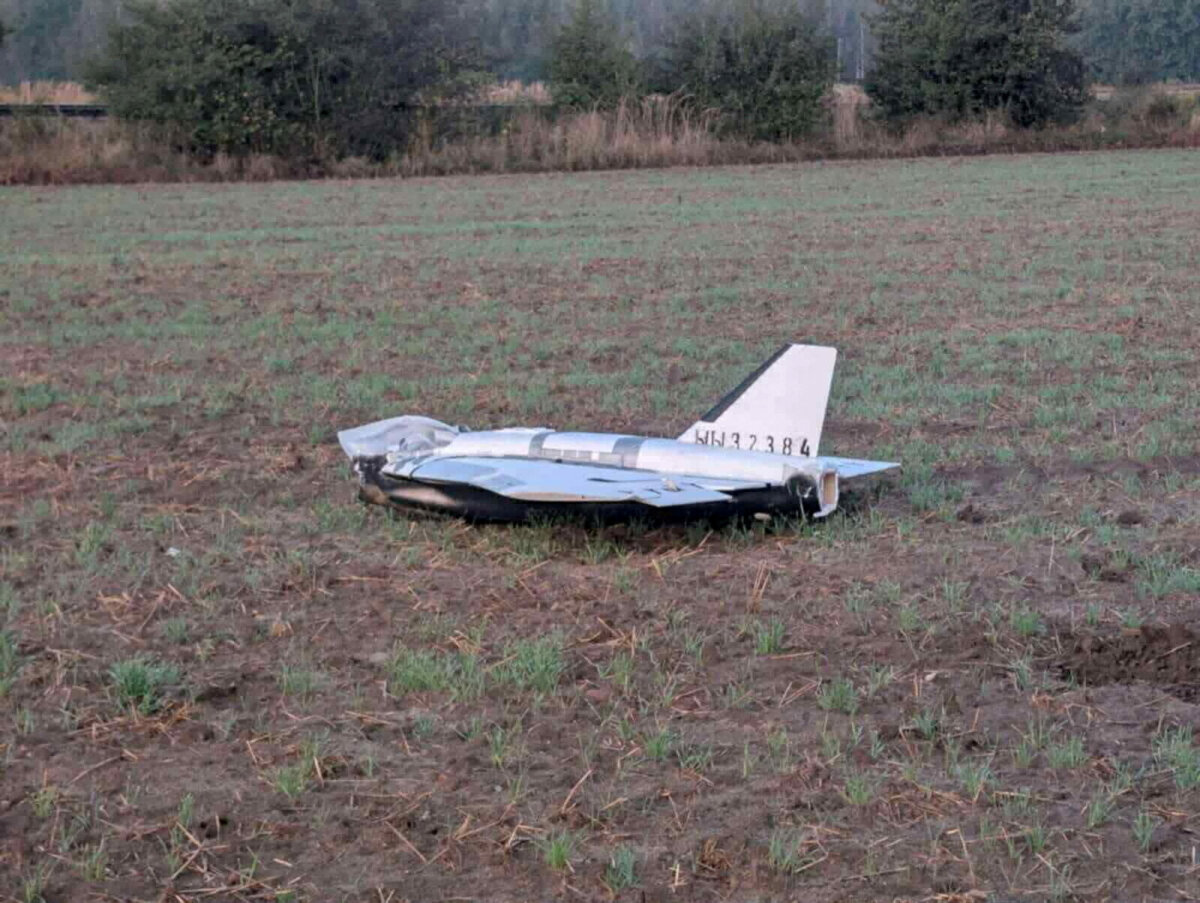
On Sept. 10, the Polish military said it had tracked and downed “several objects” as part of joint NATO efforts, later confirming that Dutch F-35 fighters assisted in securing Polish airspace during Russia’s bombardment of Ukraine.
It was not immediately clear how many drones were involved.
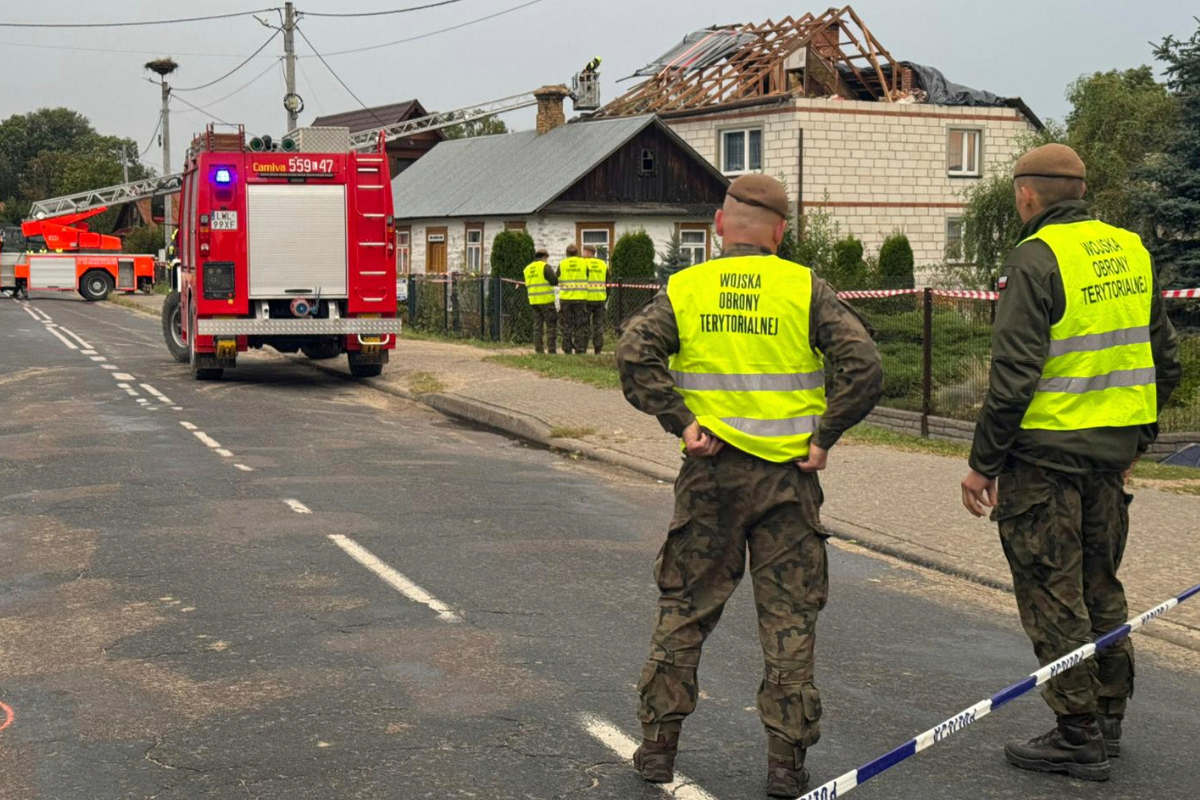
Polish Prime Minister Donald Tusk told the Parliament of Poland that 19 violations were recorded over seven hours but that information was still being gathered. Polish authorities said nine crash sites were found, some of them hundreds of kilometers from the border.
EU Allegations, Russian Denial
Warsaw and European officials said the incident was an intentional violation of Polish airspace by the Russian Federation.
European Union foreign policy chief Kaja Kallas said it was a sign that Russia’s war “is escalating, not ending.”
“Last night in Poland, we saw the most serious European airspace violation by Russia since the war began, and indications suggest it was intentional, not accidental,” she wrote on X on Sept. 10.
The Russian Foreign Ministry said in a Sept. 10 statement that the Russian Ministry of Defense “unequivocally reaffirmed” that strikes against Ukraine that night “did not include any targets in the territory of the Republic of Poland, and that the range of the drones that delivered a strike at the Ukrainian defense industry facilities, which, according to Warsaw, entered Poland’s airspace, is below 700 kilometers [435 miles].”
The statement noted that the defense ministry is ready to hold talks with Poland’s defense minister and that “the Foreign Ministry of Russia is ready to contribute to these efforts.”
‘Electronic Warfare’
Russian ally Belarus said on Sept. 10 that drones had gone astray as a result of electronic jamming during an exchange of strikes between Russia and Ukraine. Belarus Chief of the General Staff Maj. Gen. Pavel Muraveiko said his forces had to shoot down unmanned aerial vehicles (UAVs) that found their way into Belarusian territory.
“During the night-time exchange of strikes by UAVs between the Russian Federation and Ukraine, the Air Defence Forces and assets of the Republic of Belarus on duty continuously tracked UAVs that had lost their track as a result of the impact of the parties’ electronic warfare assets,” Muraveiko said.
“Some of the lost drones were destroyed by our country’s Air Defence Forces over the territory of the republic.”
NATO Secretary-General Mark Rutte said in the hours following the incident that the defense alliance is conducting an assessment. He indicated that at the time it could not be ascertained whether the violation of airspace was intentional or accidental.
Poland’s Military Modernization
Poland, which occupies a large portion of NATO’s eastern flank, said on Sept. 11 that it was pushing ahead with military modernization plans.
Tusk visited an air base in the central city of Lask, where he commended both Polish forces and NATO allies for their swift response to the incursions.
He said he expects the military to receive its first order of F-35 fighter jets in 2026.
Five years ago, Warsaw secured a deal with the United States for the supply of a total of 32 F-35s by 2030 as part of an effort to modernize the Polish air force, which in turn will strengthen Poland in its defense of the NATO alliance.
“We will do everything to ensure that our allied obligations, which are so important from our point of view today, are fulfilled by our allies,” Tusk said.
Addressing the airmen, the prime minister said: “We hope that the Americans will meet the deadlines. We would like the first batch of the F-35s to reach you in May, and so that we can speak of our air power with increasing confidence from month to month, and from year to year. And that Poland is truly safe from the sky.”
The Associated Press contributed to this report.
 Friends Read Free
Copy
Facebook
Tweet
Friends Read Free
Copy
Facebook
Tweet