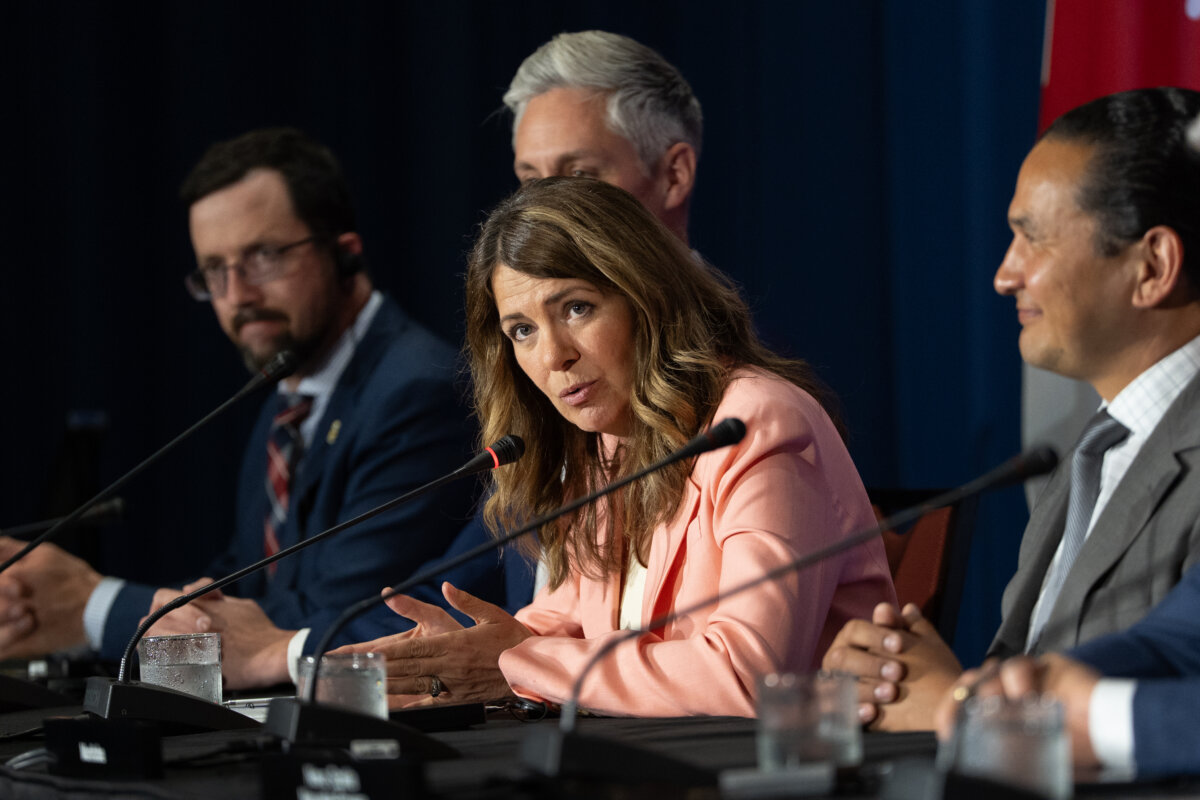
Provincial leaders say an upcoming meeting with Prime Minister Mark Carney will require developing a strong response to looming U.S. tariffs, and must also address the upcoming expiration of health transfer increments.
Premiers made the comments July 22 after wrapping up two days of meetings in Charlottetown at the Council of the Federation, with the meeting with Carney scheduled for July 23.
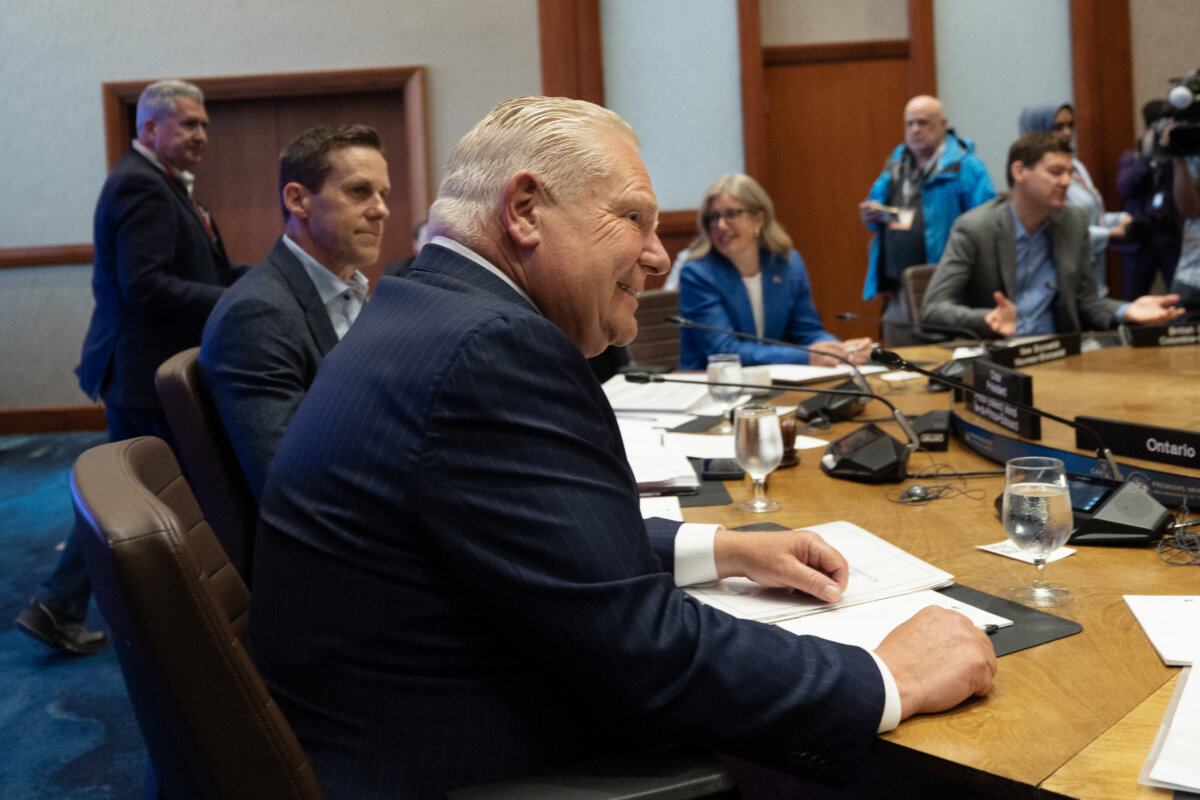
Carney “needs to lead the way. He needs to come up with a strong plan over the next 29 days, and I’m interested in sitting down with him and hearing the plan,” Ontario Premier Doug Ford told media.
Tariffs
U.S. President Donald Trump signed proclamations July 20 that impose 50 percent tariffs on approximately $28 billion worth of Canadian goods including automobiles, dairy products, cement, alcohol, and animal products used in pharmaceuticals.
Trump said the tariffs are being imposed because Canada is discriminatory toward various American exports, particularly U.S. dairy, alcohol, and automobiles.
The tariffs are set to go into effect Aug. 19 regardless of whether the products comply with the conditions of the existing Canada–U.S.–Mexico Agreement and have brought added urgency to the talks with Carney, according to Prince Edward Island Premier Rob Lantz.
“There’s no doubt our conversation with the prime minister tomorrow will have a new level of urgency,” said Lantz, who chaired the two-day gathering of premiers.
B.C. Premier David Eby has pushed for provinces and territories to come up with a coordinated retaliatory response to the U.S. tariffs and recently said there is no way American alcohol will be back on shelves in B.C.
Ford has also pushed for a confrontational response to the latest tariffs, saying that “everything’s on the table,” including the possibility of adding a surcharge on electricity exports to the United States, while others such as Saskatchewan Premier Scott Moe and Alberta Premier Danielle Smith have emphasized trying to find a deal before the tariffs go into effect.
“I am bullish that we will be able to find that in the near term,” Moe said, adding, “However, I’m not entirely confident that we will.”
Smith also said she is hopeful an agreement can be reached before the U.S. tariffs go into effect and added that the time until then can be used “to sharpen the pencils and sharpen the focus” by facing the longstanding trade issues with the United States and the issues the Trump administration has raised.
“I hope that we can get all of the outstanding issues on the table, whether it’s autos or steel, softwood [lumber], aluminum, and some of the new issues that have been put on the table, so that we can get to a comprehensive agreement,” Smith said.
She added that roughly 97 percent of Alberta’s exports to the United States currently cross the border tariff-free but said she wants that figure raised to 100 percent and wants the same level of tariff-free access to be secured for every province.
Health Transfers
Along with trade, premiers also said they will be seeking assurance from Carney about federal funding of healthcare via the Canada Health Transfer system.
The system distributes federal money to provinces and territories primarily on an equal per-capita basis to help them fund their healthcare systems.
“We need a long-term commitment,” Lantz said.
“There are federal agreements with all of the provinces, which will expire in about … 18 months or less, and you know many of our provinces are looking at a fiscal cliff in terms of funding our healthcare system.” Premiers want Ottawa to maintain a funding growth rate of at least five percent after the current agreement ends in 2028.
The P.E.I. premier added that provinces are having challenges delivering adequate healthcare while facing a shortage of family doctors and rising demand.
“We certainly had a robust discussion about healthcare in this country and the need for the federal government to come to the table as a strong, stable, reliable partner,” Lantz said.
Quebec Premier Christine Fréchette said in French that it’s important to have a solid framework in place by the beginning of 2027, while Nova Scotia Premier Tim Houston also called on Ottawa to deliver continued federal investment and said his province is trying to boost its healthcare access along with its numbers of doctors and nurses.
“It’s really important that we have a partner in the federal government who continues to do their part,” Houston said.
 Friends Read Free
Copy
Facebook
Tweet
Friends Read Free
Copy
Facebook
Tweet