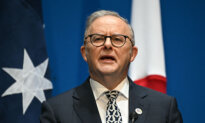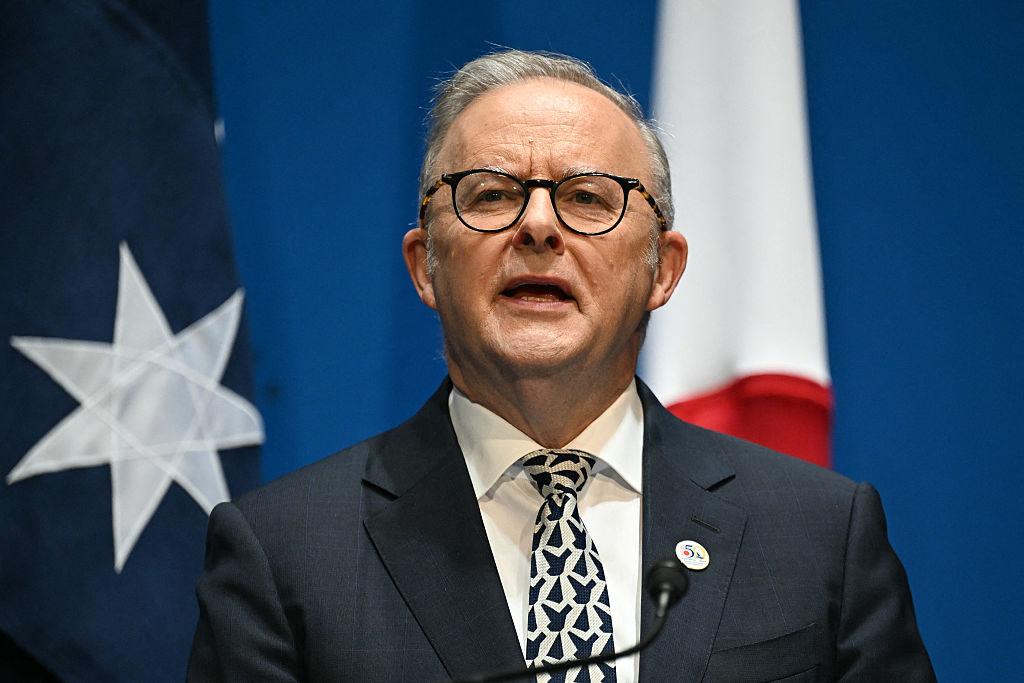

Australian Prime Minister Anthony Albanese has blamed the Coalition for “legitimising” One Nation after its landslide win in the Farrer by-election.
“I think the Liberal Party and National Party made a big mistake legitimising One Nation and in adopting many of their policies but a lighter version of them, and then following that up by giving them preferences, they were saying effectively that it was okay to vote for One Nation rather than the traditional conservative party,” he said on the morning of May 11.
“I think also there’s been a great deal of disappointment with the breakup of the Coalition. Not once, but twice.
“The removal of a leader who had represented of course that seat, in Sussan Ley, for 25 years, but who was removed without even being given the opportunity to do a single budget reply. And the way that that was done, having these meetings on the day of the funeral of one of their former colleagues, I think left an extraordinary legacy of betrayal for people who had supported Sussan Ley for a long period of time.”
Albanese was referring to the funeral and memorial for former Liberal MP Dr. Katie Allen, who died of cancer in January where several Liberal MPs were seen meeting to discuss a possible leadership challenge to Ley.
Farrer has been held by either the Liberal or National Party since 1949—the seat is so safe that Labor didn’t bother running a candidate—but at this by-election, the Liberals secured just 12 percent of the vote against a surging One Nation.
The final two-candidate preferred result showed 57.42 percent support for Farley, and 42.58 for Climate 200-backed Teal independent Michelle Milthorpe.
In terms of primary vote, One Nation won 39.45 percent support, about 38,919 votes—a major swing of 32.85 percent towards the conservative party.
While Milthorpe won about 28.39 percent of the vote, about 28,003 votes—a 8.43 percent swing.
The Liberal Party’s vote plunged to just 12.38 percent of the vote with their current tally at 12,215—a 31.03 percent swing away from them. This time, the Labor Party did not field a candidate, meaning its 14.75 percent at the last election went to other candidates.
The prime minister said the result was a sign Australians were struggling with inflation.
“Quite clearly there’s a lot of people under financial pressure who feel like the system isn’t working for them,” Albanese said. “And that’s a message for all political parties in the system.”
In an interview with the ABC, Liberal Party Shadow Treasurer Tim Wilson said the Farrer result “reflects … the need for us to be bigger, better, bolder, confident Liberals defining the future of the country”.
“It shows there’s a lot of work we’ve got to do, and [Opposition Leader Angus Taylor] has been very up-front about that.
A Threat to Labor?
Graham Young, executive director at the Australian Institute for Progress, questions where Labor’s previous 15 percent vote, and if that support went to other left-leaning parties.
He notes that Milthorpe’s vote increased eight percent this time compared to last year’s federal election, but asked, “What happened to the other seven percent [of Labor’s vote?]”
“Apart from Affordable Housing and Legalise Cannabis, just about all the other parties were on the right of the spectrum,” Young said.
“Some must have gone to [the right] before eventually finding a home with Milthorpe or One Nation [via preference flows]. That tells you that the Labor vote is not a very committed one.”
Former Labor Minister Joel Fitzgibbon says its likely previous Labor voters switched their support to One Nation, saying those votes “had to go somewhere.”
“This is the thing about One Nation. They are becoming more professional, they are becoming more sophisticated, [and] they are becoming better funded,” he said on Sky News.
Fitzgibbon grappled with the rise of One Nation in his former seat of Hunter, a coal-mining hub, and has warned the Labor Party not to stray from its working class roots.
Political analyst Antony Green questions how Labor will respond.
In 2001, Queensland Labor, led by Peter Beattie, ran a widespread television ad campaign likening One Nation Leader Pauline Hanson to a back-seat driver of the state Liberal National Party (LNP), effectively warning voters if they chose the Liberals, they could get One Nation instead.
“Labor played on the uncertainty of who would be in charge of a Coalition government,” he said.
“The metaphor of the ad was clear. A Coalition government would have Pauline Hanson trying to drive government from the back seat.”
 Friends Read Free
Copy
Facebook
Tweet
Friends Read Free
Copy
Facebook
Tweet