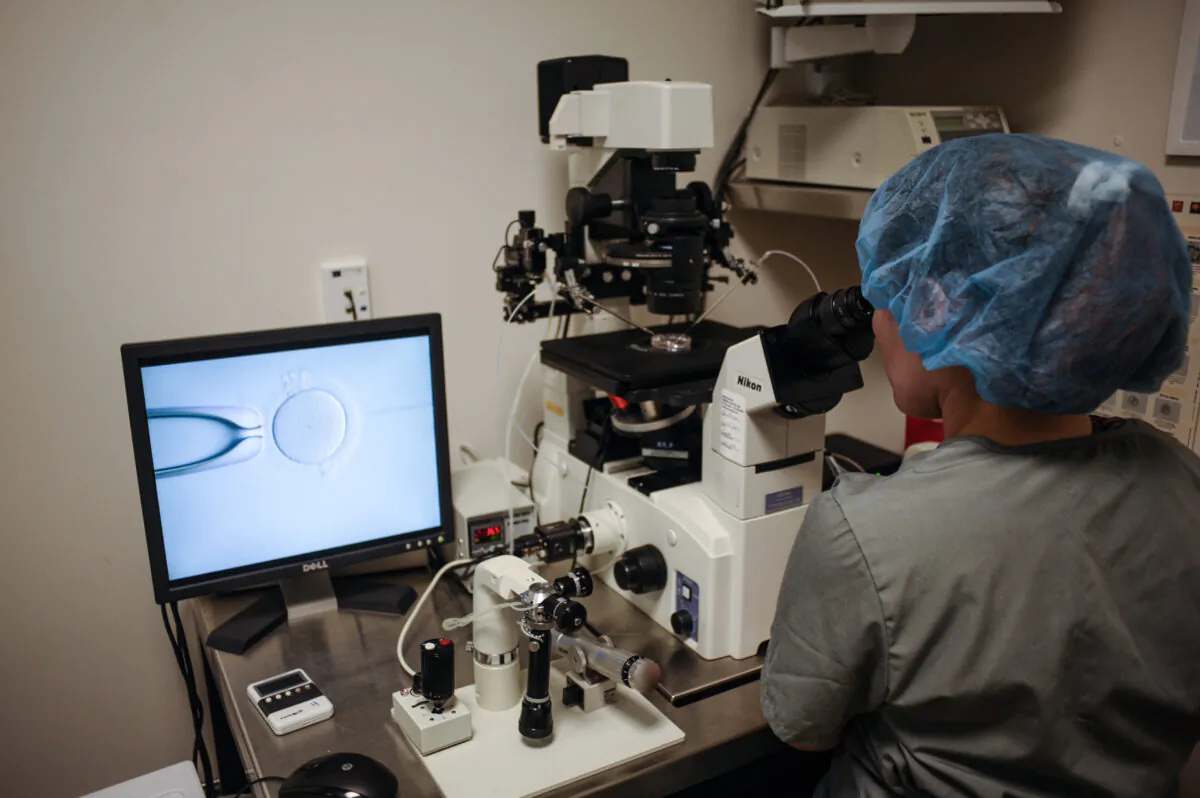

A Queensland prison chief has been told not to make “value judgements” about prisoners’ decisions to preserve their fertility, after a woman won a High Court challenge to freeze her eggs while behind bars.
In a unanimous decision (pdf) five High Court judges ruled that the state’s prison law did not stop Rachel Smith, who is serving 10 years for drug trafficking, from applying to have her eggs extracted and frozen at her own cost.
The court overturned the decision to refuse Smith’s application, remitted it to the chief executive of Queensland Corrective Services (QCS) for reconsideration, and ordered the chief executive to pay her legal costs.
Justice Jayne Jagot said it was now up to the chief executive “to decide her application as soon as reasonably possible.”
A spokesperson for QCS told the Epoch Times it was “aware of today’s High Court decision and is currently reviewing the judgement and will consider the application in accordance with the Court’s orders.”
The ruling follows an earlier debate in Victoria over prisoners’ access to reproductive treatment.
In 2024, the Victorian government blocked a proposed bill that would have banned convicted criminals from receiving IVF while serving prison sentences.
The case involved a convicted murderer who had been granted IVF treatment, and prompted debate over whether access to reproductive services should be restricted as part of a prison sentence.
Smith, who was born in June 1990, was sentenced in July 2021 to 10 years’ jail for trafficking in a dangerous drug. She will be 39 when she becomes eligible for parole, and 41 if she serves her full sentence.
Medical evidence showed a woman’s fertility falls between her mid-30s and early 40s, while the risk of chromosomal abnormalities, which can cause long-term disability in a child, rises. Freezing eggs earlier can reduce both risks.
Prisoner’s Application Denied
In June 2023, when she was 32, Smith sought approval under the Corrective Services Act, which allows prisoners to receive treatment from a doctor of their choice at their own expense.
But the same law bans prisoners from taking part in “assisted reproductive technology,” and in February 2024 a delegate of the chief executive refused her application on that basis.
Acting Chief Justice Michelle Gordon and Justice Robert Beech-Jones found the ban covered only technology that directly helps a person conceive or reproduce.
“It does not include egg extraction and freezing, which involve technology that assists to preserve fertility,” they wrote.
The judges noted Smith was not trying to become pregnant while in jail.
“She is seeking to receive medical treatment that would allow her to extract and freeze her eggs so that she may preserve her fertility and choose whether to have a child once she leaves prison,” they said.
The two judges pointed out that, when the law was introduced in 2006, the government’s explanatory notes said the ban meant prison authorities would not have to make “value judgements” about which prisoners should be allowed to have children while in prison.
But they argued that the chief executive “is not to make ‘value judgments’ about prisoners’ decisions to preserve their fertility, much less whether they should be allowed to procreate after they have ceased to be imprisoned.”
Queensland Government’s Argument ‘Emphatically’ Rejected
In her reasons, Jagot rejected the Queensland attorney-general’s argument that denying prisoners the chance to preserve their fertility was a legitimate part of punishment and deterrence.
She said the argument must be “comprehensively and emphatically rejected,” and that nothing in the law supported what she called the “quasi-eugenicist notion” that a prisoner’s inability to have children after release could be part of their punishment.
“It is the very denial of liberty which punishes the offender and deters the offender and others from committing crimes in the future,” Jagot said.
Justice James Edelman found that Parliament intended the ban on “assisted reproductive technology” solely to extend the existing prohibition on prisoners engaging in activities that could lead to reproduction.
He said the state’s wider reading of the law would also breach Smith’s rights to dignity and to health care under Queensland’s Human Rights Act.
Meanwhile, Queensland Minister for Corrective Services Laura Gerber told the Epoch Times that the court’s decision was “being considered.”
 Friends Read Free
Copy
Facebook
Tweet
Friends Read Free
Copy
Facebook
Tweet