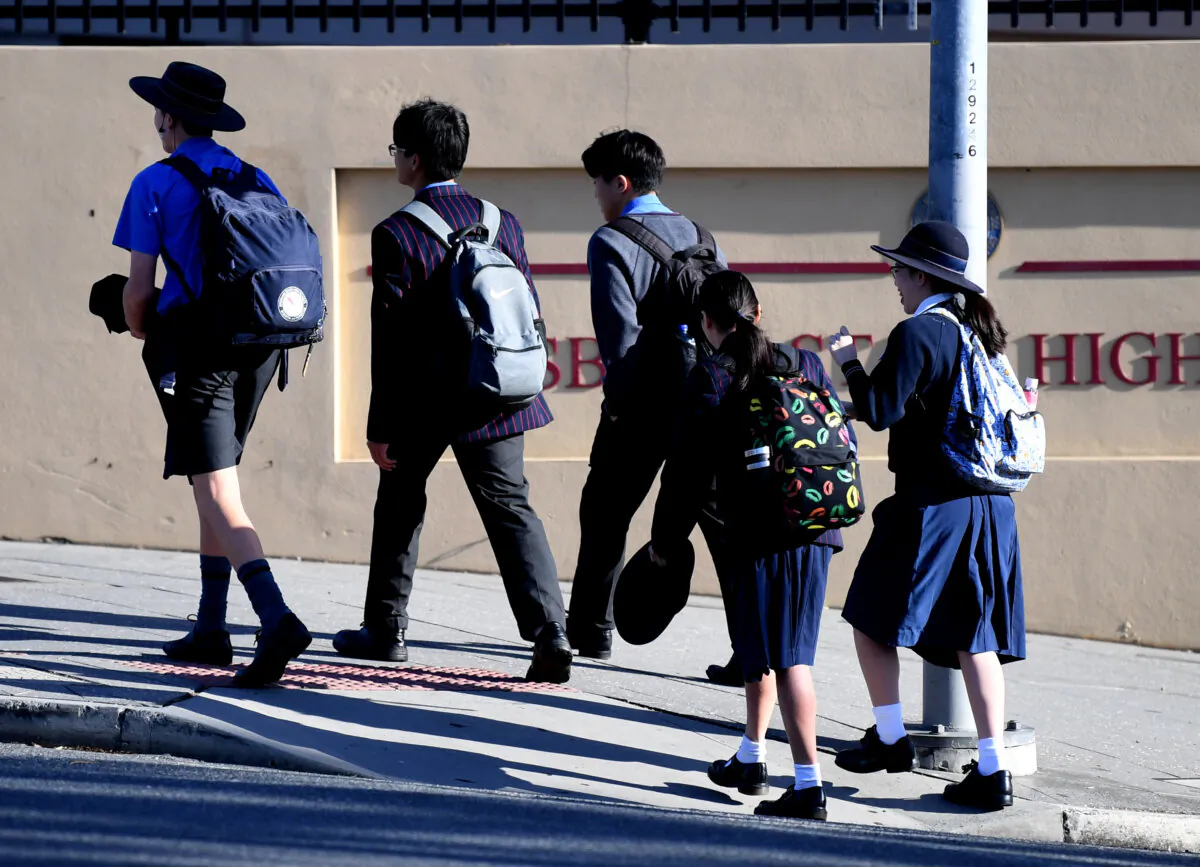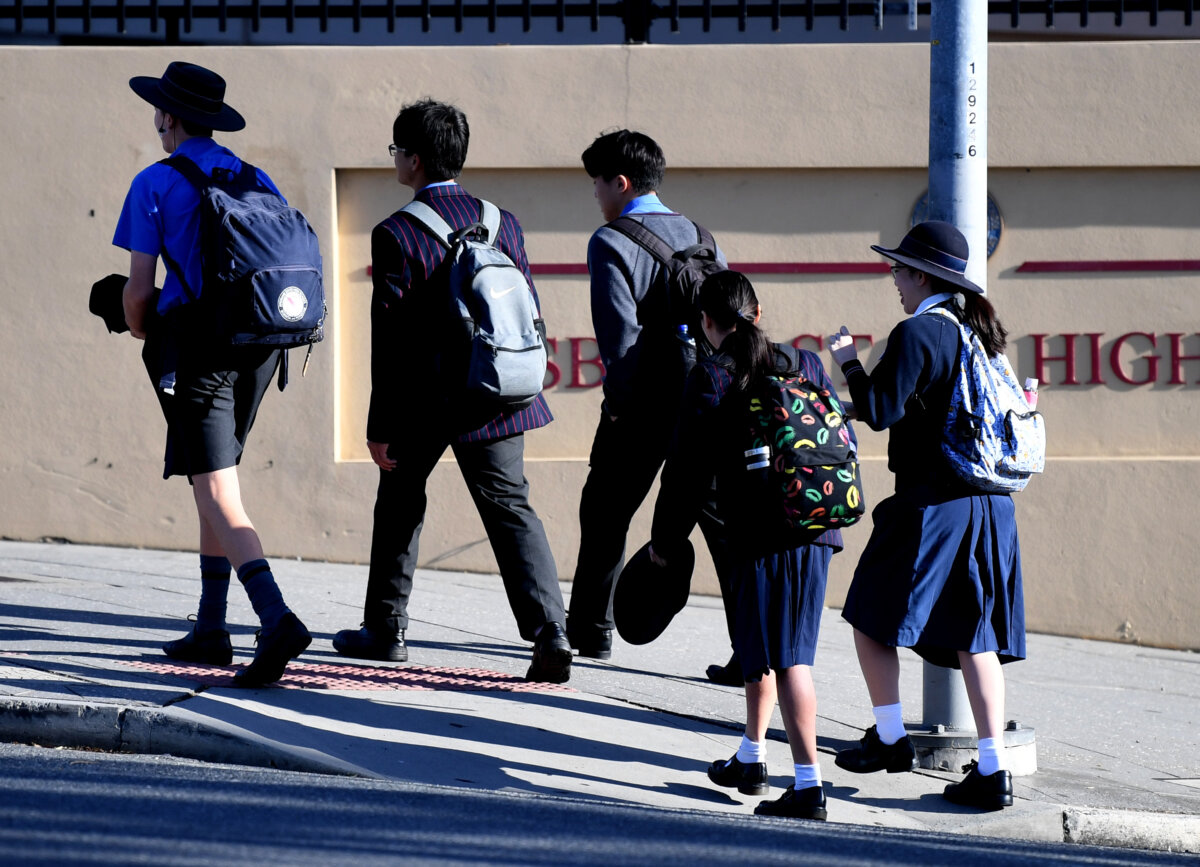

School enrolments reached a record 4.1 million last year, but new data shows a widening divide between government and private schools in Australia.
Figures released by the Australian Bureau of Statistics (ABS) shows enrolments at state-run schools fell by 0.2 percent in 2025, while independent and Catholic schools recorded growth of 3.4 percent and 1.4 percent respectively.
Overall school enrolments grew by 0.7 percent last year as 28,912 new students started at one of Australia’s 9,673 schools.
The increase was not evenly distributed across age groups.
Total primary student enrolments across all schools fell 0.3 percent in 2025, with 7,013 fewer than the year before, while secondary school numbers rose by 1.9 percent, or 35,925 students.
The decline in state school numbers continues a trend evident over the past four years.
Between 2021 and 2025, total student enrolments rose by 3.2 percent. Over the same period, independent school enrolments grew by 15.3 percent and those of Catholic schools by 5.7 percent, while government school enrolments fell by 0.4 percent.
Over a longer timeframe, government school growth has also lagged behind the private sector.
From 2016 to 2025, enrolment at state schools grew by 5 percent, or 129,602 students. In contrast, independent schools rose by 31 percent, or 168,448 students. Catholic schools increased by 8 percent or 64,642 students.
More Staying at School
There has also been an overall rise in the proportion of students staying at school.
The share of students completing education from Year 7/8 through to Year 12 rose from 79.9 percent in 2024 to 81.3 percent in 2025.
The proportion staying in school from Year 10 until Year 12 grew by 1.6 percentage points to 81.5 percent over the same period.
Enrolments among Aboriginal and Torres Strait Islander students also continued to rise, increasing by 8,911 (3.2 percent) from 2024.
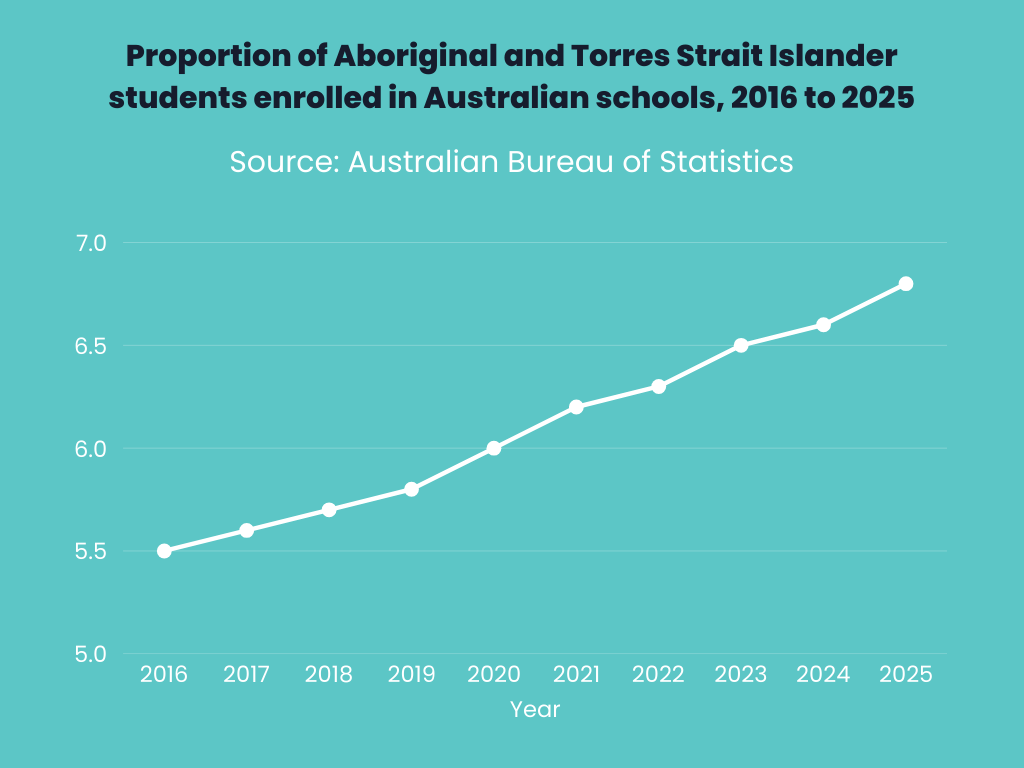
There were 283,611 Aboriginal and Torres Strait Islander students attending Australian schools in 2025, making up 6.8 percent of total enrolments.
The proportion of Aboriginal and Torres Strait Islander students staying in school from Year 10 to Year 12 also rose in 2025, up 2.7 percentage points to 59.7 percent, more than double the previous year’s growth.
Across all schools, the average student-to-teacher ratio was 12.8 students per teacher.
Private School Growth Expected to Continue
The Independent Schools Association (ISA) last year projected that enrolments will continue to grow over the next decade, with the gap between government and private schools expected to widen.
The organisation forecasts government school enrolments will decline by an average of 0.1 percent a year through to 2034, while independent schools are expected to grow by 1.4 percent annually and Catholic schools by 0.2 percent.
The largest increases are projected in Western Australia, where the independent school sector is expected to grow from 18.5 to 21.4 percent. Independent schools in New South Wales are forecast to grow from 19.4 to 22.2 percent.
Meanwhile the largest decreases over the same period will be in Tasmanian state schools, where the share of students is projected to fall from 66.1 to 62.6 percent. NSW government school enrolments are forecast to decline from 62.2 to 59.1 percent.
The ISA said most families with children enrolled in independent schools are middle-to-low-income earners, increasingly from culturally diverse backgrounds, and live in outer- and inner-suburban communities.
“Many are currently facing economic stress and are making substantial sacrifices for their children’s education,” the association said.
Enrolment growth in independent schools since 2019 has occurred mainly in schools with average annual fees of $7,500 or less. These schools account for 44 percent of all independent school enrolments and 63 percent of additional enrolments.
More than half of the sector’s recurrent income come directly from parents and families.
ISA Chief Executive Officer Graham Catt said the figures reflect a sustained shift in parental preferences.
“Australian families want choice in education and are prepared to make sacrifices to secure the school they believe is right for their child,” he said.
“Parents are often seeking a values-based education, specialist programs, smaller school communities or simply a school that aligns with their family’s priorities.”
Catt said the growth also reflects the diversity of the independent school sector.
“Independent schools are not one-size-fits-all. They include faith-based schools, community schools, special assistance schools, schools in regional and remote areas and schools serving families from every background,” Catt said.
Despite their growth, students at independent schools still receive significantly less government funding than their peers in government schools.
“On average, independent school students receive around $11,000 less per student in government funding than public school students,” Catt said.
“Families who choose independent schools are taxpayers too, yet they shoulder a much larger share of the cost of their child’s education.”
 Friends Read Free
Copy
Facebook
Tweet
Friends Read Free
Copy
Facebook
Tweet