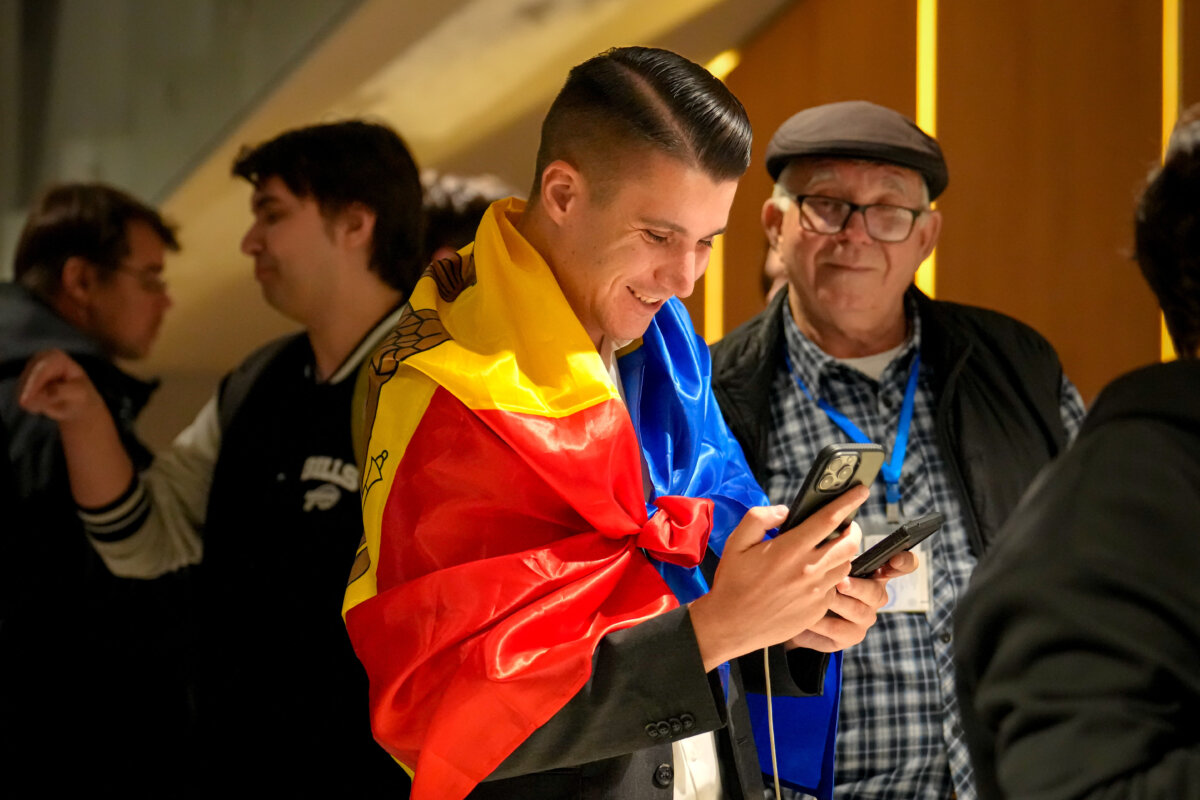
The pro-EU governing party in Moldova has won a parliamentary majority in an election held on Sept. 28, defeating a coalition of pro-Russian parties.
On Sept. 29, the country’s Central Election Commission said that with 99.91 percent of results in, the Party of Action and Solidarity (PAS) had won 50.1 percent of the vote, while the pro-Moscow Patriotic Bloc was second with 24.2 percent.
The Alternativa Bloc, which is also on good terms with Russia, came third with 7.9 percent, followed by the populist Our Party with 6.2 percent.
The only other party that passed the 5 percent threshold for getting into Parliament is the conservative Democracy at Home party with 5.62 percent of the vote.
Moldova has a Romanian-speaking majority and Russian-speaking minority, and it is sandwiched between Romania—which joined the EU in 2007 and is a member of NATO—and Ukraine.
The PAS, founded by President Maia Sandu in 2016, is expected to hold about 55 of the 101 seats in the Legislature.
Sandu is likely to reappoint Prime Minister Dorin Recean, an economist who has steered Moldova’s government through multiple crises since 2023.
The Moldovan government applied to join the EU in 2022, following Russia’s invasion of Ukraine, and was later granted candidate status. In 2024, the EU agreed to open accession negotiations.
Future-Defining Election
In an interview with The Associated Press before the election, PAS leader Igor Grosu said the results would define the country’s future “not just for the next four years, but for many, many years ahead.”
Last week, Sandu accused Russia of meddling in the former Soviet Union state, after police arrested dozens of people accused of involvement in a plot to stoke violent disorder in advance of the election.
On Sept. 29, European Commission President Ursula von der Leyen posted on X: “Moldova, you’ve done it again.
“No attempt to sow fear or division could break your resolve.
“You made your choice clear:
“Europe. Democracy. Freedom.
“Our door is open. And we will stand with you every step of the way.
“The future is yours.”
Polish President Donald Tusk posted on X: “It took real courage of the Moldovan nation and Maia Sandu personally to win this election. Not only did you save democracy and kept the European course, but you have also stopped Russia in its attempts to take control over the whole region. A good lesson for us all.”
Last month, Tusk joined French President Emmanuel Macron and German Chancellor Friedrich Merz on a trip to the Moldovan capital, Chisinau.
“Your presence here—France, Germany, Poland—shows not only your support for Moldova, but that the European project is alive, and that we are part of it,” Sandu said at a press conference on Aug. 27.
On Sept. 23, Sandu accused the Kremlin of “pouring hundreds of millions of euros” into Moldova in an attempt to provoke violence and spread disinformation.
“The Kremlin believes that we are all for sale. That we are too small to resist. That we are not a country, only a territory,” Sandu said.
“But Moldova is our home. And our home is not for sale.”
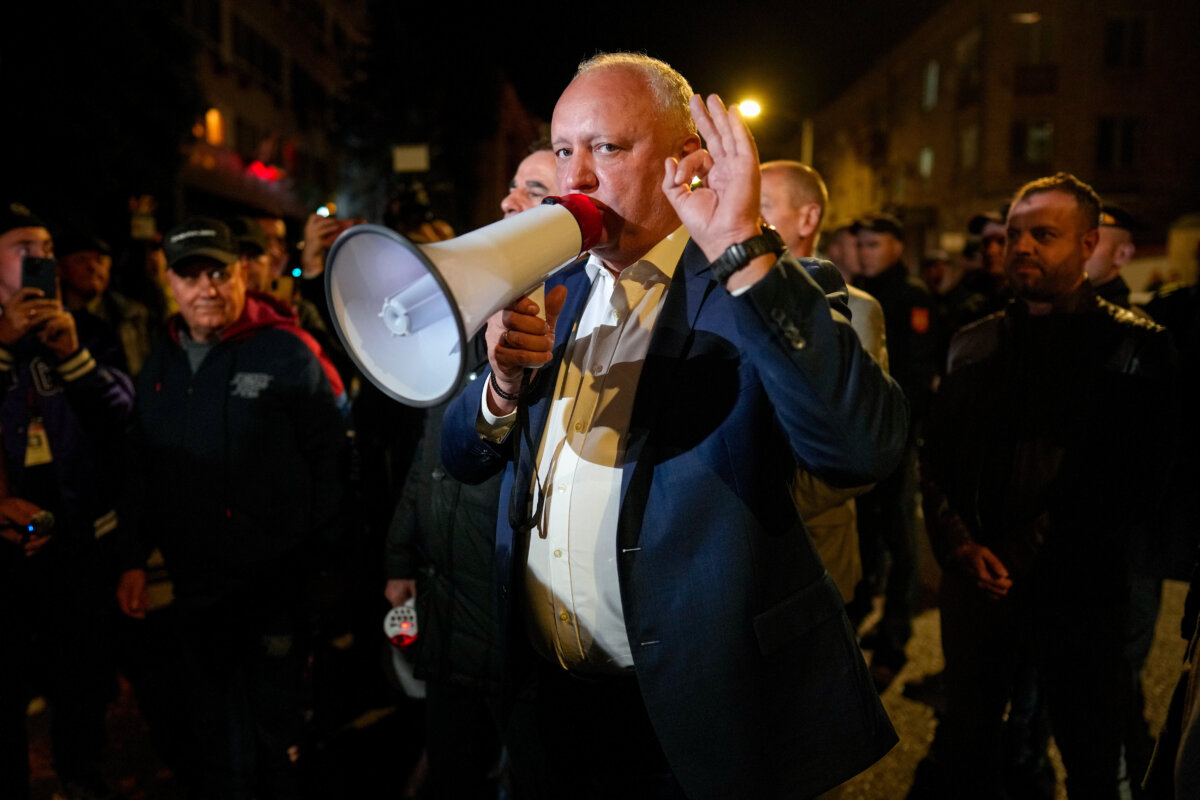
Russia has been accused of orchestrating a large-scale vote-buying scheme, spreading disinformation online, and conducting more than 1,000 cyberattacks this year alone on government infrastructure.
Russia has always denied meddling in Moldova’s affairs.
“Our country was baselessly accused of interfering in Moldova’s internal affairs and attempting to sway the will of the Republic’s citizens,” Russian Foreign Ministry spokeswoman Maria Zakharova said in October 2024, following the first round of presidential elections and a constitutional referendum in Moldova.
After the Soviet Union broke up in 1991, ethnic Russians sought to break away from Moldova, and today, a thin sliver of territory known as Transnistria still maintains its autonomy in the east of the country, backed by a garrison of Russian troops.
The Associated Press contributed to this report.
 Friends Read Free
Copy
Facebook
Tweet
Friends Read Free
Copy
Facebook
Tweet