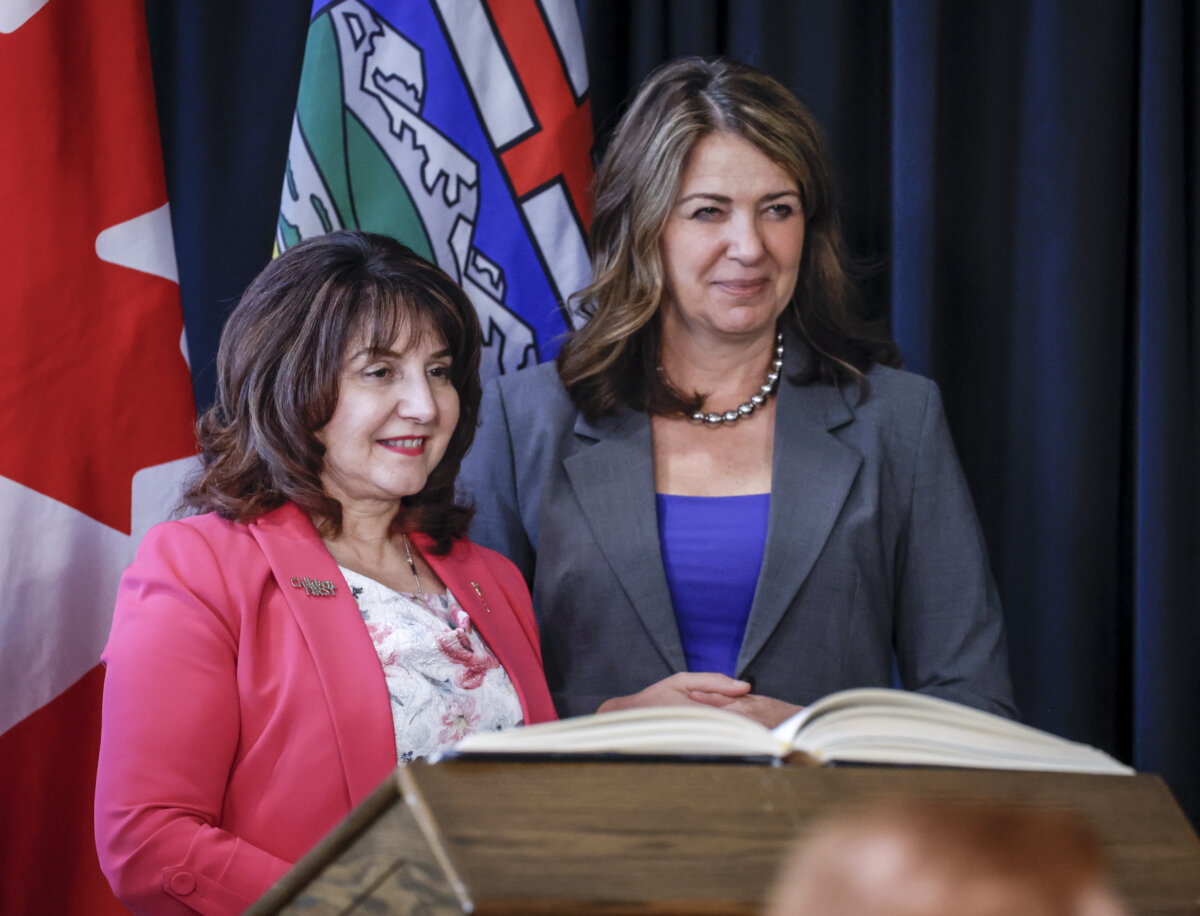

Alberta Premier Danielle Smith says her government will introduce changes allowing surgeries to be performed in the private sector as well as the public system, an initiative she says will help reduce wait times.
The government says under its new proposed legislation, physician participation rules would be changed that would permit surgeons and surgical staff to perform both publicly and privately funded surgeries. The announcement on Nov. 19 comes a day after draft legislation outlining the changes was leaked to the media, sparking criticism from the opposition.
The health ministry had declined to comment on the proposal on Nov. 18 but vowed to ensure Albertans would never be forced to pay out of pocket to receive medical care.
The proposed initiative, called the “dual practice surgery model,” would let physicians perform privately funded elective surgeries such as knee, hip, eye, and shoulder procedures, as long as they are done after regular business hours or on weekends, and provided they commit to performing a minimum number of publicly funded surgeries each year.
Alberta NDP Leader Naheed Nenshi describes the measure as a step toward health-care privatization and a system resembling “American-style two-tiered health care.”
“For those who cannot afford to pay, their wait times will be even longer because there will be fewer people operating in the systems,” Nenshi said in a Nov. 18 press conference.
Smith says the new model would reduce wait-lists by allowing patients who can afford the surgery to have it performed during off hours, removing them from the public wait-list at no additional cost to taxpayers. Smith didn’t provide details on when the legislation will be tabled.
“One challenge we face is that surgeons are not doing all the surgeries they could because the public health system can’t afford the operating room time, so patients wait too long, and some frustrated surgeons leave Canada,” Smith said on Nov. 19.
With the new model, surgeons and other specialists would remain in the public system “but are happier because they get to perform more surgeries should they want to, which in turn, leads to fewer of these doctors leaving Alberta and attracting back others who had previously left for better opportunities elsewhere,” she added.
The Canadian Medical Association (CMA) raised concerns about the province’s plans, saying it “will leave more Albertans waiting even longer to access health care.”
“[The CMA] is disappointed that the Alberta government isn’t embracing known solutions to make sure every Albertan has access to the care they need,” the organization said in a Nov. 18 press release. “Instead, it plans to create a parallel private system where more people will wait longer, with many paying twice for health care, once through taxes and a second time with their credit card.”
It said the right solution involves “training and licensing more health professionals, implementing team-based care, and taking advantage of technology.”
The think tank Montreal Economic Institute, meanwhile, praised the province’s plan, describing it as a “win for patients struggling to access care.”
“It is well-documented that in countries where doctors have the option of practising in both the public and the private sectors, patients have better access,” said Emmanuelle B. Faubert, an economist with the think tank, in a Nov. 18 news release.
The premier said her government’s proposed initiative is based on systems used in some European countries and will be “closely monitored to protect our public health-care system.”
She said measures to protect public services include requiring surgeons to keep separate records to ensure no public funding subsidizes private care, requiring them to meet a fixed quota of publicly funded surgeries, and potentially restricting certain specialties to public practice if shortages affect public care.
She said surgeries for life-threatening conditions such as cancer or emergency procedures will remain publicly funded, with no private option available.
“To be clear, the [United Conservative Party] public health guarantee continues to be in full force—no one will ever be forced to pay out of pocket for a needed hip, knee, or other surgery,” she said. “Everything your Alberta Health Insurance covers today remains covered.”
 Friends Read Free
Copy
Facebook
Tweet
Friends Read Free
Copy
Facebook
Tweet