
Russia is ready to extend by one year the most recent nuclear arms control deal between Moscow and Washington, Russian President Vladimir Putin said on Sept. 22.
Speaking to Russia’s Security Council, Putin said that Russia is prepared to continue adhering “to the central quantitative limits” under the New Strategic Arms Reduction Treaty, or New START, beyond the expiration date of Feb. 5, 2026.
The nuclear arms control agreement went into force in 2011.
It caps each side at 700 deployed long-range missiles and bombers, 1,550 deployed nuclear warheads, and 800 total launchers and bombers, whether deployed or not.
The treaty also restricts Russia’s most powerful long-range weapons, including the Avangard and the Sarmat missiles, which can reach the United States in about 30 minutes.
Although Russia has the ability to load far more warheads onto its missiles and bombers, the treaty prevents it from doing so.
Reducing Nuclear Weapons
With a little more than four months left before the treaty expires, Russia and the United States have yet to begin talks on extending or revising it.
In February, U.S. President Donald Trump signaled his interest in engaging both Putin and Chinese leader Xi Jinping in discussions on capping their nuclear arsenals, raising the prospect of a potential trilateral summit on arms control.
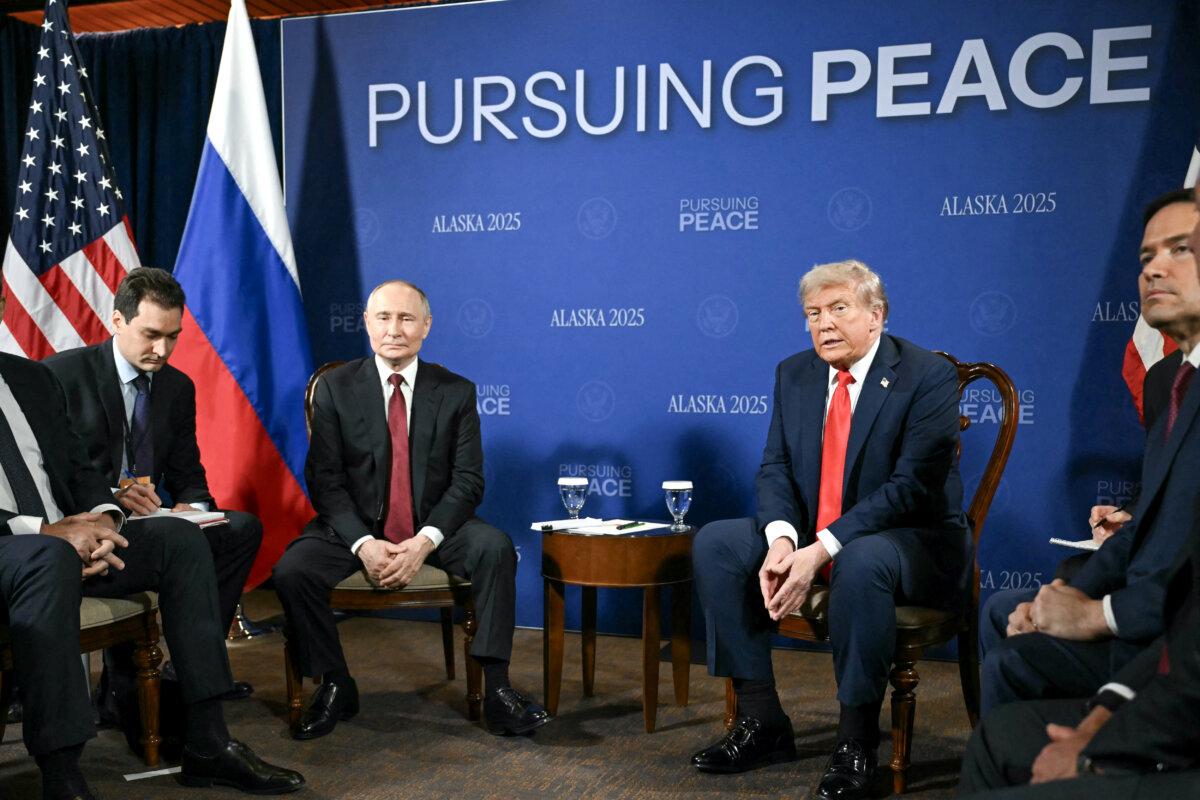
Trump also raised the subject in August, saying that he discussed nuclear arms control at his Aug. 15 summit with Putin in Alaska and that he wanted China brought into the process.
“One of the things we’re trying to do with Russia and with China is denuclearization, and it’s very important. Denuclearization is a very big game, but Russia is willing to do it, and I think China is going to be willing to do it, too,” Trump said.
“We cannot let nuclear weapons proliferate. We have to stop nuclear weapons.”
The suggestion was rejected by Beijing.
Suspension
In 2021, shortly after U.S. President Joe Biden took office, the treaty was extended by five years. In February 2023, Putin announced that Russia was “suspending” its participation in New START.
Moscow said it would continue to respect the treaty’s central limits on deployed strategic warheads and delivery systems, but without verification measures.
Addressing his Security Council on Sept. 22, Putin said the suspension followed “the extremely hostile policy of the Biden administration, which violated the basic principles on which [the] treaty was founded.”
According to the U.S. State Department, the absence of New START’s verification measures would gradually weaken Washington’s understanding of Russia’s nuclear forces, diminishing confidence in its assessments and limiting the information needed to make informed decisions about U.S. nuclear capabilities.
Putin said that after the extension, a specific decision would be made on whether to continue maintaining the voluntary limitations, depending on an analysis of the situation.
“We believe this measure will only be viable if the United States acts in the same way and does not take steps that undermine or violate the existing balance of deterrent capabilities,” Putin said.
Russia and the United States together possess about 90 percent of all nuclear weapons, according to the Stockholm International Peace Research Institute.
Holding more than 5,000 warheads each, they are followed by China, France, the UK, and the remaining nuclear powers, India, Pakistan, Israel, and North Korea.
Correction: A previous version of this article misstated which security council Putin was speaking to when commenting on Russia’s suspension of its participation in New START. The Epoch Times regrets the error.
 Friends Read Free
Copy
Facebook
Tweet
Friends Read Free
Copy
Facebook
Tweet