
Quebec Health Minister Sonia Bélanger says she is “open” to banning the sale of energy drinks to minors after meeting with the parents of 15-year-old Zachary Miron, who died after drinking a can of Red Bull.
Zachary died in the winter of 2024 when the combination of his ADHD medication with a highly-caffeinated Red Bull beverage caused a fatal arrhythmia.
His parents have been advocating since his death for a ban on the sale of energy drinks to anyone under 18—or at a minimum, to those under 16. Their petition has collected more than 15,000 signatures on the National Assembly’s website to date.
Bélanger told reporters she is on board with banning energy drinks for minors and would take concrete steps on the issue before the end of the parliamentary session on June 12, but she did not offer any details about how long the process would take.
“We will launch work on this,” she said in the National Assembly corridors after meeting with Zachary’s parents. “We will do everything possible to implement a set of measures. Legislatively, discussions still need to happen.”
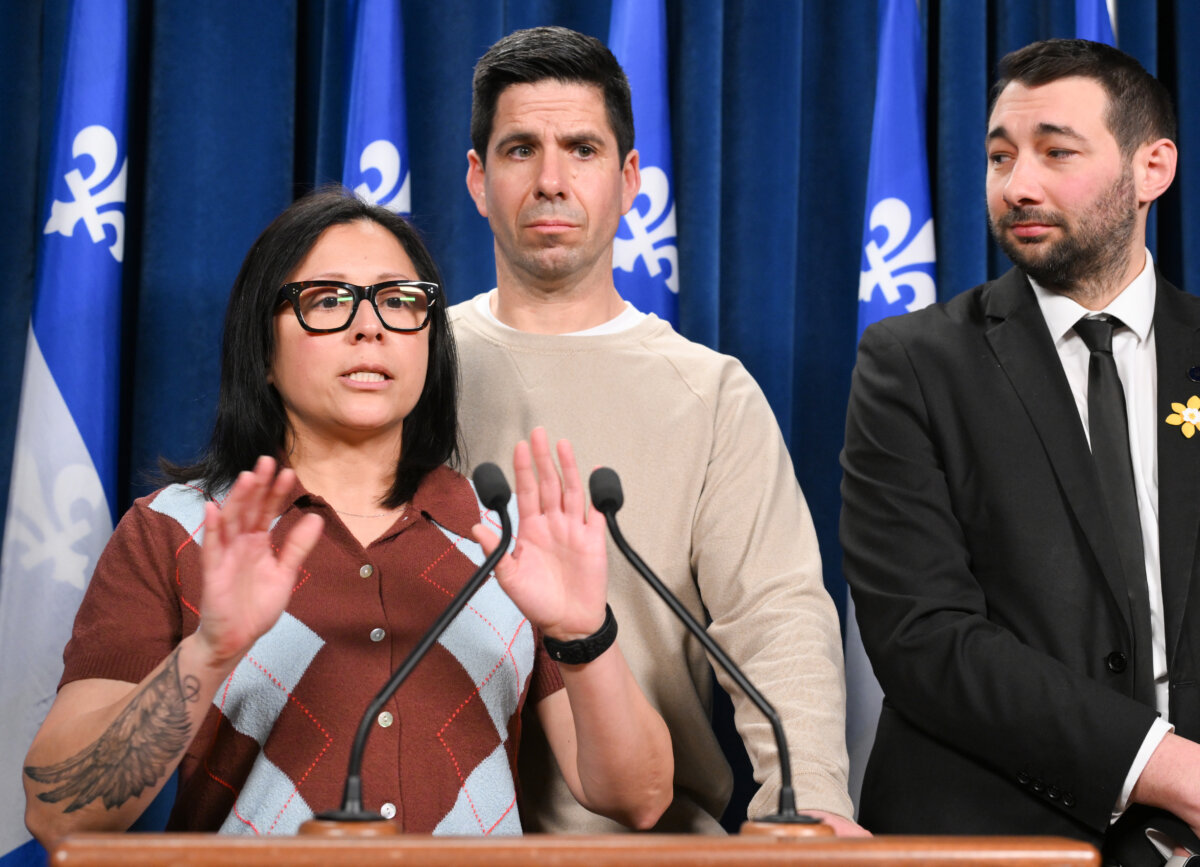
Zachary’s mother, Veronica Martinez, described her April 1 meeting with Bélanger as “productive” but said she and her partner, David Miron now “expect action” on the issue.
“What we are living right now—nobody has to go through that,” Martinez said during a press conference with Miron and Québec solidaire MNA Guillaume Cliche-Rivard at her side.
Advertising
Perception and branding play a major role in minors choosing energy drinks over other beverages, the parents argue.
Miron said teenagers are increasingly consuming energy drinks, which are perceived as “sexy,” “colourful” and “affordable,” and are available in nearly every type of store, ranging from convenience stores to hardware stores to pharmacies.
Martinez agreed, criticizing energy drink companies for their advertising practices.
“They say it’s not meant for kids but all of the marketing, the branding is specifically for them,” she said, noting that “young people are really at risk with this easy access to these drinks.”
Zachary was in “perfect health” at the time of his death, she added.
He died while participating in a school ski trip in Morin Heights, which is located in the Laurentians, a scenic mountain range north of Montreal. His mother said his heart stopped while he was on a ski lift.
“If it can happen to a boy like that, I mean, nobody is safe,” she said.
The couple also voiced concern about the lack of warning from doctors and pharmacists to young people receiving prescriptions for psychostimulants for ADHD treatment.
The parents and Cliche-Rivard both said they are hopeful the minister will address the issue quickly.
The MLA said he believes Bélanger was “moved and touched” by the parents’ story and expressed optimism that the minister will launch a special initiative to hear from stakeholders who can make recommendations about next steps.
He said he is hopeful a bill—the Zachary Miron Act—could be adopted to enforce better regulation.
“What David and Veronica are telling me is that words are nice, but they want to save the next life,” he said. “For me, all of this is possible.”
Bélanger said she would work with the national director of public health, Dr. Caroline Quach Thanh, on the issue and her next step will be to meet with the Association of Pharmacists “in the coming days.”
She noted that there are currently “two schools of thought” on the appropriate age restriction for energy drinks—whether the ban should apply to those under 16 or be extended to include anyone under 18.
“I will look at that. Regarding the age, I’m certain we need to act, but we will have time to revisit it.”
Energy Drink Recommendations
Both Health Canada and paediatric experts say teenagers should not consume energy drinks due to the high levels of caffeine and sugar.
One energy drink could have more caffeine than the maximum safe daily limit for youth, according to the Canadian Paediatric Society website.
A teenager should have no more than 2.5 milligrams of caffeine per kilogram of body weight, per day, the site said.
If a teen weighs 55 kilograms—approximately 120 pounds—his or her maximum caffeine intake should be 137.5 milligrams a day, which is the equivalent of a small coffee at Tim Hortons, according to the Montreal Children’s Hospital.
One 355 millilitre can of Red Bull contains 114 milligrams of caffeine, coming close to the maximum amount, while a 473 millilitre can has 151 milligrams, which exceeds the recommendation for a teen that size.
Monster brand energy drinks contain even more caffeine. A standard 16-ounce can of original Monster Energy contains approximately 160 milligrams of caffeine. This amount can vary slightly depending on the specific flavour, variety, or regional regulations, but generally ranges between 140 milligrams and 300 milligrams for specialty products like Java Monster or Monster Killer Brew.
Too much caffeine can cause rapid heart rate, high blood pressure, headaches, impulsive behaviour, and anxiety, the paediatric society said. Other symptoms include sleep disruptions, irritability, vomiting, and diarrhea.
Health Canada recommends that children younger than 14 should avoid caffeinated energy drinks entirely.
 Friends Read Free
Copy
Facebook
Tweet
Friends Read Free
Copy
Facebook
Tweet