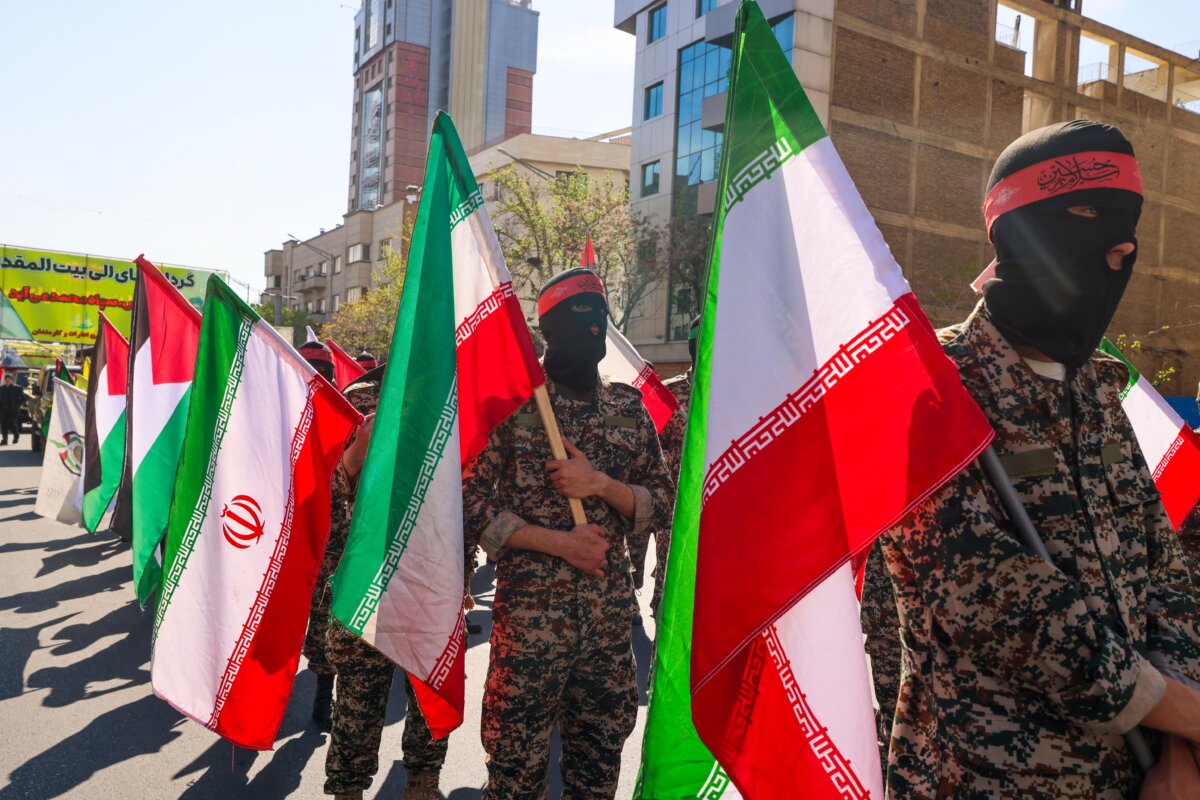

Iran’s military on Wednesday issued a warning to U.S. assets in the Middle East after a new round of strikes was launched by Washington and Tehran overnight as American forces denied Iran’s recent claims that it struck U.S. warships in recent days.
Hossein Mohebbi, an Iranian brigadier general and spokesman for the Islamic Revolutionary Guard Corps (IRGC), said in comments carried by the semi-official, pro-regime Tasnim News that Tehran has “reached a point where if the enemy hits two or three of our targets, we will respond strongly with 20 targets.”
Iran, he also claimed, “will use this power to respond to the enemy’s aggression and make the enemy regret continuing its aggression,” according to the Tasnim report.
It came as Iran said on Wednesday it had attacked 10 ships near the Strait of Hormuz after the U.S. military sank five Iranian oil tankers, in the biggest declared wave of tit-for-tat attacks on shipping by both sides since the start of the six-month-old war.
The Hormuz Strait is considered a key waterway that Iran has sought to control amid the U.S. strikes and economic pressure campaign. In peacetime, it allows for the transit of about a fifth of the world’s traded oil, coming from oil-rich Gulf nations.
The attacks sent the price of oil surging, with benchmark Brent crude futures breaching $100 a barrel for the first time since July. At least one seafarer aboard a tanker was reported killed and another listed as missing.
Iran also said it had fired ballistic missiles at a base used by U.S. forces in Jordan. Attacks by both sides since the end of August have shattered a month of relative calm, with the United States and Iran hitting military, shipping, and energy assets.
The U.S. military, in a post on social media late on Tuesday, said it destroyed five Iranian oil tankers in overnight strikes, releasing video of vessels on fire before they sank. It also described the fresh attacks against Iran as a response to attacks launched by Iran’s Revolutionary Guards against an American Navy warship in recent days.
On Wednesday morning, U.S. Central Command (CENTCOM) also denied Iran was successful in attacking any U.S. Navy ships.
“All IRGC attempted attacks failed,” CENTCOM wrote. “Meanwhile, U.S. forces have successfully destroyed 10 Iranian tankers in just the last week. These vessels were part of a multibillion-dollar shadow network that funds the IRGC, and Iran cannot defend them.”
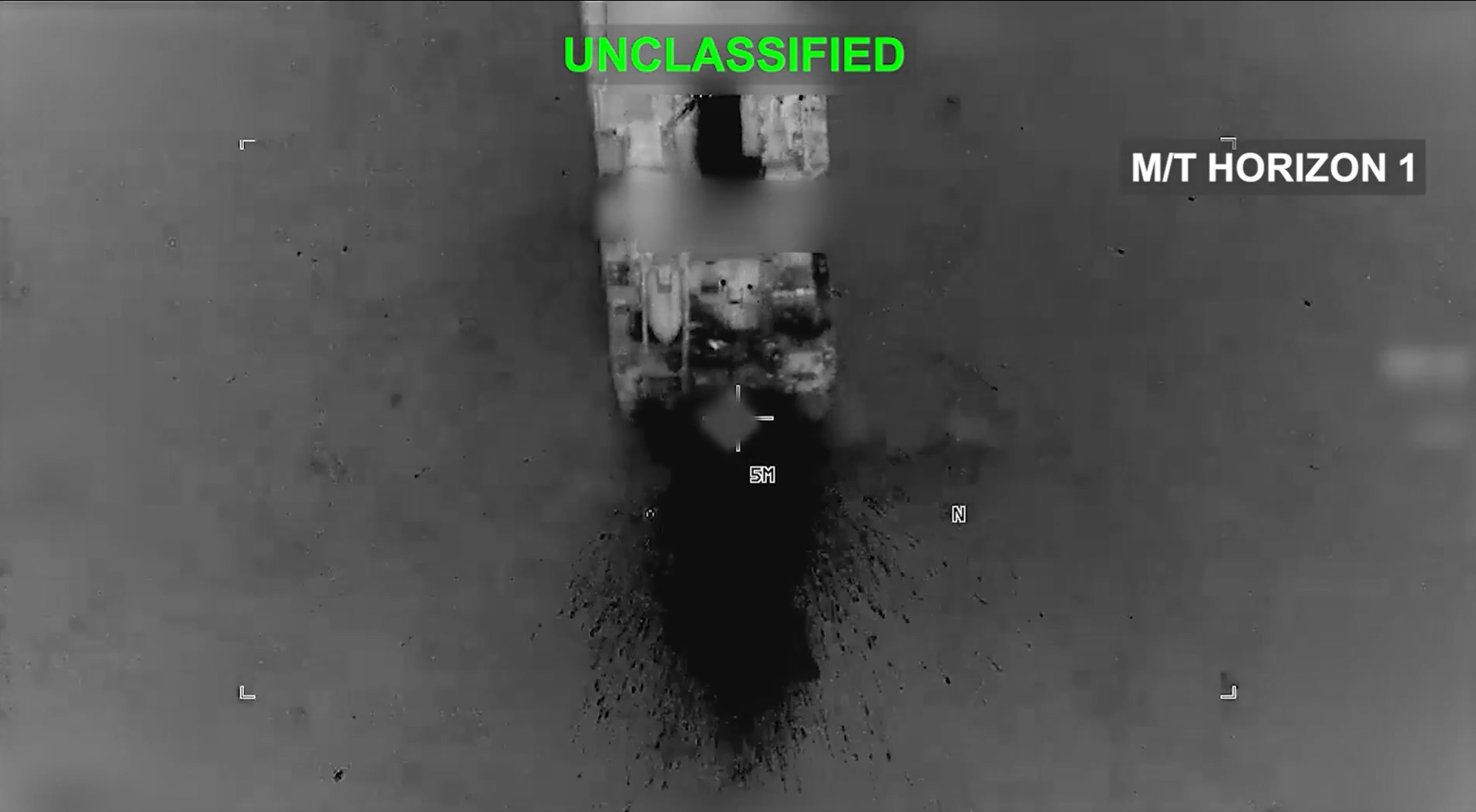 U.S. forces strike the Iran-linked tanker M/T Horizon 1 as it sailed in the Gulf of Oman on Sept. 8, 2026. (U.S. Central Command/X)
At least one analyst, Patrick De Haan of GasBuddy, has said that the rise in diesel prices can be partially attributed to Ukrainian attacks on Russian oil facilities that produce the fuel.
In a post on Monday, U.S. President Donald Trump predicted that gas prices would drop quickly once the war ends, saying that the price for a gallon could drop to under $2.
Reuters contributed to this report.
 Friends Read Free
Copy
Facebook
Tweet
Friends Read Free
Copy
Facebook
Tweet