
Direct flights between the capitals of Russia and North Korea will begin later this month, Russia’s national tourism industry group said.
The Association of Tour Operators of Russia (ATOR) said on July 9 on its official Telegram channel that Rosaviatsia, the Russian federal government’s aviation regulator, has granted a license to the charter airline Nordwind to operate flights between Moscow and Pyongyang up to twice a week.
Moscow’s Sheremetyevo International Airport has added flights to Pyongyang to its schedule starting July 27, according to ATOR.
Currently, there are only three direct air routes into Pyongyang. The only one involving Russia is a twice-weekly flight between Pyongyang and Vladivostok, Russia’s largest port on the Pacific Ocean. That service resumed in August 2023 after being suspended for three years during the COVID-19 pandemic.
The other two routes connect Pyongyang with China, specifically Beijing and the northeastern city of Shenyang.
The new Moscow–Pyongyang flights are another step in the deepening relationship between the two heavily sanctioned countries, extending beyond military cooperation to tourism and transportation.
In January, Russian travel agency Vostok Intur began advertising tours to North Korea’s Wonsan-Kalma coastal resort, which opened in June after a decade of construction. In May, the agency also announced plans to launch a ferry service connecting Vladivostok and the resort.
More recently, in June, North Korea and Russia resumed passenger rail service on the more than 6,000-mile Pyongyang–Moscow trans-Siberian route, with trains departing Pyongyang twice a month and making stops in Russian cities. A separate direct route between Pyongyang and Khabarovsk, the largest city in the Russian Far East, was also launched that month, operating once a month.
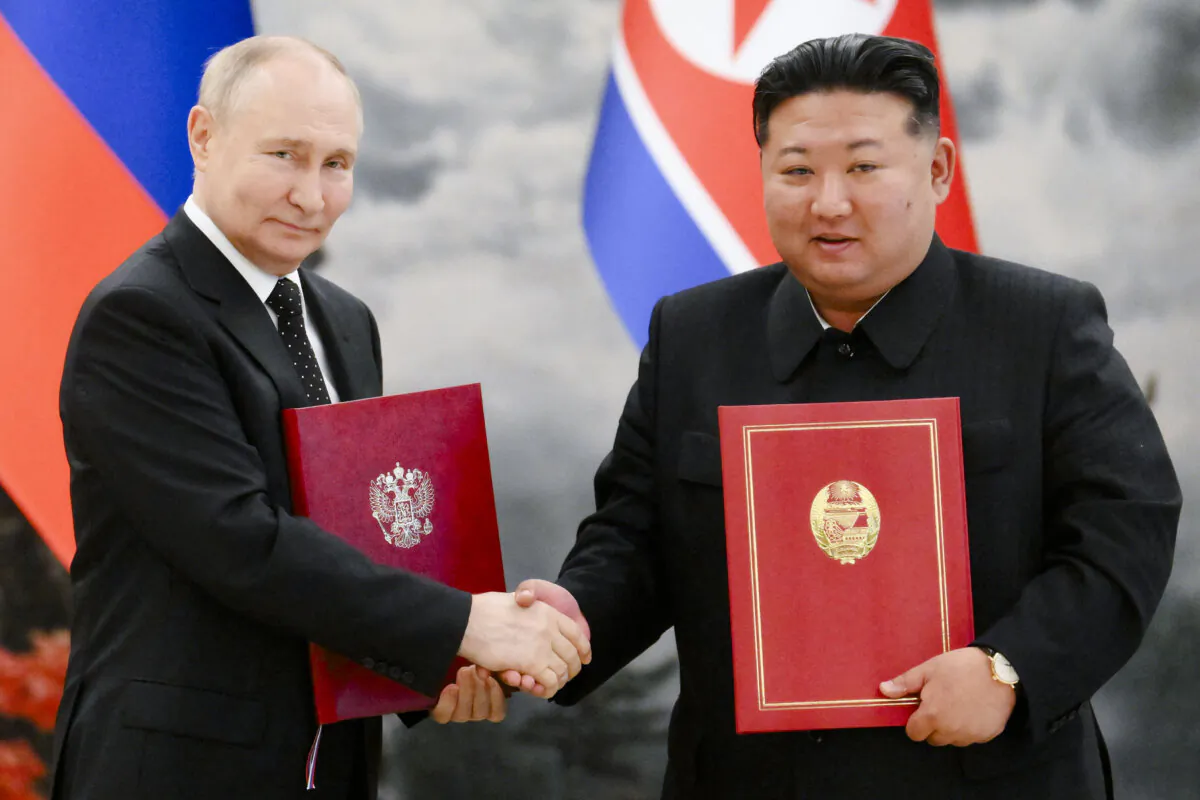
Since Russia’s invasion of Ukraine in 2022 and the ensuing war, Moscow and Pyongyang have taken steps to upgrade their relationship. In June 2024, Russian President Vladimir Putin and North Korean leader Kim Jong Un signed a mutual defense treaty during Putin’s high-profile visit to Pyongyang.
The treaty elevates the relationship to a level reminiscent of the Soviet Union–North Korea alliance, which lapsed following the Soviet collapse in 1991. It includes a provision obligating both parties to provide immediate military assistance if either country is attacked.
Honoring the new treaty, North Korea has supported Russia’s military campaign in Ukraine by sending thousands of shipping containers filled with munitions, millions of artillery rounds, and dozens of ballistic missiles, as well as troops to help repel Ukrainian forces from Russia’s Kursk region. In April, South Korea’s intelligence service informed the country’s parliament that North Korea had sent 15,000 troops to Russia, with 4,700 casualties reported, including 600 deaths.
Experts have said that Russia could, if it has not already done so, transfer military technology that would advance the Kim family regime’s generational nuclear weapons ambitions.
Gen. Xavier Brunson, who is in charge of the U.S. Forces Korea, testified before Congress in April that Russia “is expanding sharing of space, nuclear, and missile-applicable technology, expertise, and materials” to North Korea. He further stated that Russia’s expanded cooperation will advance the North Korean weapons of mass destruction program “across the next three to five years.”
 Friends Read Free
Copy
Facebook
Tweet
Friends Read Free
Copy
Facebook
Tweet