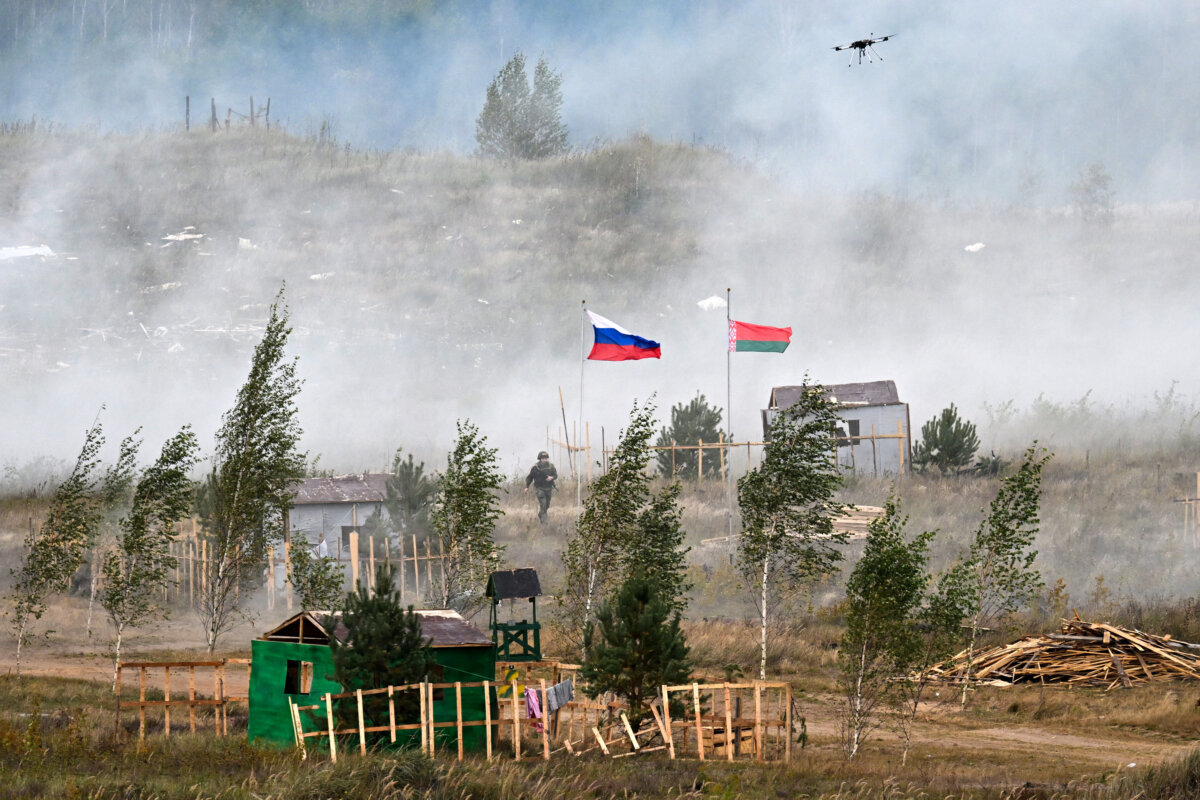

Russia and Belarus have concluded five days of wide-ranging military drills during which the allies tested their ability to fend off attacks by hypothetical enemies.
On Sept. 16, the last day of the joint exercises, Russia’s Baltic Fleet “demonstrated its strategic capabilities through a coordinated missile strike against naval targets,” Russia’s TASS news agency reported, citing Moscow’s defense ministry.
Held on Russian and Belarusian territory and in international waters, the Zapad (or West) 2025 military exercises officially began on Sept. 12.
According to the Russian defense ministry, the drills aim to “improve the skills of commanders and staffs, enhance interoperability and field training of regional and coalition battlegroups … and ensure military security.”
TASS reported on Sept. 12 that the first phase of the exercises would practice means of “repelling aggression against an allied state.”
A second phase would rehearse managing forces “during the restoration of the territorial integrity of an allied state and the defeat of the enemy, including with the participation of … friendly states,” TASS added.
The joint drills also involved “planning the use of nuclear weapons and Oreshnik hypersonic missile systems,” according to the news agency.
During the five-day exercises, Russian and Belarusian military personnel took part in a series of ground and aerial warfare scenarios at military facilities in both countries.
On Sept. 13, Russian nuclear-capable bomber aircraft struck mock enemy positions, while Russian and Belarusian personnel jointly rehearsed anti-sabotage operations.
Two days later, artillery units in Russia’s Kaliningrad region were tested against a hypothetical invading force.
A day before the wargames kicked off, Kremlin spokesman Dmitry Peskov described the exercises as “routine drills, not aimed against anyone else.”
“It’s about a continuation of defense cooperation and efforts to improve interaction between two strategic allies,” he said in remarks cited by TASS.
The Union State
Belarus, a former Soviet republic, has previously been described by the Kremlin as Russia’s “No. 1 ally.”
Since 1999, the two countries have been bound by their “Union State” treaty that aims to cement ties between the two neighbors, which share a 770-mile border.
Under the treaty, Russia and Belarus share a common security structure that includes a joint Regional Group of Forces and a jointly run air-defense system.
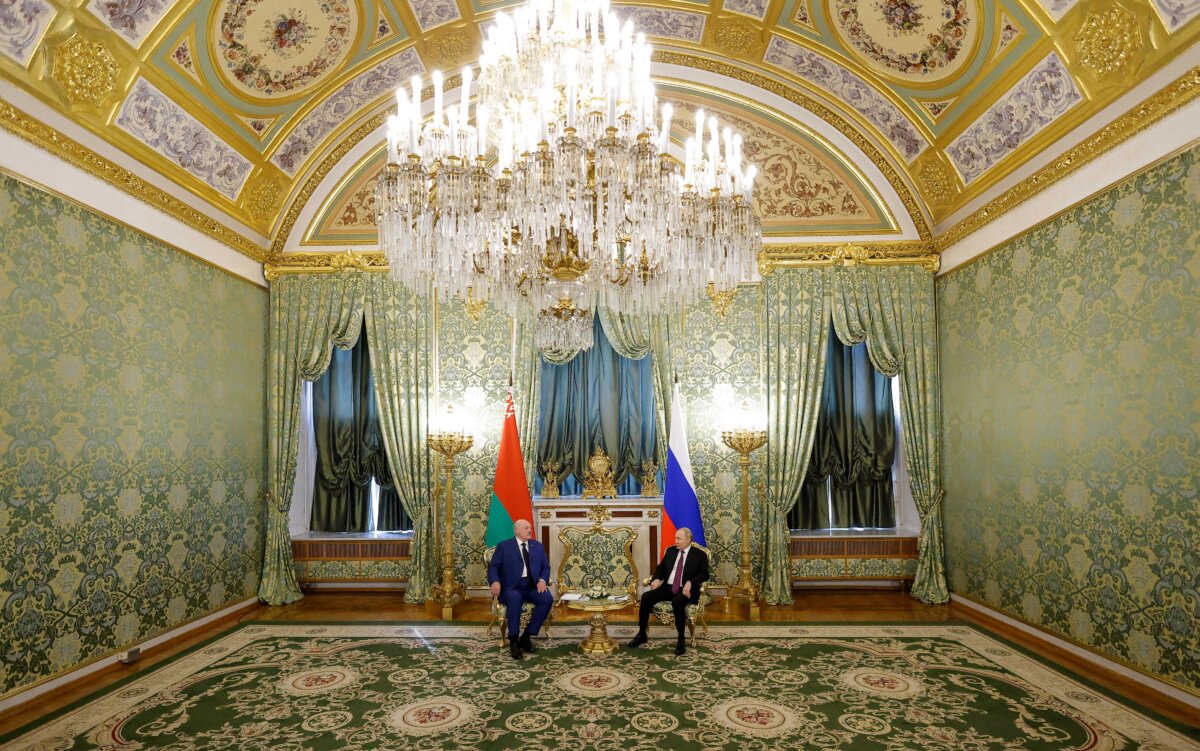
In 2023, Belarus made international headlines after Moscow unveiled plans to station nuclear weapons at Belarusian military facilities.
Belarusian President Alexander Lukashenko has since confirmed that Russian nuclear warheads—he did not say how many—were already stationed on his country’s territory.
On Sept. 16, Pavel Muraveiko, chief of the Belarusian armed forces’ general staff and first deputy defense minister, said the two militaries had “accomplished all the tasks” they had set for themselves in the context of the Zapad joint drills.
“Among significant events, I can mention the planning and the consideration of the application of non-strategic nuclear weapons,” he was quoted as saying by Minsk’s state-run BelTA news agency.
According to Muraveiko, this includes the “evaluation and deployment” of Russian-built Oreshnik hypersonic missiles, which can carry nuclear payloads.
Early last month, Russian President Vladimir Putin said that the Oreshnik missile system would be delivered to Belarus before the end of the year.
“Our specialists … have chosen a site for future positions,” he was quoted as saying by TASS on Aug. 1. “Now work is underway to prepare these positions.”
Drills Held Amid Tensions
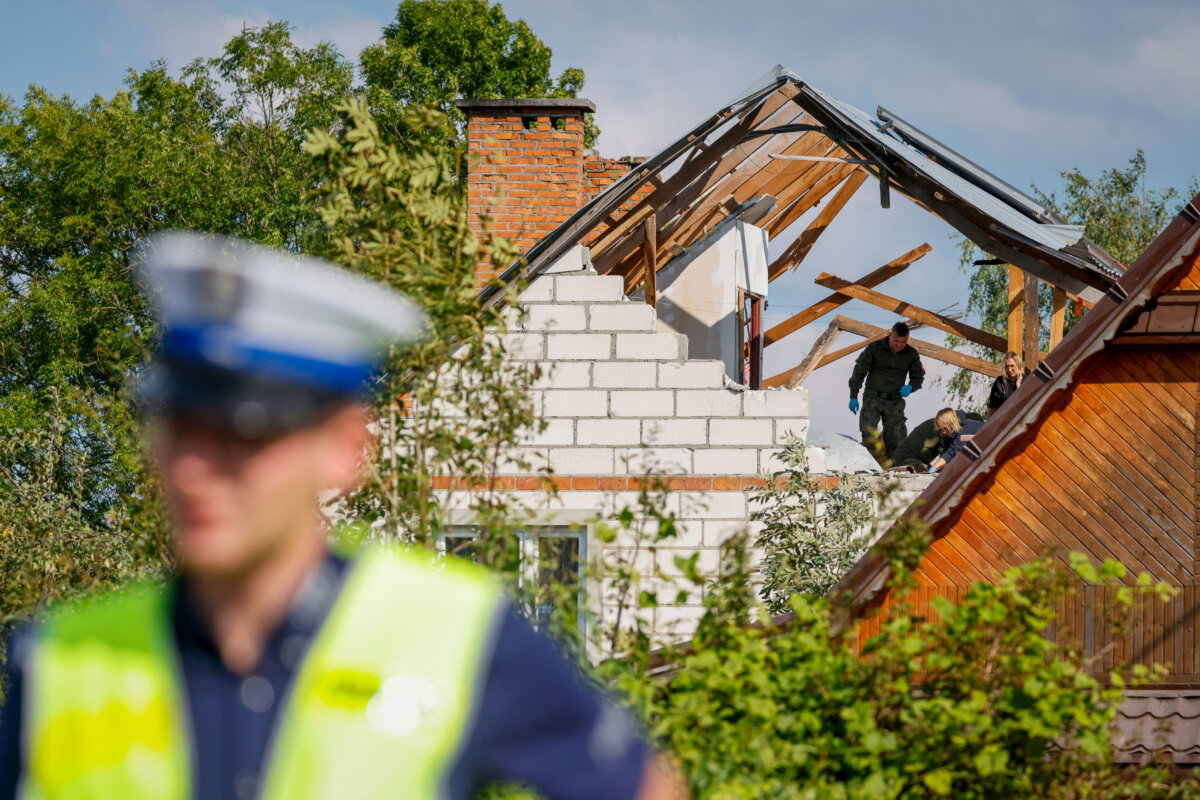
The Russia–Belarus joint drills began less than a week after neighboring Poland shot down a number of Russian drones over its territory.
The incident raised alarm bells among Western capitals, with Poland closing its border with Belarus.
Nevertheless, recent days have seen signals that Washington seeks to improve its relations with Minsk, which have been suspended since 2022.
Last week, White House special envoy John Coale visited Belarus, where he said U.S. President Donald Trump hoped to reopen Washington’s embassy in Minsk, normalize bilateral ties, and jumpstart trade between the two countries.
Trump also lifted U.S. sanctions on the Belarusian national carrier Belavia after Lukashenko agreed to free 52 prisoners, including several journalists.
In a further sign of thawing relations, at least two U.S. military officers were invited to Belarus to observe the five-day joint exercises.
Observers from Turkey and Hungary—both NATO members—were also invited to attend the joint military drills.
Reuters contributed to this report.
 Friends Read Free
Copy
Facebook
Tweet
Friends Read Free
Copy
Facebook
Tweet