
Russia reacted with fury on Thursday after the United States imposed sweeping sanctions on its two largest oil companies, a move directly targeting the Kremlin’s most critical source of revenue that world leaders said keeps the war in Ukraine going.
The U.S. Department of the Treasury on Wednesday announced sanctions on Rosneft and Lukoil, as well as nearly three dozen of their subsidiaries.
This marks the first major economic punishment on Moscow by President Donald Trump since his return to the White House for a second term, as he seeks to pressure both Russia and Ukraine to pause the fighting along the current front lines.
Putin, Allies Condemn Sanctions
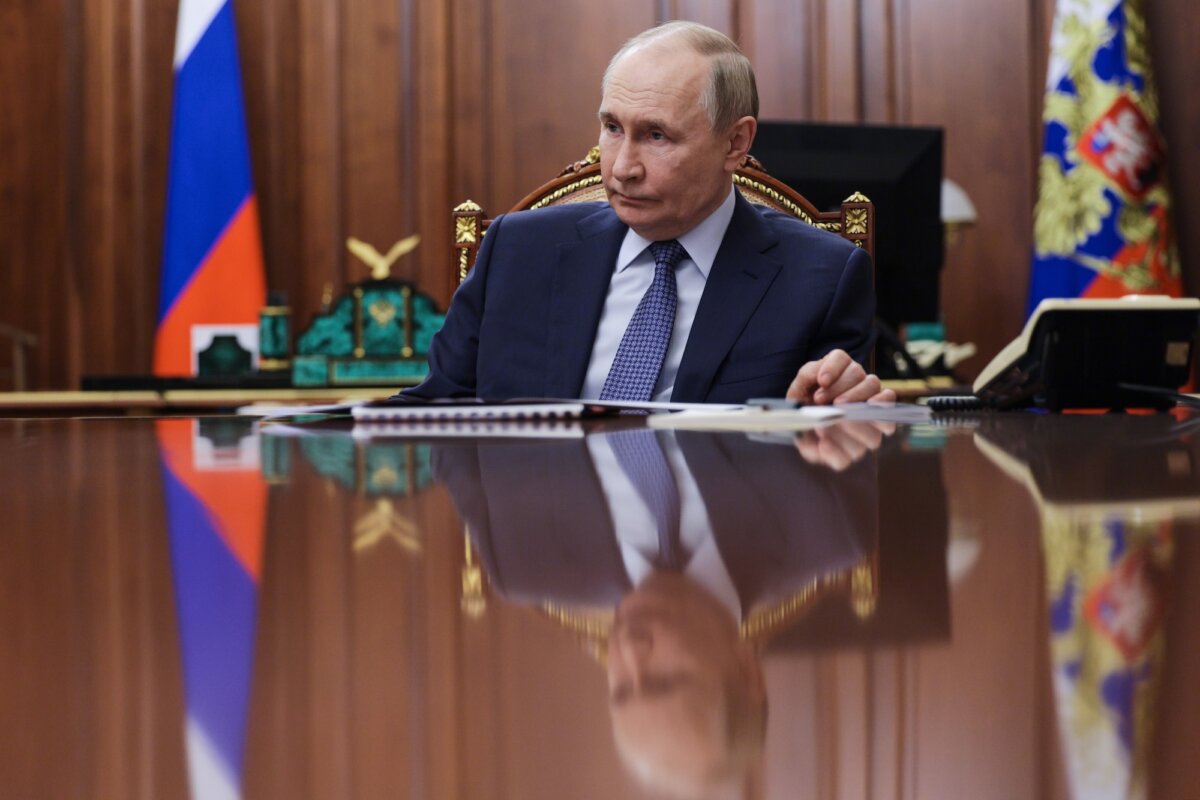
Speaking to reporters at the Kremlin, Russian President Vladimir Putin condemned the sanctions as an “unfriendly act,” but said they “will not have a significant impact” on Russia’s economy.
“It is an obvious thing and it does not strengthen Russia-U.S. relations that have just started recovering,” he said, reported state news agency TASS. “Certainly, the U.S. administration harms Russia-U.S. relations by such actions.
“[The sanctions] are serious in nature and will have certain consequences, but they will not have a significant impact on the health of our economy.”
Putin then warned that restricting Russian energy exports would likely push global energy prices higher, noting that, unlike Russia, the United States consumes more oil than it sells.
Former Russian President Dmitry Medvedev, a longtime Putin ally who now serves as the deputy chairman of Russia’s Security Council, was more blunt.
“The USA is our adversary, and their loquacious ‘peacemaker’ has now fully taken up the path of war with Russia,” Medvedev wrote on his Telegram channel, referring to Trump.
Foreign Ministry spokeswoman Maria Zakharova said that Washington’s approach would backfire.
“If the current U.S. administration decides to follow the example of its predecessors, who tried to pressure or force Russia to abandon its national interests through illegitimate sanctions, the outcome will be exactly the same: a failure, both politically at home and harmful to global economic stability,” she said, reported TASS.
Washington: ‘Time to Stop the Killing’
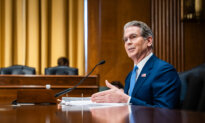
Announcing the sanctions, Treasury Secretary Scott Bessent said the measures were a direct response to Moscow’s unwillingness to end what he called a “senseless war” and were designed to choke off “the Kremlin’s war machine.”
“Now is the time to stop the killing and for an immediate ceasefire,” Bessent said in an Oct. 22 statement.
The sanctions freeze all assets belonging to Rosneft and Lukoil in the United States and bar U.S. companies and individuals from doing business with them. They also extend to 28 Rosneft subsidiaries and six Lukoil units, and open the door to secondary sanctions against foreign firms conducting transactions with the blacklisted entities.
Rosneft and Lukoil form the backbone of Russia’s energy industry, together accounting for over half of the country’s estimated five million barrels per day in crude oil exports. State-controlled Rosneft, led by Igor Sechin, a close ally of Putin, produces about 40 percent of Russia’s total crude oil output, while privately owned Lukoil contributes roughly 15 percent, according to figures published on the companies’ websites.
Budapest Meeting Still on the Table
The sanctions also added to the uncertainty surrounding a proposed peace summit between Trump and Putin in Budapest. While the bilateral relations have been further strained, the White House maintained that the meeting is “not completely off the table.”
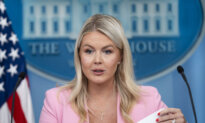
“[President Trump] has always maintained that he would implement sanctions on Russia when he felt it was appropriate and necessary, and yesterday was that day,” White House press secretary Karoline Leavitt told reporters on Thursday. “The President has also long expressed his frustration with Vladimir Putin and, frankly, both sides of this war. He’s always said in order to negotiate a good peace deal, both sides need to be interested in a good peace deal.
“A meeting between these two leaders is not completely off the table,” she said. “The President and the entire administration hopes that one day that could happen again, but we want to make sure that there’s a tangible, positive outcome out of that meeting, and that it’s a good use of the President’s time.”
 Friends Read Free
Copy
Facebook
Tweet
Friends Read Free
Copy
Facebook
Tweet